Forty years after opening Australia’s first dedicated Pilates studio, I am asking what happens when the equipment becomes more important than the teaching.
By Allan Menezes
In 1986, I opened Australia’s first dedicated Pilates studio in Sydney.
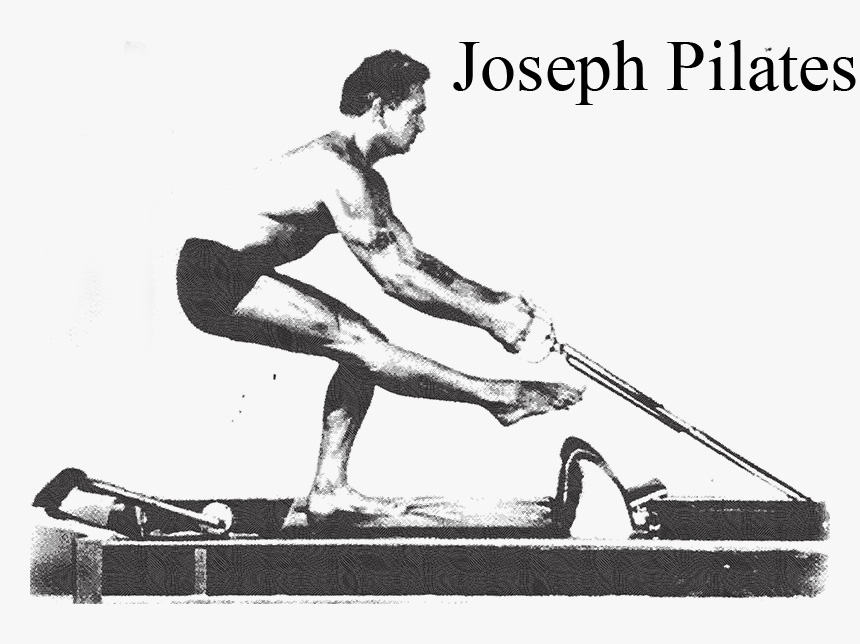
I had emigrated to Australia after training in London with Alan Herdman. My teaching lineage connects through Carola Trier and Robert Fitzgerald to Joseph Pilates.
Back then, I spent a great deal of time explaining what Pilates was. Today, almost everyone knows the name.
What concerns me is how little that name now tells you about the experience you are buying.
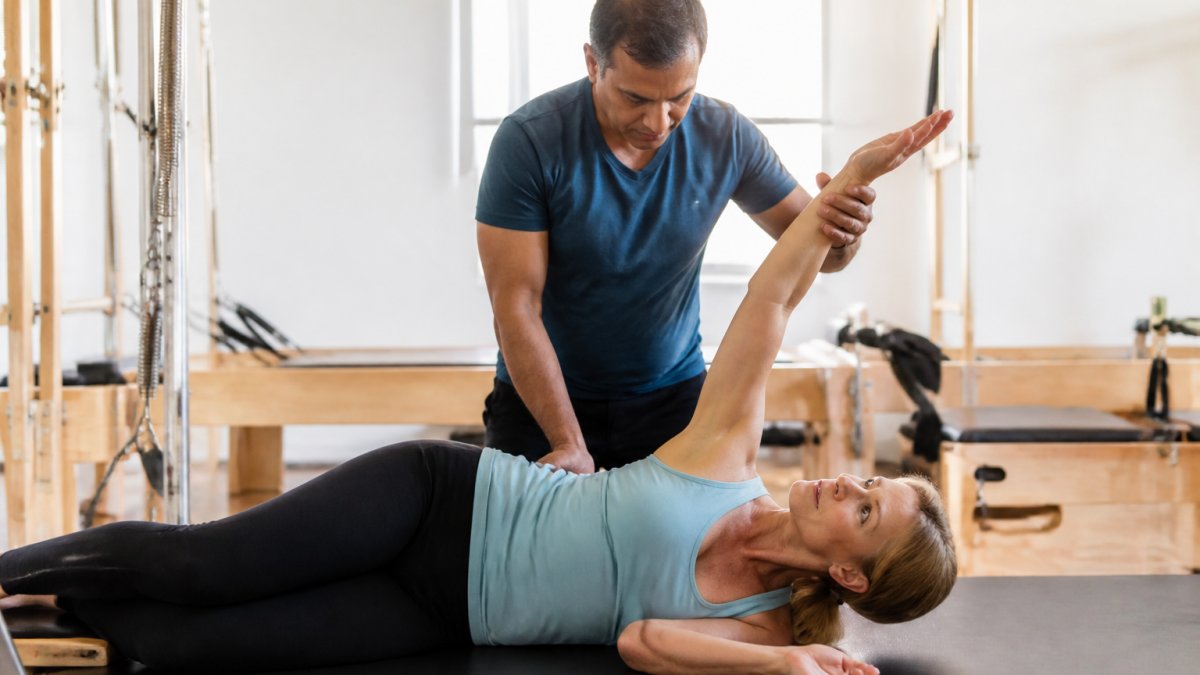
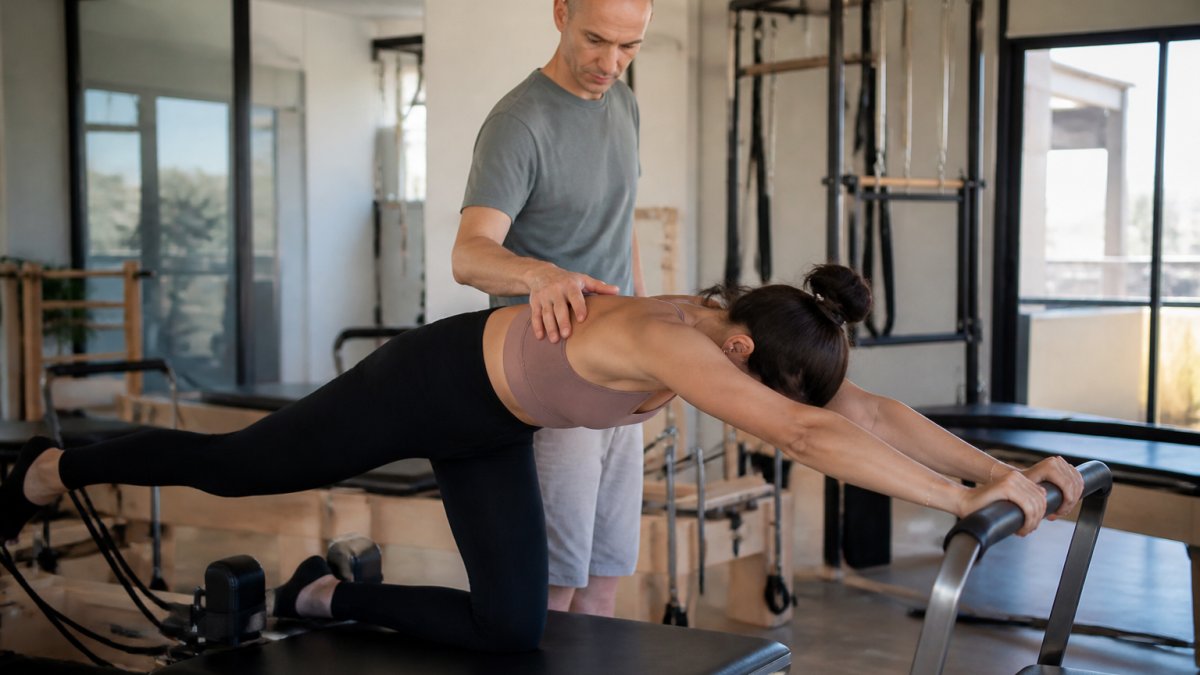
You might receive thoughtful instruction from a knowledgeable teacher who observes your movement, explains the purpose of an exercise and adapts it to your needs.
Or you might spend a session trying to keep pace with a routine while an instructor calls directions across a crowded room.
Both experiences are sold as Pilates.
After forty years of teaching, educating instructors and working with people seeking help with back pain, I believe we need to discuss that difference openly.
I call the erosion of the method Pilatecide.
Its most visible expression is Reformercide: keeping the reformer, the branding and the membership model while gradually removing the individual teaching that gives the apparatus its value.
The machine cannot teach you
The reformer is an extraordinary piece of equipment.
Its springs can assist movement or provide resistance. The moving carriage gives feedback. Changes in position, spring tension and range can make an exercise more accessible or more demanding.
But none of that happens intelligently by itself.
The reformer cannot recognise that you are holding your breath. It cannot ask why a movement hurts. It cannot decide that the exercise planned for today is unsuitable for the person standing in front of it.
That requires a teacher.
A row of reformers tells you that a business has invested in equipment. It tells you very little about the quality of instruction.
The most important piece of equipment in a Pilates studio is still the teacher’s ability to observe.
Doing the exercise is only the beginning
Consider a simple leg press.
You place your feet on the bar, push the carriage away and return.
From a distance, the movement appears straightforward. Yet a teacher has much to consider.
How are you distributing pressure through your feet? Can you control the return? Are you holding your breath? Are your knees moving comfortably? Is the chosen range appropriate? Does the spring setting help you understand the task, or encourage you to struggle through it?
Completing ten repetitions does not answer those questions.
You can finish every repetition without understanding what you were meant to learn.
That is why I distinguish between leading an exercise session and teaching movement. Both require skills, but they are different services.
The public deserves to understand which one it is paying for.
When keeping up replaces learning
There is nothing inherently wrong with music, energy or an enjoyable group atmosphere.
Pilates can flow. It can be dynamic, physically demanding and fun.
My concern begins when the pace becomes compulsory.
If you need another explanation, can the instructor give it? If you need a smaller movement, is that acceptable? If the class changes exercises before you understand the first one, what have you gained?
When the sequence keeps moving regardless of the people performing it, keeping up becomes the main achievement.
The carriage moves. The body works. The class finishes.
But has the participant learned anything useful about how they move?
A well-designed session should have an answer beyond “they felt the burn”.
A burn is a sensation, not a qualification
The fitness industry has trained people to look for immediate evidence of effort.
Sweat. Shaking. Soreness. Exhaustion.
Those sensations can accompany useful exercise. They cannot establish whether the teaching was good or whether the exercise suited you.
Burning thighs do not tell you how well you controlled the carriage. A sore abdomen does not prove you have learned to organise your trunk. Being exhausted does not necessarily mean you have progressed.
Some of the most valuable changes I see are quieter.
A client finally understands how to move without unnecessary neck effort. Someone learns to breathe throughout an exercise instead of bracing and holding. Another person becomes more confident getting down to the floor.
These changes may be less dramatic than a punishing class. They can matter far more to everyday life.
I want clients to leave with greater capacity and understanding, alongside whatever physical challenge is appropriate for them.
Your body is more complicated than “beginner”
A booking system may offer beginner, intermediate and advanced classes.
Those categories can help organise a timetable. They cannot replace a conversation.
One beginner may be healthy, strong and unfamiliar with the reformer. Another may have persistent pain, a recent operation, poor balance or considerable fear of movement.
Even two people with back pain may respond differently to the same exercise.
A health questionnaire is a starting point. Its value depends on whether someone reads it, asks relevant questions and acts on the answers.
Does the instructor know what you have disclosed? Can they modify the session? Will they suggest a different service when a general class is unsuitable?
A form that never changes what happens in the room offers limited practical protection.
The Pilates Association Australia distinguishes group instruction from comprehensive studio practice. Its published group scope identifies lower-risk participants as the population for whom group instructors are competent to design and deliver sessions. That distinction deserves attention whenever a general fitness class is promoted to people seeking help with injuries or complex health concerns.[1]
The word Pilates should not create an expectation of rehabilitation that a service is unequipped to provide.
Why I keep my groups small
At Body Contrology in Chatswood, I limit semi-private sessions to five clients.
That is a deliberate teaching decision.
I want time to observe people, hear their questions and change an exercise when needed. I want to see what happens after I give a cue.
Did the person understand it? Did it help? Did it create a different problem?
A teacher’s work continues after the instruction has been spoken.
Small numbers do not automatically guarantee excellent teaching. Equally, group classes can be well run. The essential issue is whether the instructor has the competence, time and practical opportunity to teach the participants.
As the room fills, attention is divided among more people. Equipment changes, demonstrations and transitions compete with observation.
Even an excellent instructor has limits.
Those limits belong in the discussion about class size.
What I mean by Stable Spine
Over four decades, I have developed the Menezes Method®, including my Stable Spine approach and B-Line® cueing.
In my teaching, Stable Spine emphasises lengthening and organising the spine while maintaining appropriate control. My B-Line® cue gives clients a practical point of attention when learning that control.
I also teach awareness of the Foot Tripod: how the foot contacts its supporting surface and contributes to the movement being performed.
These ideas become useful through explanation, practice and observation.
Repeating a cue across a room is only the beginning. The teacher must establish whether it produces a helpful response in that particular person.
One client may need different words. Another may need a demonstration, a change in position or a smaller movement.
The purpose is to help people move with understanding and confidence.
It is also important to be precise about what these approaches represent: they are elements of my teaching philosophy and practice. They should not be presented as a scientifically proven solution for every person or every back problem.
We should teach movement without teaching fear
Criticism of poor exercise instruction must also be responsible.
A rounded spine does not automatically mean damage. Hip flexors are essential muscles. Faster movement can be appropriate when someone has the capacity and control for it.
The question is whether the task suits the person, their symptoms, their experience and their current ability.
Someone may need a reduced range today and a greater range later. An exercise that works well for one client may need substantial modification for another.
That is where professional judgement matters.
Good teaching helps people build capacity. It also recognises when to modify, stop or recommend assessment by an appropriate health professional.
We do clients no favours by encouraging them to push through everything. We also do them no favours by making them afraid of ordinary movement.
My concerns extend beyond the studio
I have acted as an expert witness in an injury case involving a group reformer class. I have also been approached on other occasions for expert input.
That experience has reinforced the importance I place on instructor competence, appropriate supervision and the ability to adapt exercise to the individual.
An individual case cannot establish that group reformer classes generally cause injuries.
It can, however, remind us that the decisions made in an exercise environment have consequences for real people.
Questions about screening, equipment use, progression and supervision deserve serious attention before something goes wrong.
Instructor education must develop judgement
The growth of Pilates creates demand for instructors.
That makes the quality of education especially important.
It would be inaccurate to claim that every franchise relies on a weekend qualification. Some advertise comprehensive programmes involving hundreds of hours.[2]
The more useful questions concern what those hours contain.
How much supervised teaching takes place? How is practical competence assessed? Do trainees observe different bodies and abilities? Can they explain why an exercise is appropriate? Can they recognise when it needs to change?
Knowing a repertoire is valuable. Applying it responsibly requires more.
Instructors need anatomy they can use, practical feedback and continued mentorship. They need opportunities to develop judgement beyond the relatively predictable circumstances of a course demonstration.
New teachers deserve that support. Clients deserve instructors whose responsibilities match their training and experience.
When the business model starts making the decisions
I understand the economics of running a studio. I have been doing it for forty years.
Rent, staff, equipment and education must be paid for. A sustainable business matters.
The concern is what happens when financial targets begin determining the teaching.
More reformers can create more places to sell. Standardised routines can simplify delivery. A fixed timetable can improve efficiency.
Each decision should come with another question: can we still provide the service we promise?
A programme template can support a teacher. It becomes a problem when the teacher cannot depart from it despite what a participant needs.
The real test comes when an instructor says:
“This person needs a different exercise.”
“This client would be better served in a smaller session.”
“We need more time before progressing.”
Does the business support that judgement?
A responsible studio makes room for those decisions.
What should you ask before booking?
You do not need an anatomy qualification to choose a studio. You can ask clear, practical questions:
- What training has my instructor completed?
- How do you introduce someone who is new to the reformer?
- Who reviews the health information I provide?
- What happens if an exercise causes pain or I cannot keep up?
- Can the instructor adapt exercises during the class?
- What do you recommend if a group class does not suit my needs?
Listen to the explanations.
Look for someone who is comfortable discussing the limits of their service and willing to recommend another option.
A teacher’s confidence should include the ability to say, “This needs a different approach.”
The legacy is still ours to protect
The reformer boom has introduced many people to movement. That is an opportunity.
I want those people to experience teaching that earns their trust and helps them become more capable.
My concern is that Pilates could become so loosely defined that its name tells consumers almost nothing about the instruction, supervision or experience they can expect.
That is what I mean by Pilatecide.
It happens gradually: when observation becomes expendable, when every client receives the same answer, and when the appearance of exercise matters more than its purpose.
Forty years ago, I had to explain why Pilates deserved a place in Australia.
Today, I am asking the industry to protect what made it worth introducing.
A room full of moving carriages proves that the equipment is being used.
The legacy survives only if the method is being taught.
Have you experienced a Pilates class where you felt carefully taught—or one where you felt you simply had to keep up? Share your experience in the comments, without naming individual instructors or studios.
Subscribe to Menezes Method for more discussions on Pilates, back pain and better movement, informed by forty years of teaching.
References
- Pilates Association Australia — Scope of Practice
https://www.pilates.org.au/membership/scope-of-practice/ - Club Pilates Australia — Teacher Training
https://lp.clubpilates.com.au/teacher-training