Table of Contents
- What a Pilates Studio Actually Offers (And What It Doesn’t)
- Clinical Pilates vs Fitness Pilates: What’s the Real Difference?
- Pilates for Back Pain: Why Some Studios Get Better Results
- Pilates Instructor Qualifications in Australia: What to Check
- Class Types, Studio Capacity and Booking Policies Compared
- Membership Terms, Pricing Structures and No Lock-In Contracts
- Conclusion: Matching a Studio to Your Body, Not Just Your Schedule
- Frequently Asked Questions
Last Updated: October 4, 2026
What a Pilates Studio Actually Offers (And What It Doesn’t)
A pilates studio is a dedicated space built around specialised apparatus, small class sizes and instructors trained to teach controlled movement rather than general fitness. A gym with mats in the corner is not the same thing as a pilates studio, and the difference matters if you are dealing with back pain or a longstanding injury.
What a pilates studio does offer is assessment, apparatus and individual attention. What it does not offer is a guaranteed fix. No studio can promise that, and any provider that does should worry you.
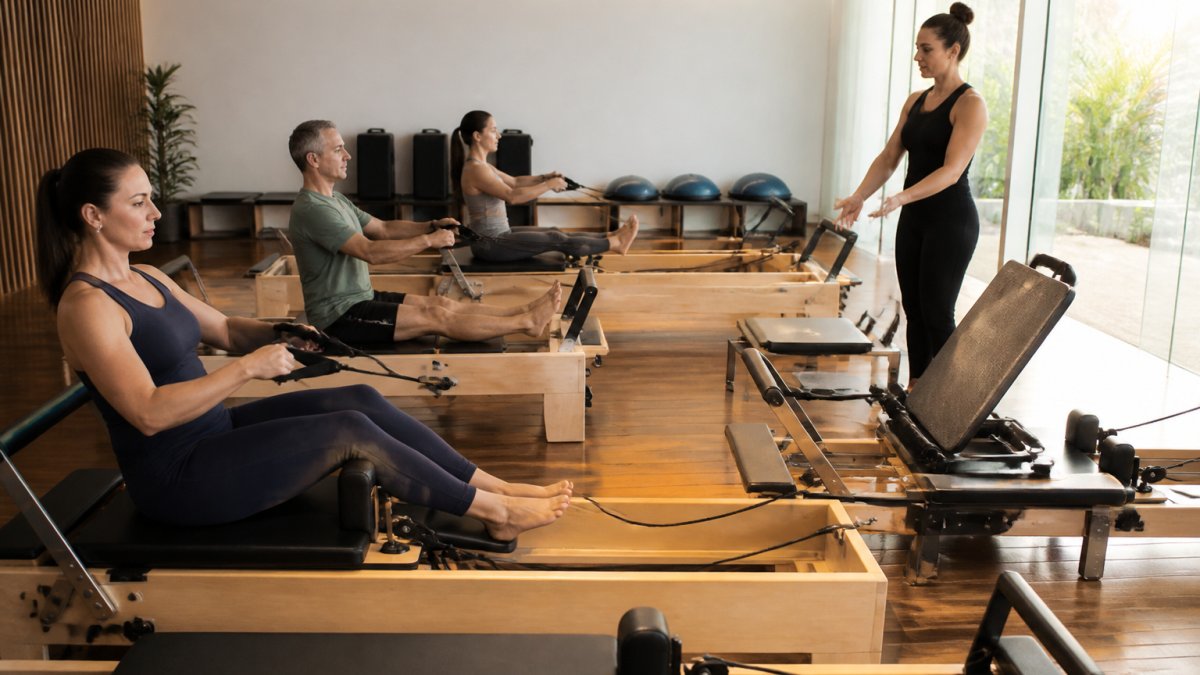
The equipment you’ll find on the floor
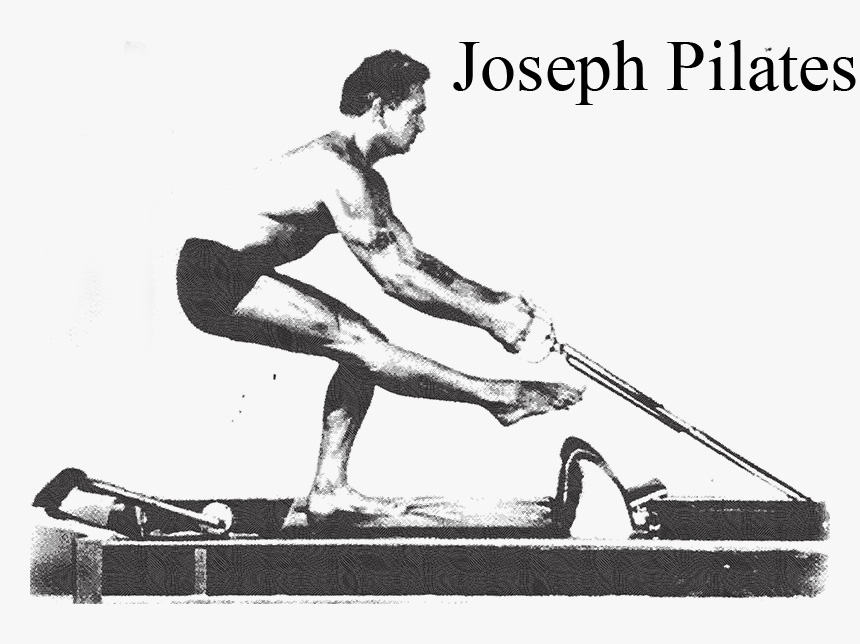
The reformer is the centrepiece of most studios. It is a sliding carriage on a sprung frame, and it lets an instructor adjust resistance and support to suit the person in front of them.
Other common apparatus includes:
- Cadillac or trapeze table for supported, spring-assisted work
- Wunda chair for seated and standing control exercises
- Barrels for spinal extension and alignment work
- Jump board for low-impact plyometric training
- Small props such as rings, bands and balls
The apparatus is the point. It gives an instructor options that a mat class simply cannot, which is why studios can modify exercises for people returning from injury rather than asking them to keep up.
Clinical Pilates vs Fitness Pilates: What’s the Real Difference?
Both have a place. If you are healthy and want to move more, a fitness class is a reasonable choice. If you have a diagnosed condition, a history of disc problems or ongoing pain, the assessment step is what separates a useful session from a risky one.
Many businesses find that the confusion arises because the word “clinical” is not protected. Any studio can use it. What you can check is the instructor’s registration and whether a proper assessment happens before you join a class.
Pilates for Back Pain: Why Some Studios Get Better Results
Pilates for back pain works when the exercise selection is matched to the individual, not when it is copied from a template. That single factor explains most of the difference in outcomes between studios.
Two people can walk in with the same diagnosis and need completely different programs. One may need to learn to stop gripping through the lower back.
At Menezes Method Pilates, we use a biomechanics-focused approach built on the B-Line and Stable Spine concepts rather than the traditional navel-to-spine cue.
Discomfort that sharpens, radiates down a leg or appears in a new place is a signal to stop and get it assessed. Ignoring it can turn a manageable problem into a long one.
How assessment changes the exercise selection
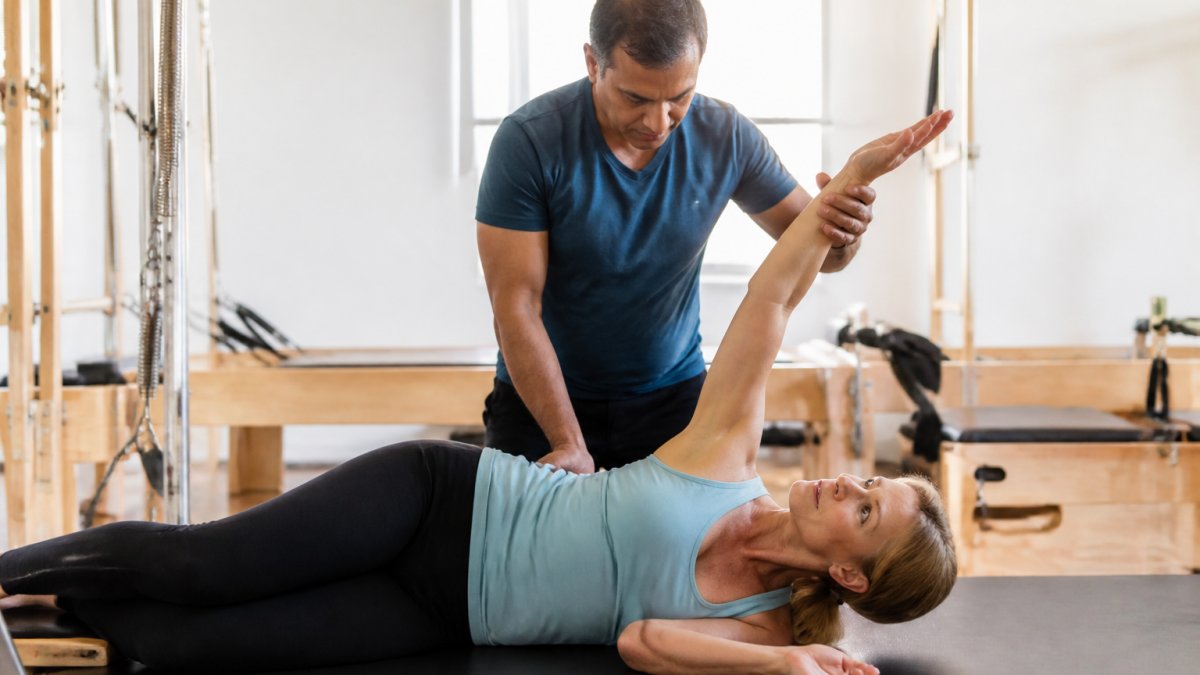
Assessment is where a studio earns its fee. It typically covers how you sit, stand, bend and walk, plus how your breathing and core activation behave under load.
That information changes everything downstream:
| What assessment reveals | How the program changes | Why it matters |
|---|---|---|
| Poor spinal position under load | Slower progression, more support | Reduces strain on the lower back |
| Weak deep core activation | Breathing and control work first | Builds stability before strength |
| Restricted hip or shoulder range | Modified range and props | Prevents compensation patterns |
| Habitual postural strain | Daily habit coaching | Carries results beyond the studio |
Without that step, an instructor is guessing. With it, they can progress or regress an exercise on any given day.
Gabrielle Patterson, a client, put it simply: ‘Allan is incredibly knowledgeable and passionate about his work.’
Pilates Instructor Qualifications in Australia: What to Check
Instructor qualifications vary widely, so verification is your job. There is no single national licence that makes someone a pilates instructor, which means the certificate on the wall tells you less than you might expect. What matters is the pathway the instructor took, because the two main routes produce very different teachers.
The two training pathways
Studio or comprehensive training is the traditional route.
Mat-only or short-course certification is faster and cheaper. It covers mat repertoire and sometimes a single apparatus, often over a weekend or a few weeks, with limited supervised teaching hours.
A common pattern is that the certificate names a training provider rather than a national standard, because there is no single government-issued pilates licence. That is why the questions below matter more than the framed certificate.
What to ask before you commit
- Which training pathway did the instructor complete, comprehensive studio training or a short course?
- How many supervised teaching hours were required before certification?
- Does the instructor hold a health or allied health qualification, such as physiotherapy?
- Do they have specific training in rehabilitation or back pain?
- Are they insured, and can they show you the certificate of currency?
- Will you be assessed before joining a group class?
A good studio will answer all of these without hesitation. If the answers get vague, that tells you something. The distinction between a comprehensively trained instructor and a weekend-certified one is usually visible in how they programme a session, not in how they describe themselves.
BOOK YOUR FREE 15 MINUTE CONSULTATION →
Why the health qualification matters for some clients
If you have a diagnosed condition, a history of disc problems or ongoing pain, the assessment step is what separates a useful session from a risky one. An instructor with a physiotherapy background can screen for red flags, interpret a referral and communicate with your treating practitioner.
If you have a diagnosed condition, healthdirect’s guidance on finding a physiotherapist is a useful starting point for understanding what a qualified practitioner looks like.
Ask the studio which instructor will actually take your class, not just who owns the business. Qualifications are held by individuals, and a studio’s marketing can be stronger than the credentials of the person standing in front of you.
Class Types, Studio Capacity and Booking Policies Compared
Class format determines how much attention you actually receive. That is the trade-off nobody puts on the pricing page. But format is only half the decision, the apparatus in the room changes what is possible in a session, and most comparison guides ignore it entirely.
Classical apparatus versus modern reformer machines
Neither is better in the abstract. Classical equipment rewards precision and repetition of a known sequence. Modern equipment rewards adaptability, which is why it is common in studios working with rehabilitation clients.
Beyond the reformer, the apparatus on the floor tells you what a studio can actually offer:
- Cadillac or trapeze table for supported, spring-assisted work and traction
- Wunda chair for seated and standing control exercises
- Barrels for spinal extension and alignment work
- Jump board for low-impact plyometric training
- Small props such as rings, bands and balls
A studio with only reformers can still deliver excellent general conditioning. A studio with the full apparatus range has more options when your needs change, which matters if you are managing a long-term issue rather than chasing general fitness.
Class formats and what you actually get
| Class type | Typical capacity | Best for | Trade-off |
|---|---|---|---|
| Private sessions | 1 person | Rehab, specific goals | Highest cost per session |
| Duet or small group | 2-4 people | Personalised training with a partner | Limited scheduling options |
| Reformer group class | 6-12 people | General strength and mobility | Less individual correction |
| Mat class | 10-20 people | Flexibility, low-impact exercise | No apparatus support |
Small group classes sit in the middle, and for most people they are the sensible starting point. You get enough attention to be corrected, without paying private session rates. If you are new to the apparatus, ask whether the studio runs a beginner induction before you join a general class, being the only person who has never seen a reformer is not a good first session.
Booking and cancellation policies
Booking and cancellation policies matter more than people expect. Ask how far ahead you need to cancel, whether late cancellations are charged, and how waitlists work. Studios with tight capacity often have strict rules, and you want to know them before you are caught out.
The two questions that separate a studio built for you from one that is not: which apparatus system do they use, and can the instructor regress an exercise on the day you need it. Everything else, pricing, location, timetable, is easier to change than a method that does not fit your body.
Membership Terms, Pricing Structures and No Lock-In Contracts
Membership terms are where studios differ most, and where you should read carefully. Pricing depends on class type, frequency and commitment length, so we would rather point you to current rates than quote a figure that may have changed.
The main structures you will see:
- Casual classes for people testing whether they enjoy it
- Class packs of five or ten, usually with an expiry window
- Ongoing memberships billed weekly or fortnightly
- Introductory offers for new members, often a discounted first few weeks
No lock-in contracts are increasingly common and worth prioritising. A studio confident in its teaching does not need to trap you in a twelve-month agreement. Ask what notice period applies and whether unused classes carry over.
Ask what happens if you get injured or need surgery mid-membership. Studios with fair terms will pause or credit your membership rather than charging you for classes you cannot attend. Get the answer in writing before you sign.
If you want to understand how personalised training differs from group exercise before committing, the Australian Institute of Health and Welfare’s data on musculoskeletal conditions shows how common back and joint problems are, and why individual assessment is worth asking about.
Conclusion: Matching a Studio to Your Body, Not Just Your Schedule
The studio closest to your office is rarely the best one for a back problem. Proximity is convenient, but convenience does not correct a movement pattern.
If you have been managing pain for years, or you have tried group classes that did not help, the missing piece is usually assessment. Zang Angi, one of our clients, described the change this way: ‘After three months, I feel noticeably stronger, my core stability has improved, and my lower back pain has significantly reduced.’
Frequently Asked Questions
What should I look for when choosing a Pilates studio?
Look at four things: whether the instructor holds a recognised qualification, whether you get an individual assessment before joining a class, how many people share the equipment, and what the cancellation and membership terms actually say. A studio that assesses how you move before prescribing exercises will usually suit people with back pain, old injuries or desk-related stiffness better than one that runs identical routines for everyone in the room.
What is the difference between clinical Pilates and general fitness Pilates?
Clinical Pilates starts with an assessment of your movement, history and symptoms, then builds a program around what your body needs. Fitness Pilates follows a set class plan designed to build general strength and stamina. If you have recurring back, hip or shoulder pain, the assessment-led approach matters more than the label on the door, so ask directly how the first session is structured before you book.
What qualifications should a Pilates instructor hold in Australia?
Pilates is not a registered profession nationally, so qualifications vary. Ask whether the instructor completed a comprehensive studio-level training course, whether that training covered anatomy and rehabilitation, and how many hours of supervised teaching they finished. Instructors working with injured clients often also hold qualifications in physiotherapy, exercise physiology or similar fields. A studio that answers these questions clearly is usually the one worth your money.
Is a Pilates studio membership worth it for back pain?
It depends on whether the studio assesses you individually and progresses your program over time. Group fitness classes with the same routine for everyone rarely resolve long-standing back pain. Programs built around your movement patterns, with exercises modified as you improve, tend to deliver better results. Ask about introductory offers and short trial periods so you can judge the fit before committing to a longer membership term.
Chronic back pain does not resolve by finding a class that fits your calendar. It resolves when someone assesses how you move and builds a program around it. Menezes Method Pilates has been teaching since 1986, and our approach uses individual movement assessment, the B-Line and Stable Spine concepts, and the SpinalCore system to address core control, spinal alignment and posture. Book your free 15 minute consultation with Menezes Method Pilates and find out what is actually driving your pain.