Last Updated: November 15, 2026
Quick Summary
Clinical pilates for rotator cuff injuries is a graded, individualised exercise approach that restores shoulder control, scapular stability and pain-free movement. It cannot heal a full-thickness tear or replace surgery, but it can improve how the shoulder moves and tolerates load.
- Pilates works best alongside medical care, not as a replacement for it.
- Staged exercise progresses according to irritability, not a fixed calendar.
- Stop and seek medical assessment for radiating pain, numbness, weakness or night pain.
- Rehabilitation after rotator cuff surgery follows the surgeon’s protocol first.
Table of Contents
- What Clinical Pilates Can and Cannot Do for a Rotator Cuff Injury
- Rotator Cuff Anatomy and Why Shoulder Control Matters
- Screening and Red Flags Before You Start
- Pilates for Shoulder Impingement: Stage-Based Exercise Principles
- Pilates for Rotator Cuff Tear: Modifications and Safety Limits
- Rotator Cuff Rehabilitation Exercises: Progression, Regressions and Pain Monitoring
- Rotator Cuff Surgery Rehabilitation: Working With Your Surgical Team
- Booking Your Free 15 Minute Consultation
- Frequently Asked Questions
What Clinical Pilates Can and Cannot Do for a Rotator Cuff Injury
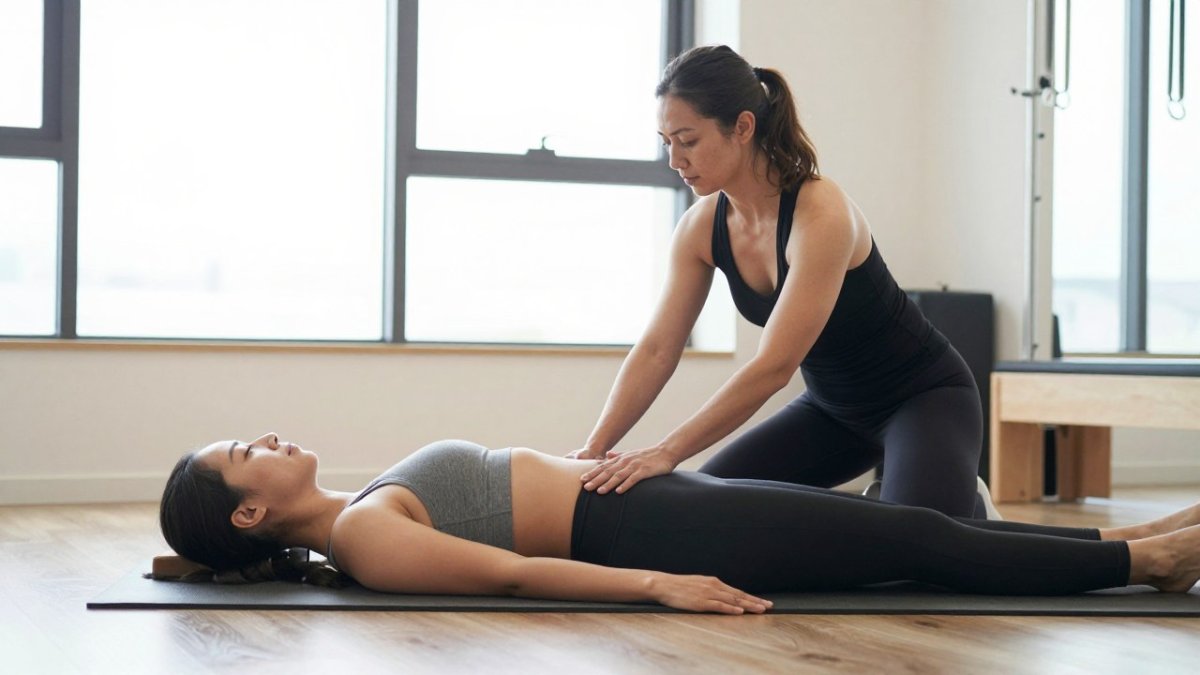
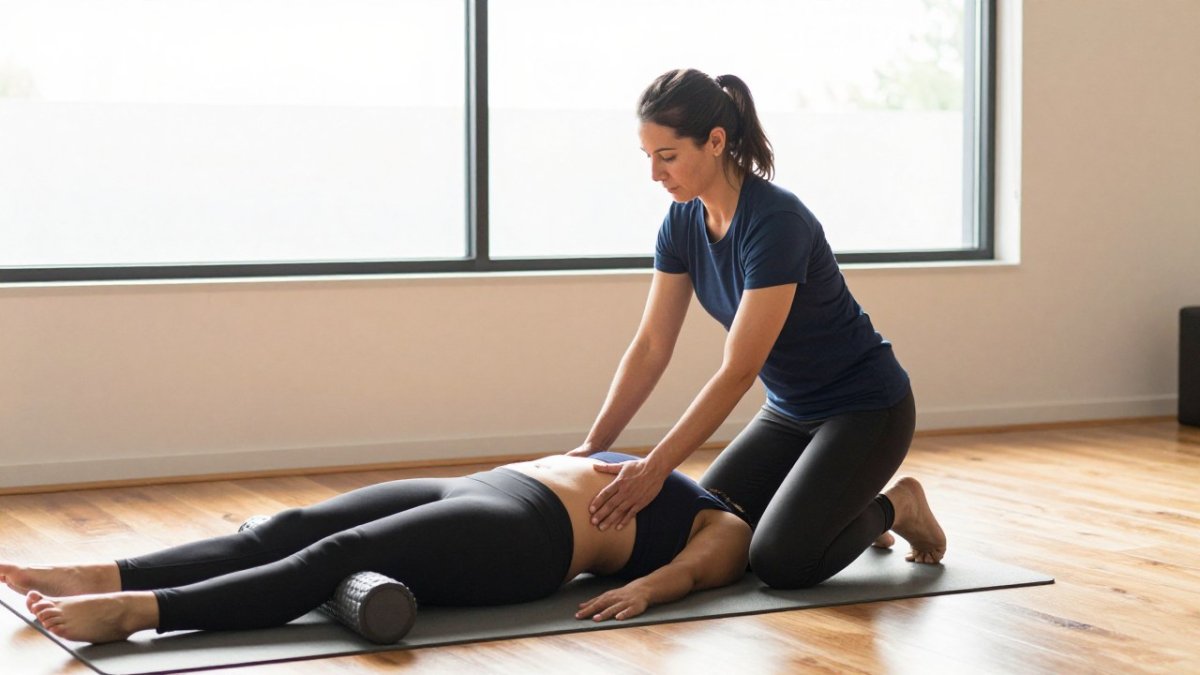
Clinical pilates for rotator cuff injuries is a graded, individualised exercise approach that aims to restore shoulder control, scapular stability and pain-free movement in people living with rotator cuff injuries. It cannot heal a full-thickness tear or replace surgery, but it can improve how the shoulder moves and tolerates load. (Source: shared decision-making between patient and clinician)
At Menezes Method Pilates, we have taught movement for decades, and we see the same pattern repeatedly. People arrive with a diagnosis and a list of exercises, but no understanding of how their shoulder actually behaves under load.
That gap matters. The shoulder is the most mobile joint in the body, and it depends on muscular control rather than bony stability. When that control breaks down, the rotator cuff takes the strain.
So what can clinical pilates realistically do?
- Improve scapular stabilisers and shoulder stability
- Restore range of motion gradually
- Reduce pain through better movement patterns
- Rebuild tolerance to daily load
- Support post-operative rehabilitation under your surgeon’s guidance
And what it cannot do?
- Repair a torn tendon
- Replace medical assessment or imaging
- Guarantee a timeline for recovery
The Australian Commission on Safety and Quality in Health Care notes that shared decision-making between patient and clinician produces better outcomes. That principle applies here. Your exercise program should sit alongside your medical care, not replace it.
Rotator Cuff Anatomy and Why Shoulder Control Matters
The rotator cuff is a group of four muscles and their tendons that wrap around the shoulder joint. They hold the head of the humerus in the socket while the larger muscles move the arm.
Those four muscles are the supraspinatus, infraspinatus, teres minor and subscapularis. Together they stabilise the shoulder through range of motion.
Here is why control matters more than raw strength. The scapula, or shoulder blade, sits on the ribcage and provides the moving base for the arm. If the scapular stabilisers do not hold it well, the rotator cuff has to work harder to keep the joint centred.
Over time, that extra load contributes to shoulder impingement and tendonitis.
A common mistake we see is people strengthening the big movers, the pectorals and lats, while ignoring the small stabilisers. The shoulder looks strong but behaves poorly.
In practice, this means:
- The scapula should rotate and glide as the arm lifts
- The collarbones stay wide, not pinched
- The ribcage stays stacked over the pelvis
- Breathing continues throughout the movement
When those four things happen together, the rotator cuff has a stable base to work from.
Screening and Red Flags Before You Start
Before any exercise program begins, screening matters. A movement screen is not a diagnosis, but it tells you where control breaks down and whether exercise is appropriate at all.
Stop and seek medical assessment if you have:
- Significant pain radiating down the arm
- Numbness, tingling or weakness in the hand or arm
- Pain that wakes you at night and does not settle
- A recent fall or trauma to the shoulder
- Fever, unexplained swelling or redness
- A known full-thickness tear awaiting surgical review
These symptoms need a qualified professional, not a Pilates class.
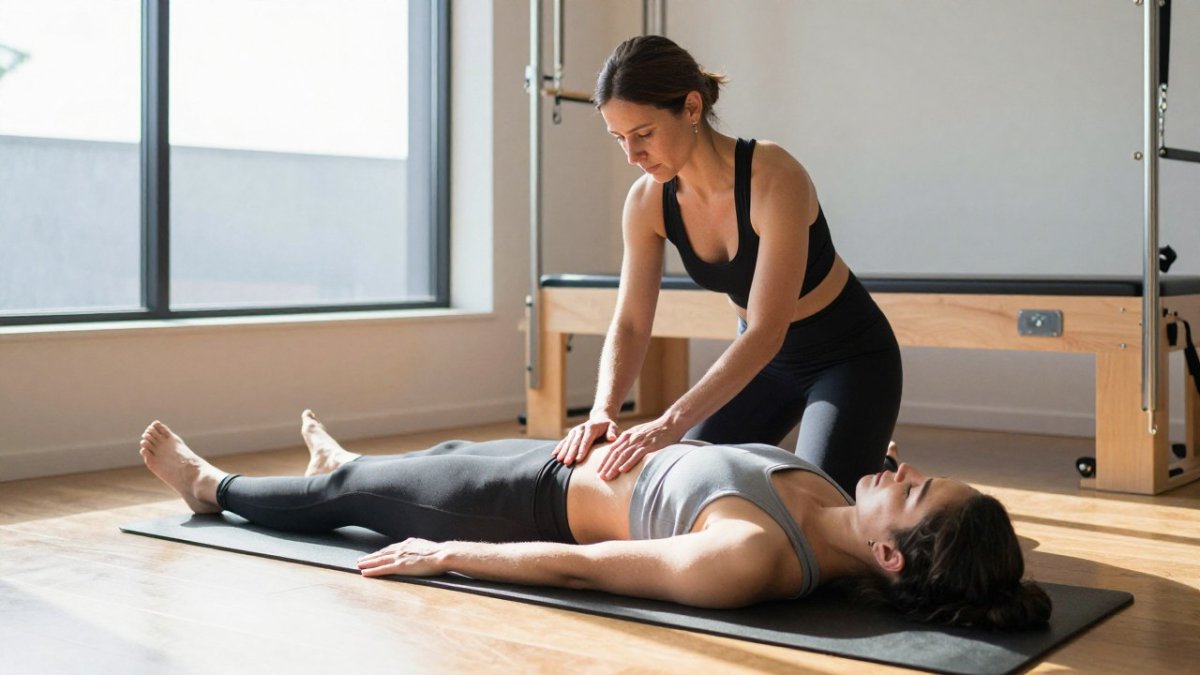
For everyone else, a simple screen helps set a baseline. We assess shoulder mobility, scapular control and posture, then watch how the shoulder behaves through a few basic movements.
The Therapeutic Goods Administration regulates medical devices and therapeutic claims, which is a useful reminder that exercise advice should be honest about what it can and cannot achieve.
Pilates for Shoulder Impingement: Stage-Based Exercise Principles
Pilates for shoulder impingement works best when it is staged, and the staging should be driven by irritability rather than by a calendar. Readers who want a fuller explanation of how Pilates addresses this condition can read why Menezes Pilates works for shoulder impingement. Jumping straight to strengthening on an irritated shoulder usually makes things worse.
A practical way to classify irritability is to look at how quickly symptoms settle after provocation. If pain settles within minutes and does not linger into the next day, the shoulder is usually ready for controlled loading. If pain lingers for hours or disturbs sleep, the shoulder is highly irritable and needs settling work first.
Stage one, settle irritation. The goal is gentle range of motion, breathing and scapular awareness without provoking pain. Typical dosage is two to three sets of five to eight slow repetitions, once or twice daily, staying well inside the comfortable range.
Stage two, build control. Here you load the scapular stabilisers and rotator cuff with low resistance and precise movement. Dosage moves to three sets of eight to twelve repetitions with a light band or body weight, alternate days.
Stage three, build capacity. Load increases and movements become more functional, including carries, pressing patterns and overhead reach where tolerated. Dosage moves to three sets of ten to fifteen repetitions or time-based holds, two to three times weekly. Progression criterion: full-range movement without compensation and no more than mild soreness the following morning.
A useful rule we teach is simple. If pain rises above a mild level during exercise and stays raised the next day, the load was too much.
Different rotator cuff conditions need different choices within these stages. Tendinopathy usually tolerates gradual loading well and responds to slow, controlled resistance. Partial tears often behave like tendinopathy but need closer monitoring of range. Impingement-like symptoms frequently improve when scapular upward rotation and ribcage position are addressed before rotator cuff loading.
For readers who want shoulder-specific detail on graded movement and what to avoid, our page on why Menezes Method Pilates works for shoulder impingement explains the approach in more depth. There is also a fuller article on the same topic if you want to read further.
Pilates for Rotator Cuff Tear: Modifications and Safety Limits
A rotator cuff tear changes the rules. Partial tears often respond well to graded exercise. Full-thickness tears may need surgical opinion first.
Modifications matter here. We avoid:
- Overhead loading in early stages
- End-range stretching that provokes pain
- Heavy resistance through a painful arc
- Positions that compress the shoulder joint
Instead, we work in a comfortable range and progress slowly. Mat Pilates and reformer Pilates both adapt well, because springs and body weight allow precise loading.
The Australian Physiotherapy Association recommends that rehabilitation be tailored to the individual rather than applied as a standard protocol. That matches what we see in practice. Two people with the same scan report can need very different programs.
Rotator Cuff Rehabilitation Exercises: Progression, Regressions and Pain Monitoring
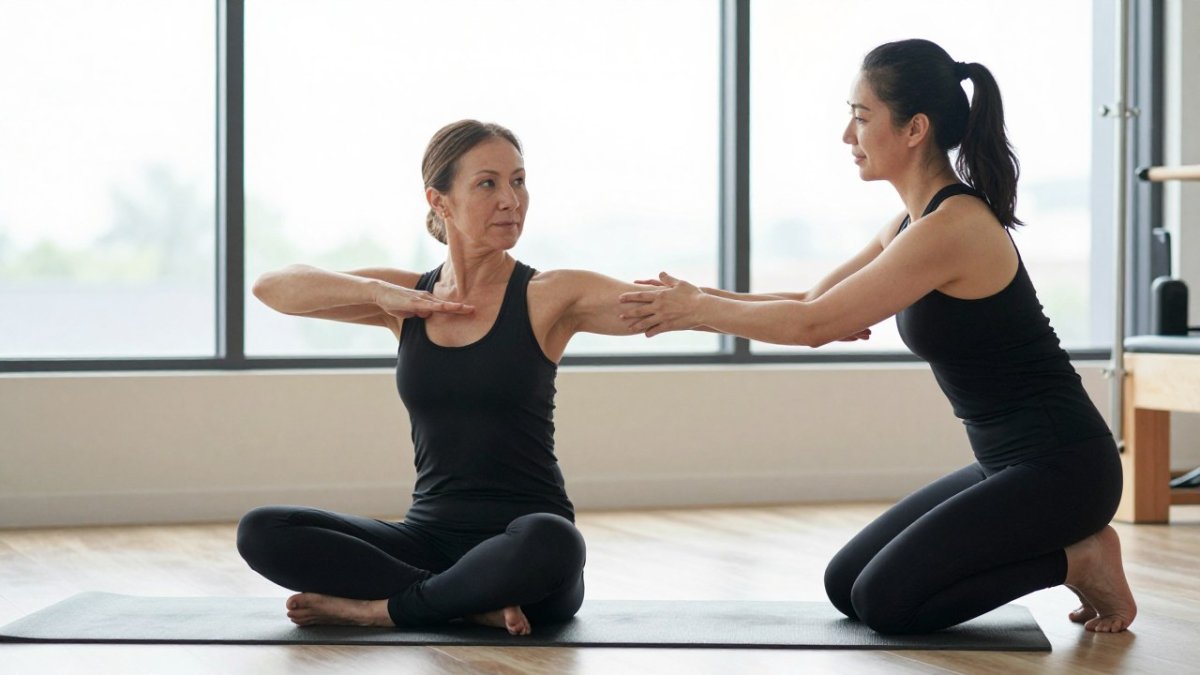
Rotator cuff rehabilitation exercises follow a simple principle. Start where control is good, then add load only when the current level is clean. Below are the exercises we use most often, with setup, cues, dosage, common errors and regressions so you can apply them safely.
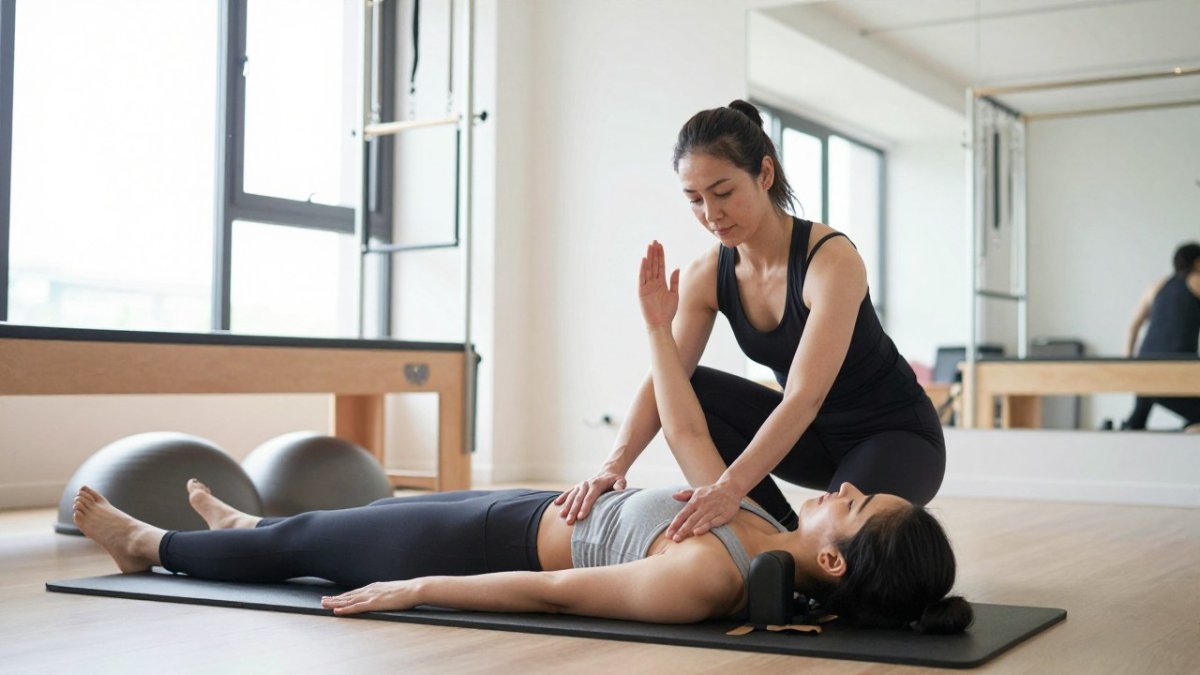
1. Supine 90/90 breathing with scapular set. Lie on your back with knees bent and feet on the mat, arms resting at 90 degrees at the shoulder. Breathe into the lower ribs and feel the shoulder blades settle onto the ribcage without pinching.
2. Side-lying scapular slide. Lie on the unaffected side with the affected arm supported on a pillow at shoulder height. Gently draw the shoulder blade down and back without shrugging. Dosage: two sets of eight slow repetitions.
3. Seated scapular clock. Sit tall with arms relaxed. Imagine the shoulder blade as a clock face and move it gently through small positions, avoiding shrugging. Dosage: one set of ten in each direction. Common error: moving the arm rather than the shoulder blade.
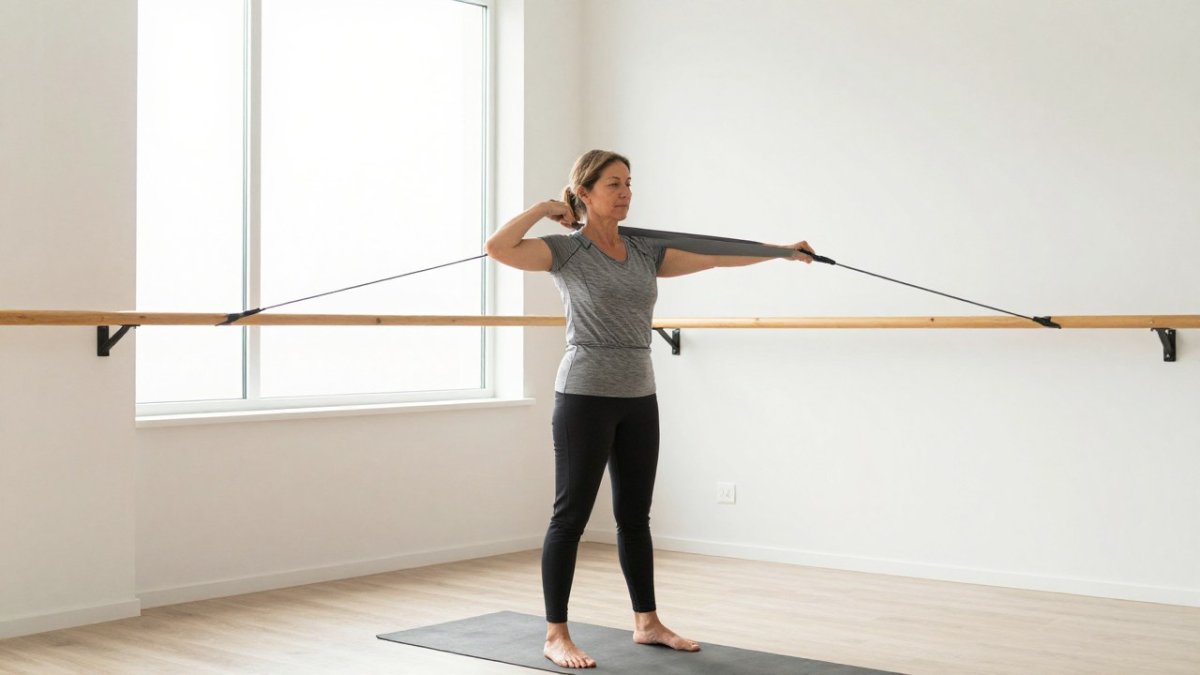
4. Band external rotation at side. Stand with a light band anchored at elbow height, elbow bent to 90 degrees and tucked to the ribs. Rotate the forearm outward without letting the elbow drift. Dosage: three sets of ten, alternate days.
5. Wall slide with scapular upward rotation. Stand facing a wall with forearms on the wall at shoulder height. Slide the forearms upward while keeping the ribcage stacked and the shoulder blades rotating upward. Dosage: two sets of eight.
6. Loaded carry. Hold a comfortable weight in one hand and walk tall, keeping the ribcage over the pelvis and breathing normally. Dosage: three 20-metre walks per side. Common error: leaning away from the weight or holding the breath.
Pain monitoring is the part most people skip. Use a simple 0-10 scale. Mild discomfort up to 3 out of 10 during exercise is generally acceptable if it settles within an hour. Pain that climbs and stays raised means back off.
Watch out: pushing through sharp pain because “no pain, no gain” is the fastest way to flare an irritated shoulder and lose weeks of progress.
The evidence base here is modest.
Rotator Cuff Surgery Rehabilitation: Working With Your Surgical Team
Post-operative rehabilitation follows your surgeon’s protocol, not a generic program. Timelines vary by procedure, tissue quality and your own healing.
Your role in post-rehab exercise is to follow the staged guidance you are given and report anything that does not feel right.
What we typically see:
- Early stage focuses on protected range of motion
- Middle stage rebuilds scapular control and light strengthening
- Later stage returns to functional loading
Pilates fits well here because it allows precise exercise prescription and easy modification. Reformer work, in particular, lets us control load finely through range of motion.
Never progress faster than your surgical team advises. If you are unsure whether a movement is appropriate, ask before you try it.
Booking Your Free 15 Minute Consultation
Recurring shoulder pain rarely resolves by guessing which exercise to do next. It resolves when someone assesses how you move and builds a program around what they find.
If you want to understand the practitioner behind the method, you can read more about Allan Menezes and his background in Pilates education. Our pricing page explains what the first private session involves, including bringing recent X-rays or scan reports. When you are ready to commit, you can register for a session directly.
Shoulder rehabilitation asks for patience and precision, and most people never get a program built around their own movement patterns. At Menezes Method Pilates, we assess how you move, then use the B-Line, Stable Spine and SpinalCore system to rebuild control from the ground up. Sessions are individualised, so exercises are modified to your shoulder rather than a group template. Get started with Menezes Method Pilates and build shoulder control that holds up in daily life.
Frequently Asked Questions
Can clinical Pilates help with a rotator cuff injury?
Clinical Pilates may support shoulder rehabilitation by improving trunk control, scapular stability and movement quality, which can contribute to comfort during daily tasks. It is not a cure, and outcomes vary with the type and stage of the injury. A qualified health professional should assess your shoulder first, and exercise choices should be matched to your symptoms and goals rather than generic programs.
What Pilates exercises are suitable for rotator cuff injuries?
Suitable exercises are usually low-load, pain-monitored movements that build control through the shoulder blade and trunk, such as supported arm movements in kneeling or seated positions. Appropriate choices depend on your diagnosis, pain levels and rehabilitation stage. Start with the simplest version, avoid movements that provoke sharp pain, and review your program with a qualified professional before progressing.
Is Pilates safe with a rotator cuff tear?
Pilates can be used with a rotator cuff tear only after a qualified health professional has assessed the tear and confirmed that exercise is appropriate. Some movements may need to be avoided or modified, particularly overhead loading. Stop any exercise that causes sharp, increasing or lingering pain, and seek advice promptly if you notice new weakness or numbness.
When should you stop exercising with shoulder pain?
Stop and seek advice if shoulder pain is sharp, worsens during or after exercise, lasts well beyond the session, or is accompanied by numbness, tingling, limb weakness, night pain you cannot settle, fever or recent trauma. These signs warrant professional assessment before you continue. Mild discomfort that settles within a day is commonly used as a guide, but your health professional should set the limits for your case.