Last Updated: November 28, 2026
Quick Summary
Pelvic stability exercises after injury help you practise keeping your pelvis steady while your legs and trunk move. Start with easy movements such as breathing, pelvic tilts and heel slides, and seek advice from a qualified health professional if pain or other symptoms concern you.
- Pelvic stability is the ability to control the pelvis while the body breathes and moves.
- Use gentle abdominal engagement and keep breathing rather than bracing hard and holding your breath.
- Stop if an exercise causes sharp or worsening pain.
- Seek prompt medical advice before exercising if you have new numbness, tingling or weakness in a limb.
Table of Contents
- How Do Pelvic Stability Exercises Help After an Injury?
- When Is It Safe to Start Pelvic Stability Exercises?
- Supine Pelvic Stability Exercises to Begin With
- Hip and Glute Strengthening Exercises for Pelvic Control
- Single-Leg Balance Exercises for Pelvic Stability
- Pelvic Stability Exercise Progression and Dosage
- Booking Your Assessment Before Your First Session
- Frequently Asked Questions
7 Pelvic Stability Exercises to Start After Injury (Source: Australian Physiotherapy Association’s clinical guidelines)
How Do Pelvic Stability Exercises Help After an Injury?
Pelvic stability exercises after injury can help you practise keeping your pelvis steady as your legs and trunk move. At Menezes Method Pilates, we focus on control, breathing and movement quality rather than simply doing more repetitions. Start with easy movements, and seek advice from a qualified health professional if pain or other symptoms concern you.
Pelvic stability is the ability to control the pelvis while the body breathes and moves. It matters during everyday tasks such as walking, bending and standing from a chair. The goal is not to keep the pelvis rigid; it is to limit unwanted movement while allowing normal motion.
Pelvic stability exercises after injury should match your current symptoms and the type of injury. A movement that suits one person may not suit another.
A common mistake is to brace hard and hold your breath. Instead, use a gentle abdominal engagement and keep breathing. Stop if an exercise causes sharp or worsening pain.
When Is It Safe to Start Pelvic Stability Exercises?
Pelvic stability exercises after injury are usually best started when you can move gently without a clear increase in symptoms, but the right timing depends on what was injured. A pelvic fracture, a soft-tissue strain, pregnancy-related pelvic girdle pain and recovery after surgery each follow a different path, and a single routine does not suit all of them.
There is no universal start date. What matters is whether the tissue has had enough time to settle and whether a clinician has cleared you for the kind of movement you plan to do.
Matching the Start Point to the Injury
- Pelvic fracture: Weight-bearing and loading are usually guided by a medical team, and exercises often begin only once fracture healing has been confirmed. Follow the treating team’s advice on weight-bearing status before you try any standing or loaded exercise.
- Soft-tissue injury (ligament, muscle or tendon strain): Gentle activation can often begin once sharp pain has settled, but the range and load should stay small at first. Most practitioners find that pain-free isometric holds are a reasonable starting point before moving through range.
- Pregnancy-related pelvic girdle pain: Symptoms often respond to pelvic floor and deep abdominal coordination, plus attention to daily positions such as standing on one leg or turning in bed. A women’s health physiotherapist can advise on support garments and task modification.
- Post-surgical recovery: Follow the surgeon’s restrictions on bending, lifting, sitting and range of motion. These restrictions override any general exercise plan, and pelvic stability work usually starts with breathing and gentle activation before any leg loading.
Symptoms That Need Assessment First
Seek prompt medical advice before exercising if you have:
- New numbness, tingling or weakness in a limb
- Pain that travels down a leg
- Fever, unexplained night pain or unexplained weight loss
- Symptoms after a recent accident or fall
- Trouble bearing weight or walking
- A pelvic or abdominal condition affecting movement
- An injury that has not been assessed, or symptoms that are getting worse
If you have been given specific advice after an injury or procedure, follow that advice first. Pelvic stability exercises after injury should not replace an assessment or a care plan made for you.
Watch out: a lack of pain during an exercise does not by itself mean the tissue is ready for load, symptoms can appear hours later, so judge the response over the following day as well.
Supine Pelvic Stability Exercises to Begin With
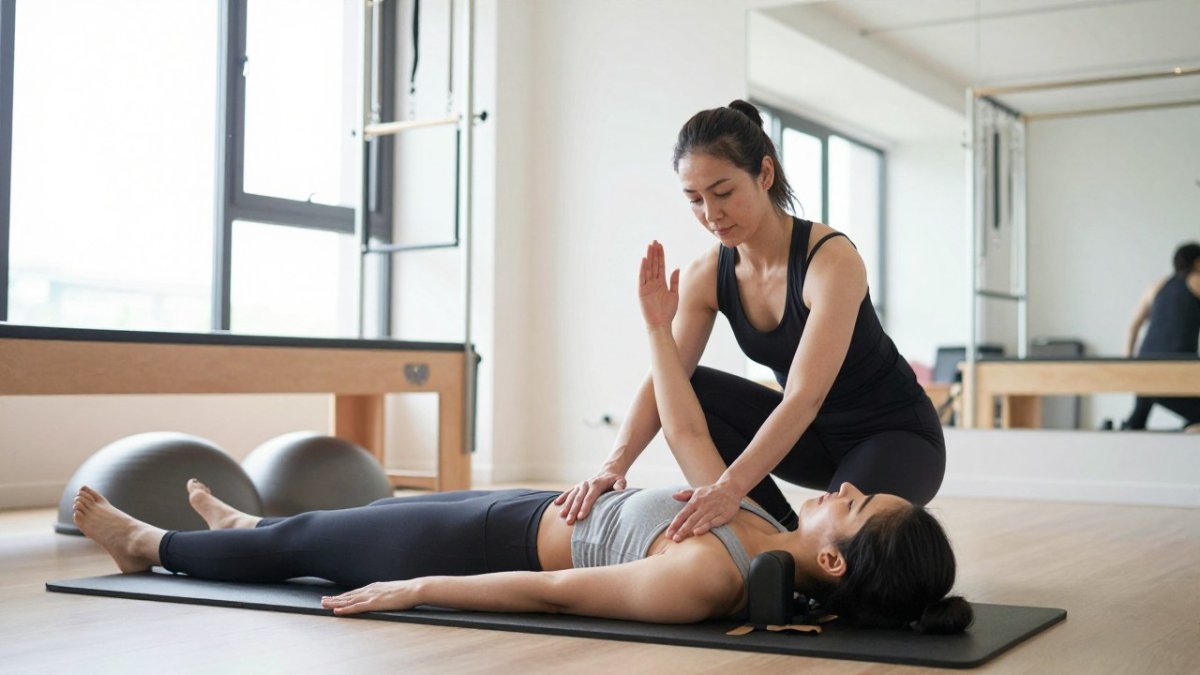
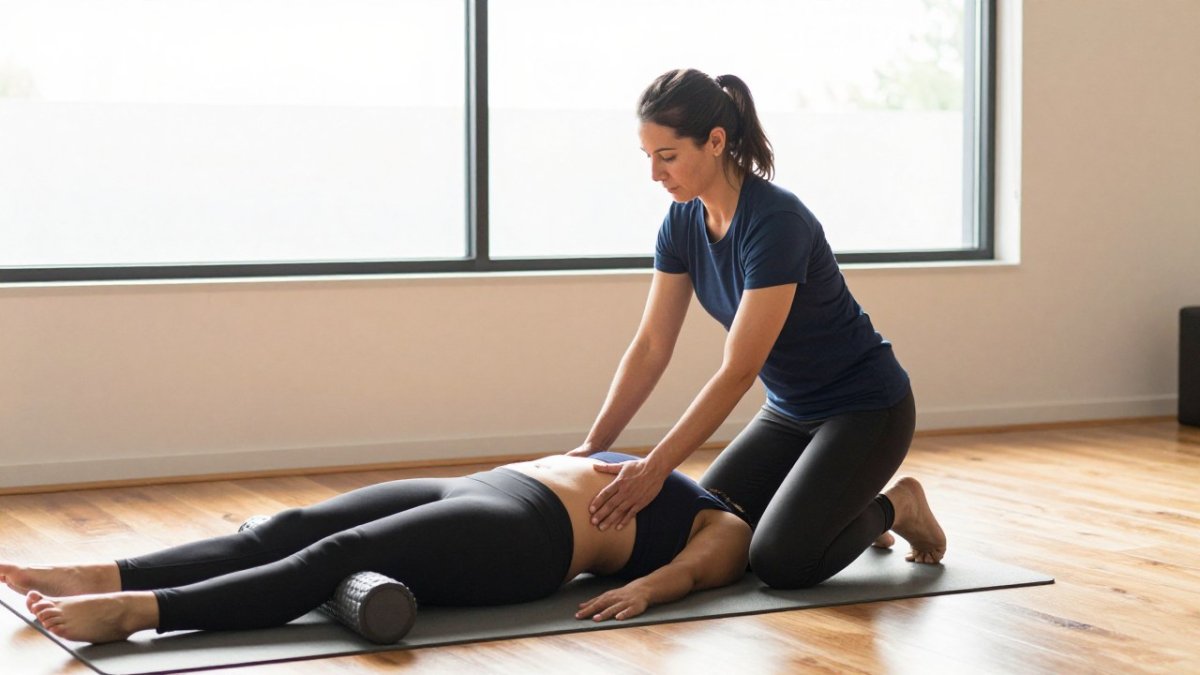
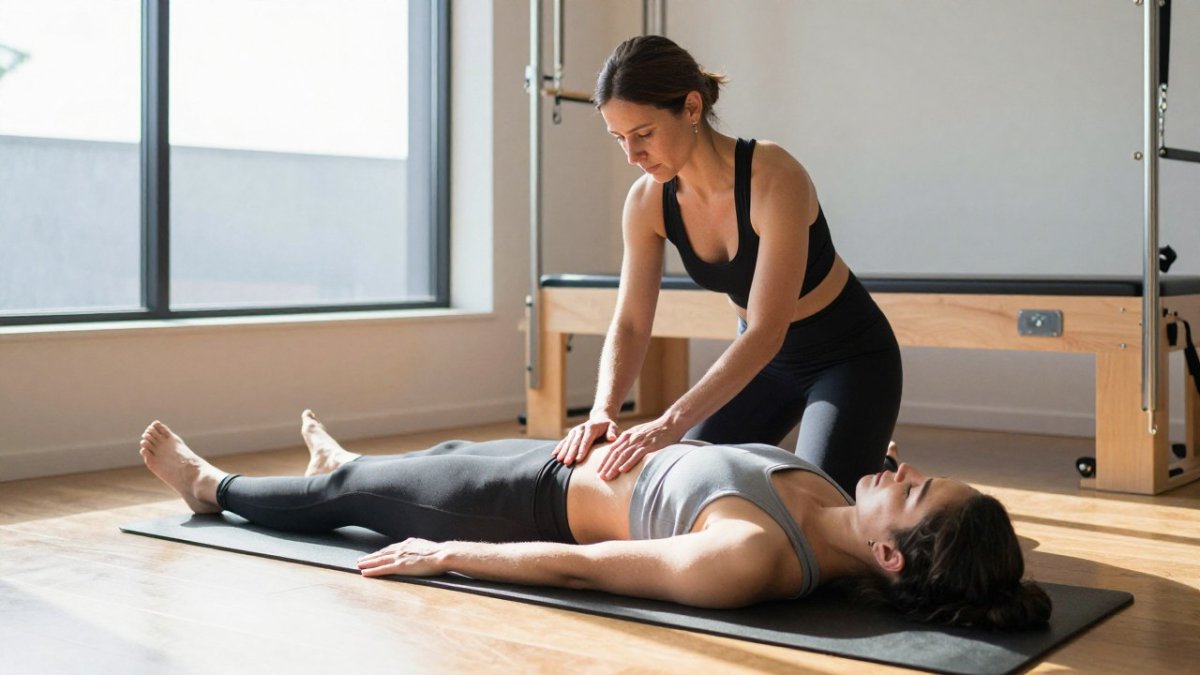
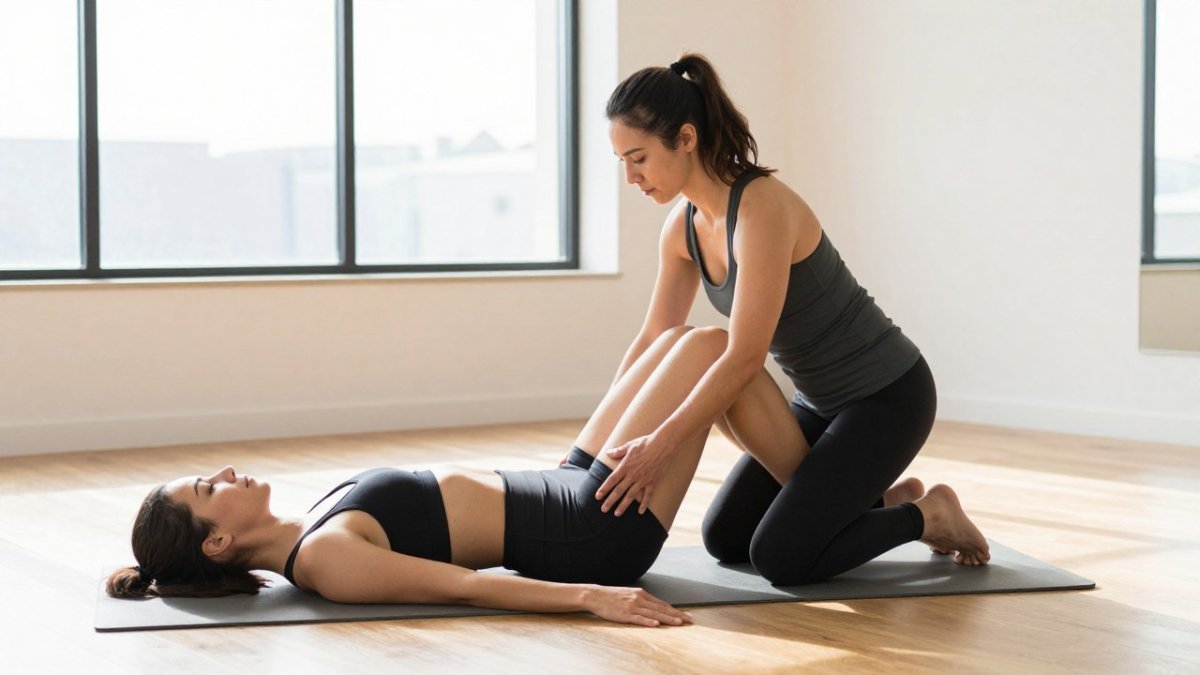
Supine pelvic stability exercises after injury begin with gentle movements on your back, knees bent and feet flat. Keep breathing, and move only as far as you can control. Start with the easiest option; stop if pain rises or your pelvis shifts sharply.
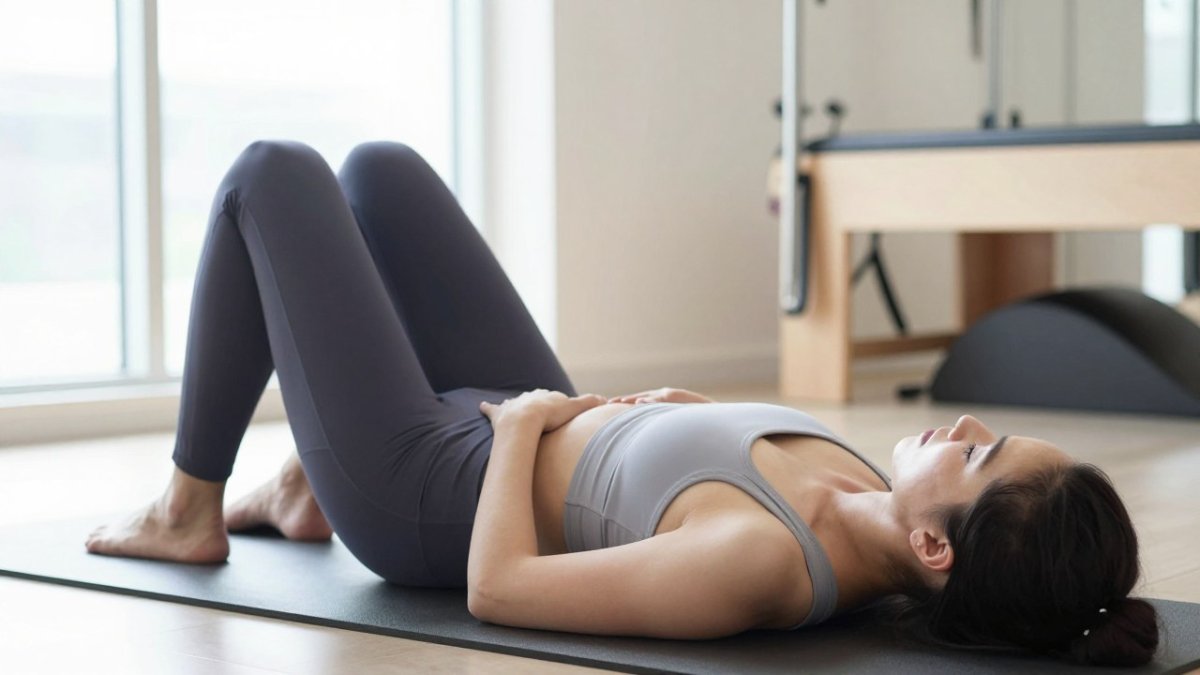
Try these movements in order:
- Diaphragmatic breathing: Breathe in gently and feel your lower ribs widen. Breathe out without gripping your stomach.
- Pelvic tilts: Slowly rock your pelvis a small amount. Keep the movement smooth, not forced.
- Heel slides: Slide one heel away, then return it. Keep your pelvis still.
- Bent-knee lift: Raise one foot a little, then lower it with control.
Bridging and Heel Slides
A pelvic bridge, also called a glute bridge, trains the hip and gluteal muscles while you practise pelvic control. For a small bridge, press both feet down and lift your pelvis only as far as you can keep breathing and moving smoothly. Lower with control.
Heel slides are often easier to scale. Make the slide shorter if your back arches or your pelvis rolls. The aim is controlled movement, not a large range.
Hip and Glute Strengthening Exercises for Pelvic Control
Hip and glute strengthening exercises can support pelvic control by asking the hip muscles to work while the trunk stays steady. Start with a small range and a stable position. If pain increases or you cannot keep breathing, pause and seek advice about a suitable change.
Try these options:
- Side-lying hip abduction: Lie on your side with knees straight or slightly bent. Lift the top leg a small amount, keeping your hips stacked.
- Clamshell: Lie on your side with bent knees. Keep your feet together and open the top knee without rolling your pelvis back.
- Standing hip extension: Hold a stable surface. Move one leg gently behind you without arching your lower back.
These hip and glute strengthening exercises are not a test of strength. A common mistake is lifting the leg higher by twisting the trunk. Reduce the range until the movement feels controlled.
Pelvic floor muscles also contribute to trunk control. If a clinician has advised pelvic floor exercises, use their guidance on how to contract and relax. Avoid repeated hard squeezing without advice, especially if it causes pain or tension.
Single-Leg Balance Exercises for Pelvic Stability
Single-leg balance exercises for pelvic stability help you practise keeping your trunk and pelvis steady while one leg supports you. Begin beside a wall or firm bench, and use light fingertip support. Stop if you feel unsafe, dizzy or more pain.
Start with both feet on the floor, then shift your weight gently from side to side. If that feels controlled, lift one heel or briefly unweight one foot. Keep your gaze forward and breathe normally.
Progress to a short single-leg stand only if the earlier steps feel steady. Keep the pelvis level without locking your knee or leaning your trunk. If balance changes after an injury, do not practise near stairs or other hazards.
These single-leg balance exercises for pelvic stability can also help you notice how control changes during daily activities. Track whether you can stand, walk and move with steady breathing, not just how long you hold a pose.
Pelvic Stability Exercise Progression and Dosage
Pelvic stability exercise progression should move from supported, small-range tasks towards more demanding daily movements only when the current level stays controlled and does not worsen symptoms. Use quality as your guide, not a fixed target.
A Practical Weekly Plan
A common pattern is to practise the activation and control work most days, and to keep strengthening sessions to three or four times a week with a rest day between them.
| Stage | Example | Sets and reps | Frequency | Progress when |
|---|---|---|---|---|
| Supported | Breathing, pelvic tilts | 2 sets of 5-8 slow breaths or tilts | Daily | Movement feels calm |
| Supine | Heel slides, small bridge | 2-3 sets of 6-8 per side | 4-5 days a week | Pelvis stays steady |
| Side-lying | Clamshell, leg lift | 2-3 sets of 8-10 per side | 3-4 days a week | Trunk stays still |
| Standing | Weight shifts, supported balance | 2 sets of 20-30 seconds per side | 3-4 days a week | Breathing stays easy |
| Functional | Walking, bending practice | 5-10 minutes | Most days | Daily movement feels controlled |
Hold each isometric position for 5-10 seconds at first, and rest 30-60 seconds between sets. Keep the effort moderate: you should be able to breathe and speak normally throughout.
Criteria for Advancing or Scaling Back
Advance one variable at a time, range, repetitions, support or speed, and only when the current level has been comfortable for at least two sessions and symptoms have not increased the next day.
Scale back if you notice:
- Pain that rises during the exercise and does not settle within a few minutes of stopping
- Pain or stiffness that is worse the following morning
- Loss of pelvic control, breath-holding or trunk twisting to complete a rep
- Symptoms spreading further from the pelvis or down a limb
A simple way to track progress is to note the exercise, range, symptoms and how you feel later. Change one thing at a time, such as range or support. Do not increase several demands together.
Watch out: adding repetitions to a movement that has already become strained trains compensation rather than control, shorten the range or return to the prior stage instead.
For guidance on posture and spinal control, read our guide to spinal alignment.
Booking Your Assessment Before Your First Session
An individual assessment can help match pelvic stability exercises after injury to your movement, symptoms and goals. At Menezes Method Pilates, the Menezes Method® uses individual movement assessment and personalised exercise selection, with a focus on breathing, spinal position and functional movement. It is not a substitute for medical assessment when symptoms need clinical care.
Bring notes on what movements feel easy, what worsens symptoms and any advice you have already received. Ask how exercises will be adjusted if your symptoms change. The B-Line® and Stable Spine® are part of the method’s approach to core control and spinal organisation.
If you are unsure where to begin, book a free 15-minute consultation with Menezes Method Pilates to discuss whether an assessment is a suitable next step.
Frequently Asked Questions
What exercises help improve pelvic stability after an injury?
Gentle supine exercises such as pelvic tilts, bridging and heel slides are typically the starting point, because they load the pelvis while the body is supported. Hip and glute work and controlled single-leg balance are added as tolerance improves. Pain should settle within a day of exercising. Progress slowly, and confirm the approach with a qualified health professional who knows your injury.
When can I start pelvic stability exercises after an injury?
The right time depends on the injury, how irritable your symptoms are and any medical advice you have been given. Many people begin gentle, pain-free movements once acute symptoms have eased. If you have significant radiating pain, numbness, tingling, limb weakness or unexplained night pain, seek professional assessment before starting any programme.
Should pelvic stability exercises hurt?
Mild muscular effort is normal, but sharp, escalating or lingering pain is a signal to reduce the load or change the exercise. Pain that is worse the next morning suggests the dose was too high. Modify the movement, shorten the hold or reduce the range, and speak to a physiotherapist or other qualified professional if symptoms do not settle.
When should I see a physiotherapist about pelvic pain or instability?
See a qualified health professional if pain persists or worsens, if you have numbness, weakness, bladder or bowel changes, fever, recent trauma or pain that wakes you at night. A professional assessment helps identify the cause and sets safe starting points, dosage and return-to-exercise criteria tailored to your injury.