Last Updated: November 17, 2026
Quick Summary
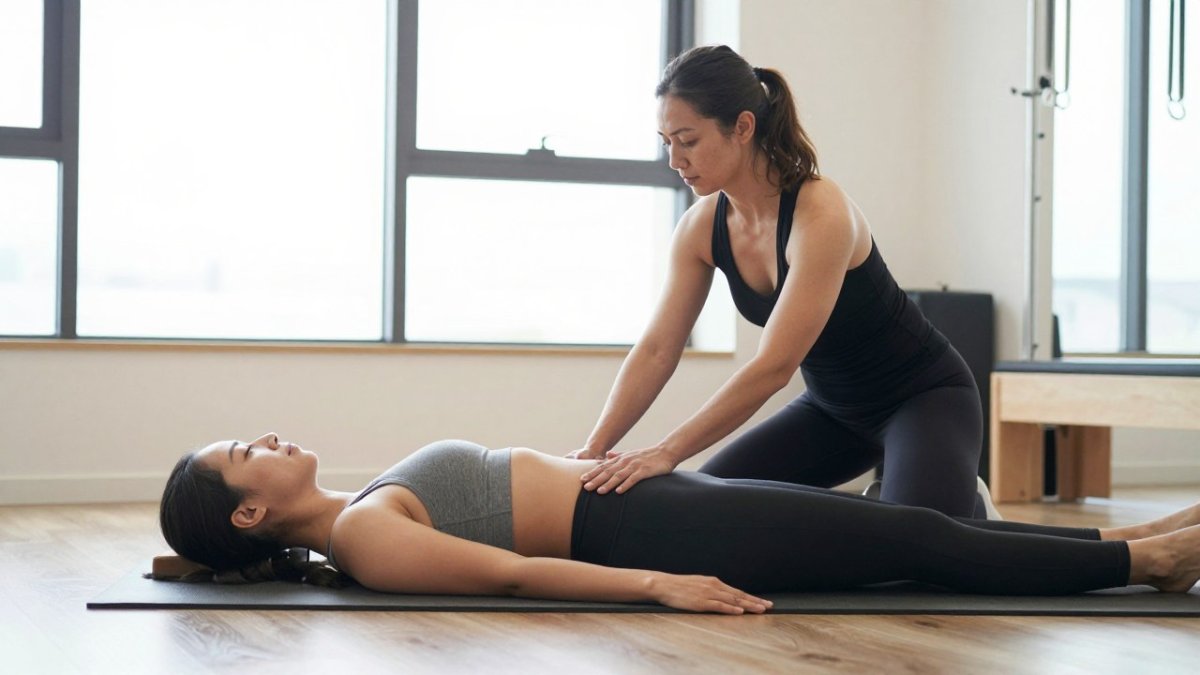
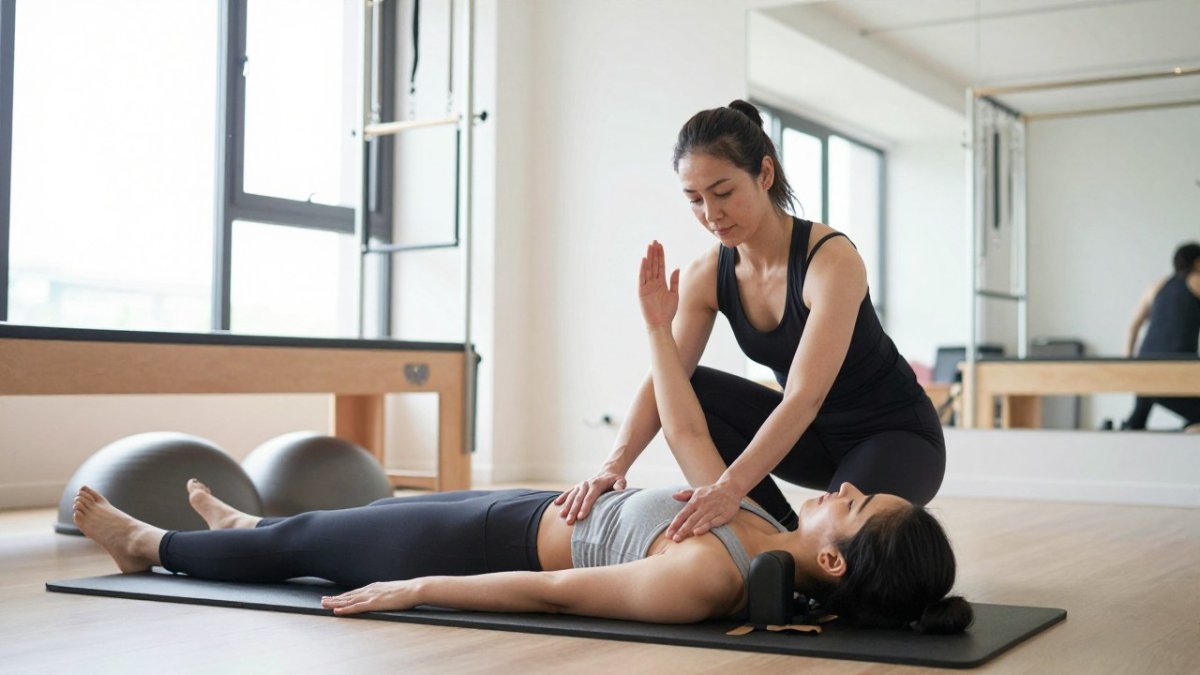
Private Pilates sessions for core control begin with an individual movement assessment, so exercises are selected for your body rather than the average body in a group class. At Menezes Method Pilates, sessions are led by Allan Menezes and draw on the B-Line, Stable Spine and the SpinalCore system, progressing at your pace.
- Group classes often fail because nobody watches how you move, which matters for an irritated spine.
- Run the starter routine as a four-week block, three times a week, for 15 to 20 minutes per session.
- Progress one variable at a time and regress a level rather than adding repetitions when form slips.
- Changes typically follow a sequence: awareness in weeks 1 to 3, easier daily tasks by weeks 3 to 8.
- Seek medical assessment first for severe pain, radiating pain with numbness or weakness, or loss of bladder control.
Table of Contents
- Why Private Pilates Sessions for Core Control Beat Group Classes
- Pilates for Core Stability: What It Actually Trains
- Core Control Exercises You Can Start With
- How One-to-One Pilates Sessions Are Structured
- Pilates for Back Pain: What to Expect and When to Seek Help
- What to Look for in a Private Pilates Instructor
- Book Your Free 15 Minute Consultation
- Frequently Asked Questions
Why Private Pilates Sessions for Core Control Beat Group Classes
Most people who come to us with recurring back pain have already tried group classes. They followed along, did the movements, and felt no better, sometimes worse.
Private Pilates sessions for core control change that equation.
The testimonials from our clients show what tailored attention looks like over time.
That is the distinction we build everything around: not more exercise, but better-targeted exercise.
Pilates for Core Stability: What It Actually Trains
Pilates for core stability trains coordination, not brute force.
This is where many people misunderstand the method. They assume core work means holding a hard brace and flattening the lower back.
What we look for instead is timing and accuracy. Can you stabilise your spine while your legs move?
Those questions sit at the centre of the Menezes Method, which Allan Menezes developed over more than four decades of teaching. The method uses the B-Line and Stable Spine as its references for trunk organisation.
The work is not glamorous. It is repetitive and detailed. But it transfers into sitting, standing, bending and lifting, which is where most spines are actually tested.
Core Control Exercises You Can Start With
Most pages that rank for this topic describe what core control is and then stop. What follows is the part they leave out: a progressive routine you can actually run, with a starting dose, a way to regress, and a clear rule for when to progress.
Run this as a four-week block, three times a week, on non-consecutive days. Each session takes about 15 to 20 minutes. Quality beats volume every time, so if control degrades, stop the set rather than pushing through.
Week 1-2: Build the Pattern
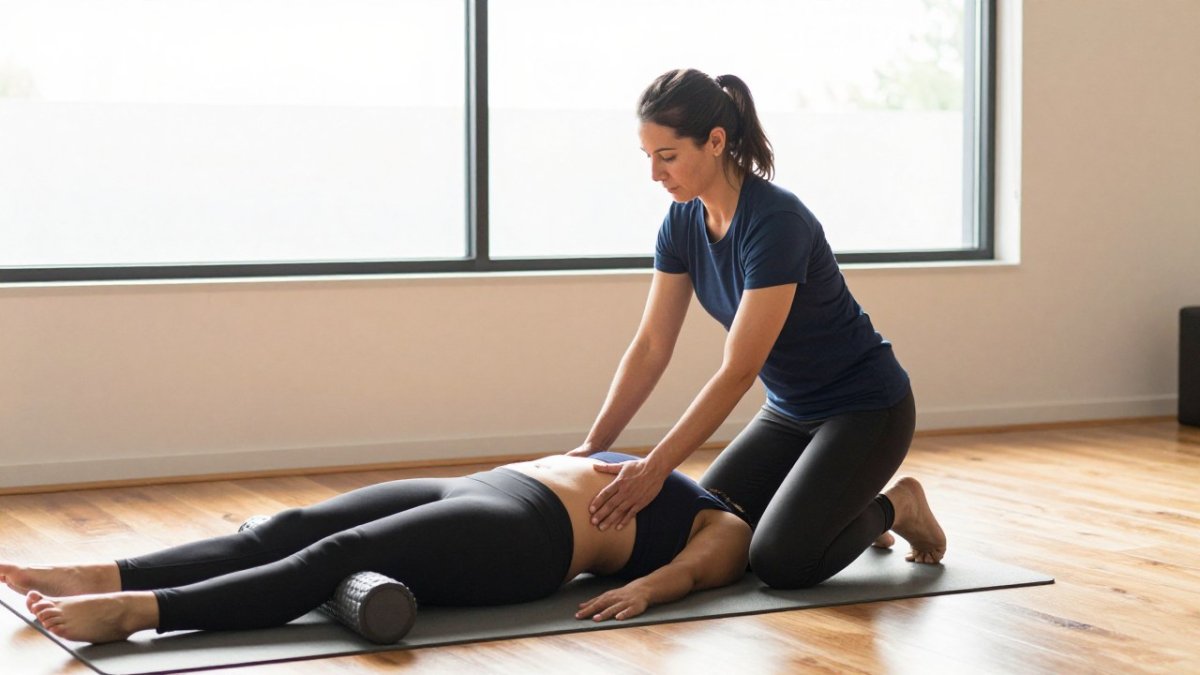
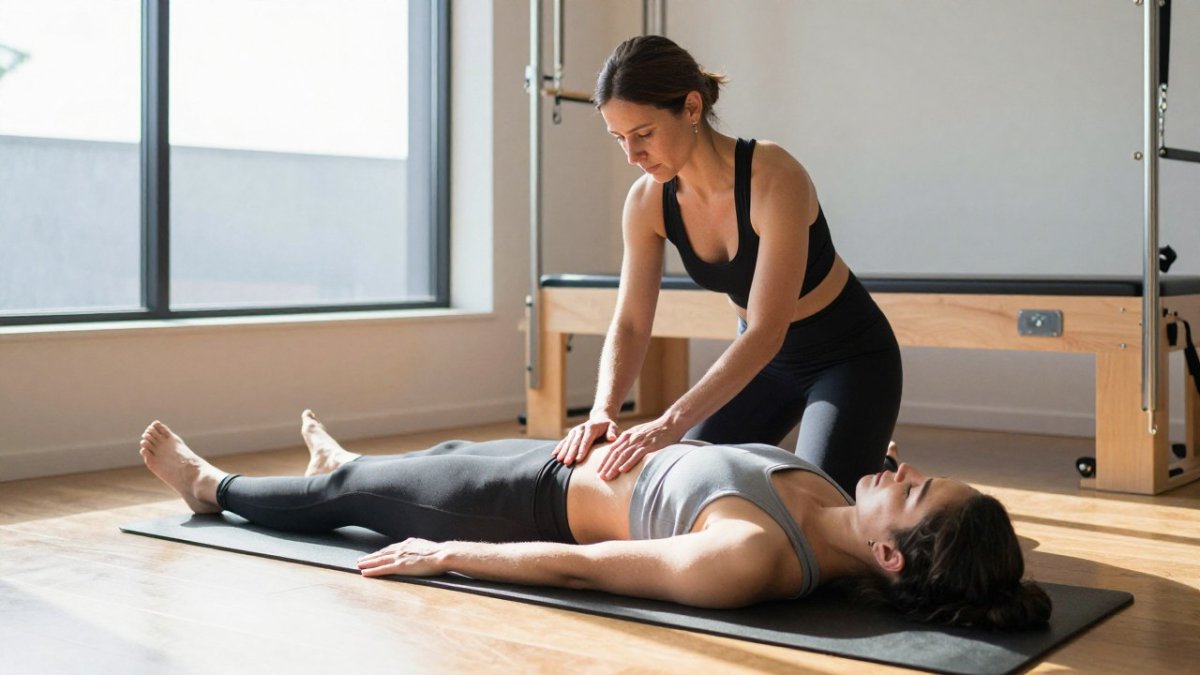
- Breathing with rib expansion. Lie on your back with knees bent, feet flat, hands around the lower ribs. Inhale for a slow count of four and feel the ribs widen sideways and into your hands. Exhale for six without gripping the stomach. Do 6 to 8 breaths. This is the foundation for everything else, so do not rush it.
- Leg lowering, one leg at a time. Keep the spine and pelvis still while one heel slides away along the floor, then returns. Start with the sliding version before you lift the leg at all. Do 6 to 8 slow repetitions per side, breathing out as the leg moves away.
- Hip hinge to a chair. Stand tall with a chair behind you and push your hips back until they lightly touch it, keeping length through the spine. Do 8 to 10 repetitions, breathing out on the way back.
- Single-leg stance at a bench. Stand on one leg with fingertips on a bench for balance. Hold for 20 to 30 seconds per side and notice whether the pelvis stays level.
- Loaded carry, light. Walk 10 to 15 metres with a comfortable weight in one hand, staying upright and breathing normally. Swap sides and repeat twice.
Week 3-4: Add Load and Range
Once each movement is clean at the week 1-2 dose, progress one variable at a time, not all of them at once:
- Leg lowering: lift the leg off the floor rather than sliding it, keeping the pelvis still. Build to 8 controlled repetitions per side.
- Hip hinge: add a light weight held at the chest, then progress to a single-leg hinge only when the two-legged version is clean.
- Single-leg stance: remove the bench support and hold for 30 seconds, then add a slow reach forward with the free leg.
- Loaded carry: increase the distance to 20 to 30 metres before increasing the weight.
A useful way to track where you are:
| Exercise | What to Watch | Common Compensation | What It Tells You |
|---|---|---|---|
| Breathing | Ribs widen on inhale | Chest and shoulders lift | Whether the diaphragm is contributing |
| Leg lowering | Pelvis stays still | Lower back arches | Whether trunk control holds under leg load |
| Hip hinge | Spine keeps length | Rounding or over-arching | Whether you can load the hips, not the back |
| Single-leg stance | Pelvis stays level | Hip drops or trunk leans | Whether stability holds on one leg |
| Loaded carry | Trunk stays upright | Leaning away from the weight | Whether control survives real-world load |
, our seven-step spinal control plan for home walks through it in order.
Watch out: the most common mistake is pushing into a harder variation before the basic one is clean. Control built on a compensated pattern tends to unravel the moment you add load, so regress a level rather than adding repetitions when form slips.
How One-to-One Pilates Sessions Are Structured
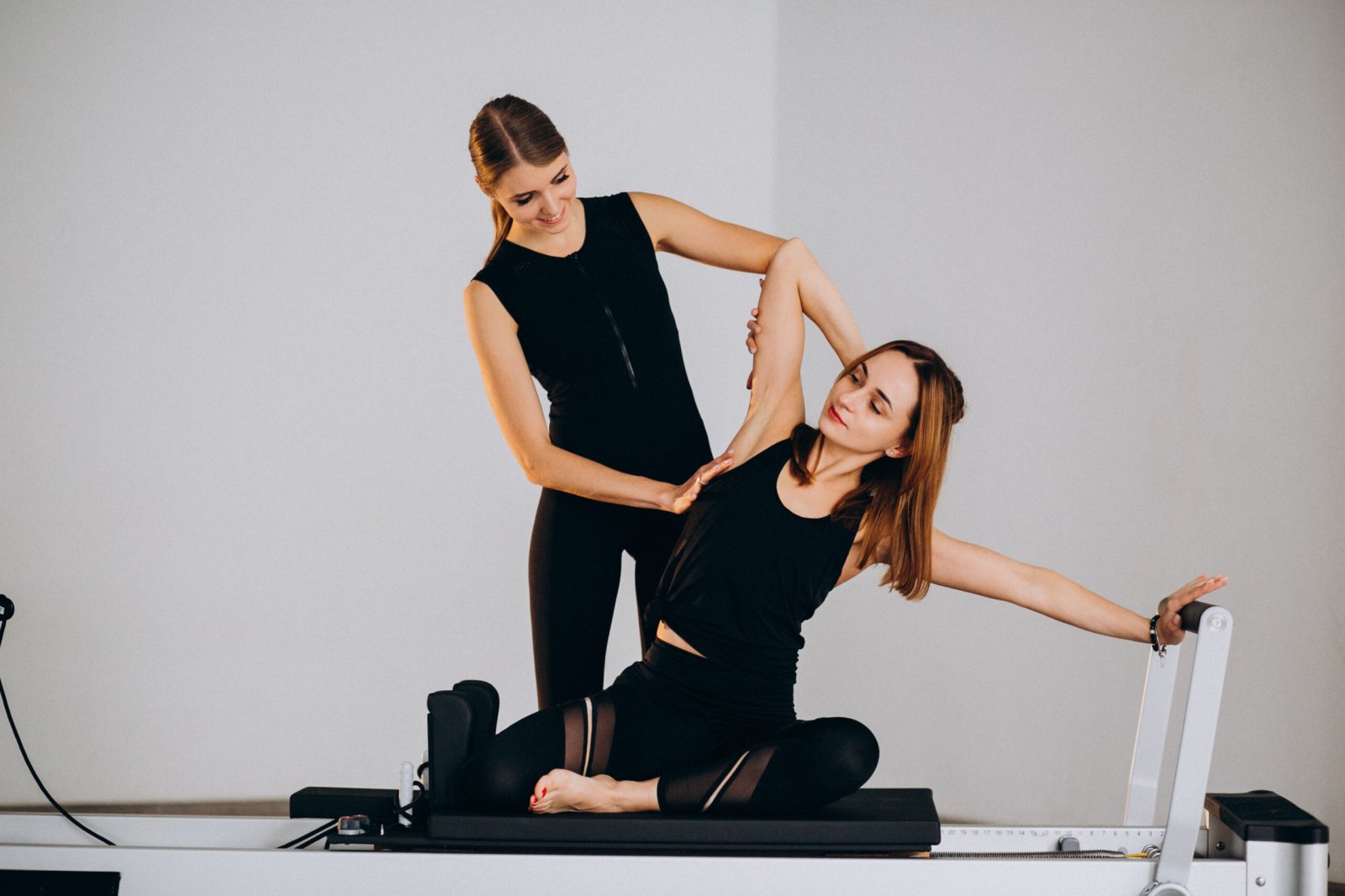
That background shapes which exercises we choose and which we avoid.
From there, sessions move between mat work, Reformer Pilates and other apparatus depending on what your body needs that day.
What most guides miss is how much of a session is spent unlearning. Replacing those patterns takes repetition, not intensity. (Source: Australia’s Physical Activity and Sedentary Behaviour Guidelines)
Pilates for Back Pain: What to Expect and When to Seek Help
Pilates for back pain can help improve control, confidence and tolerance for daily movement, but it is not a treatment for every cause of back pain. Results vary, and progress is usually gradual rather than dramatic.
What Changes First, and in What Order
A common pattern most practitioners see is that changes arrive in a predictable sequence:
- Weeks 1-3: awareness. You start noticing when you brace, hold your breath or collapse through the lower back. Nothing feels stronger yet, but you can feel the difference between controlled and uncontrolled movement.
- Weeks 3-8: daily tasks get easier. Sitting through a workday feels less effortful, bending to pick something up feels less alarming, and stiffness after desk work eases.
- Weeks 8-16: capacity builds. You tolerate longer walks, heavier carries and more challenging Reformer or mat work without losing spinal position.
- Beyond three months: control becomes more automatic, and the work shifts toward maintaining it under real-world load and sport-specific demand.
These are typical ranges, not promises. Sleep, stress, work demands and how consistently you practise between sessions all move the timeline.
How to Measure Progress Honestly
Vague improvement is easy to claim and hard to verify, so track specific markers instead:
- Movement quality: can you complete the leg lowering and hip hinge with the same control as four weeks ago, at a harder variation?
- Breath-hold count: can you breathe out fully through a repetition rather than holding your breath?
- Symptom behaviour: does discomfort settle faster after activity than it used to, and are flare-ups less frequent?
- Daily capacity: how long can you sit, stand or carry before you notice your position deteriorating?
- Consistency: how many sessions did you actually complete this month?
Re-test the five movements from the assessment section every four weeks and compare, rather than relying on how you feel on any given day.
Modifying Exercises When Something Provokes Pain
Pain during a movement is information, not a character test. The usual modifications are:
- Reduce range before reducing the number of repetitions.
- Reduce load or remove the weight entirely and rebuild control first.
- Change position, for example, take a standing exercise to the floor, or a floor exercise to a supported seated position.
- Slow down and add a pause at the point where control is hardest.
- Change the breathing so the effort happens on the exhale rather than against a held breath.
A mild, familiar ache that settles within a day and does not worsen over the following 24 hours is generally acceptable to work through. Sharp pain, pain that radiates, or pain that escalates session after session is a signal to stop and get assessed.
When to Seek Medical Help First
Seek medical assessment promptly if you have severe or worsening pain, pain radiating down a leg with numbness or weakness, loss of bladder or bowel control, unexplained weight loss, fever, or pain following a fall or accident.
For a deeper look at how Pilates and core stability fit alongside medical care for persistent pain, our guide to Pilates and core stability for chronic back pain covers what to expect and when to involve a physiotherapist.
What to Look for in a Private Pilates Instructor
Choosing a private Pilates instructor comes down to how they assess, how they cue, and whether they can explain their reasoning.
Use this checklist when you are evaluating options:
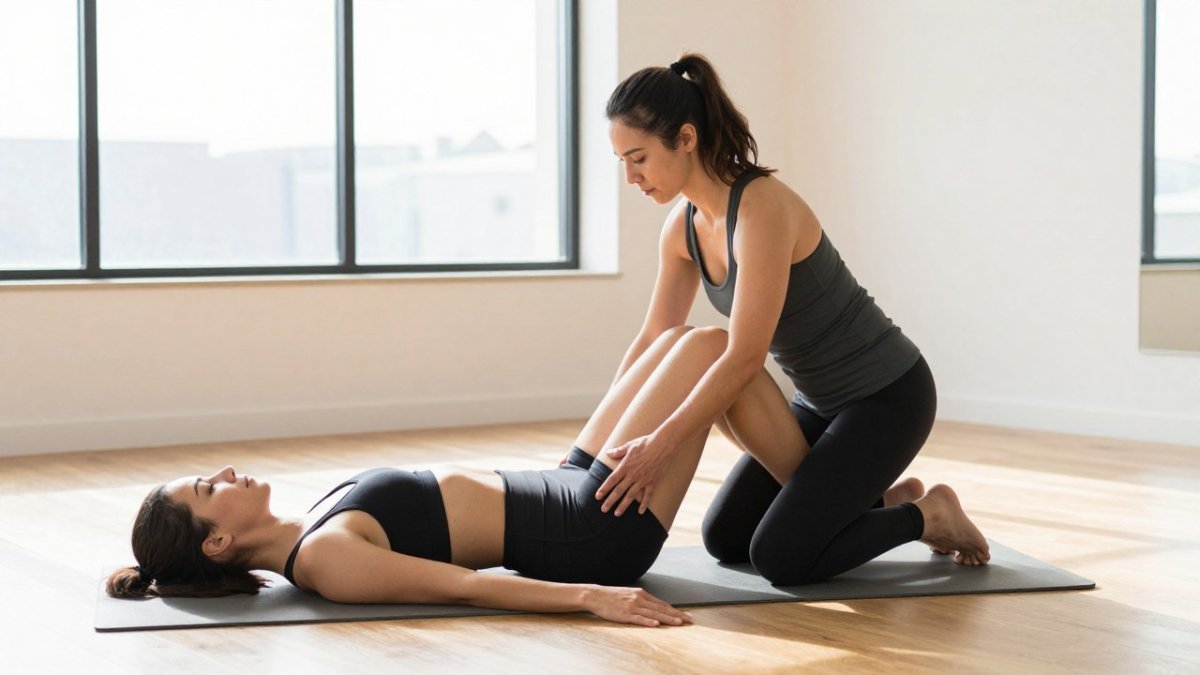
- The instructor assesses your movement before your first full session
- They ask about your history, scans and current symptoms
- They can explain why a cue is used, not just what to do
- They offer modifications when something provokes pain
- They watch breathing as closely as they watch the exercise
- They are clear about what Pilates can and cannot address
- They refer you to a clinician when your presentation calls for it
- They track progress against specific movements, not just how you feel
The last point matters more than it sounds. Vague improvement is easy to claim and hard to verify.
Our guide to choosing a Pilates studio sets out the questions worth asking before you commit, including how instructors are trained and how sessions are tailored.
Book Your Free 15 Minute Consultation
Private Pilates sessions for core control work best when the programme is built around your spine, your history and your daily habits, not a template.
At Menezes Method Pilates, sessions are led by Allan Menezes, Australia’s most experienced Pilates Master Trainer, and draw on the B-Line, Stable Spine and the SpinalCore system for building strength through the trunk. You can find session pricing and first-visit details on our site before you decide.
If you have been managing back pain for years and want to understand what is actually driving it, start with a conversation.
Persistent back pain rarely resolves by doing more of the same exercises. It usually shifts when someone finally watches how you move and adjusts the work to match.
Frequently Asked Questions
What happens in a private Pilates session?
A private session starts with an assessment of how you breathe, stand, bend and move, so the instructor can see where your core control breaks down. From there you work through tailored exercises on the mat, Reformer or other equipment, with hands-on cues and modifications as needed. The focus is on movement quality rather than repetitions, and you leave with practical strategies to use outside the studio.
What is the difference between core strength and core control?
Core strength is how much force your trunk muscles can produce. Core control is whether the right muscles switch on at the right time and in the right amount while you breathe and move. You can have strong abs and still lose spinal position during a leg lift or a loaded carry. Private Pilates sessions for core control target timing, breathing and alignment, not just tension.
Is private Pilates suitable for beginners?
Yes. One-to-one Pilates is often the better starting point for beginners because every exercise can be modified to your current ability. You are not trying to keep pace with a group, and the instructor can slow things down or adjust equipment resistance as needed. If you have back pain or a history of injury, tell your instructor before your first session so the program can be tailored safely.
How long before I see results from Pilates for core stability?
Timelines vary with your starting point, how consistently you practise and how much you apply the cues to daily movement. Many people notice better body awareness within a few weeks, while changes in strength and back comfort typically build over a few months of regular sessions. Your instructor can track progress using repeat movement screens rather than relying on how you feel on any single day.