Last Updated: November 22, 2026
Quick Summary
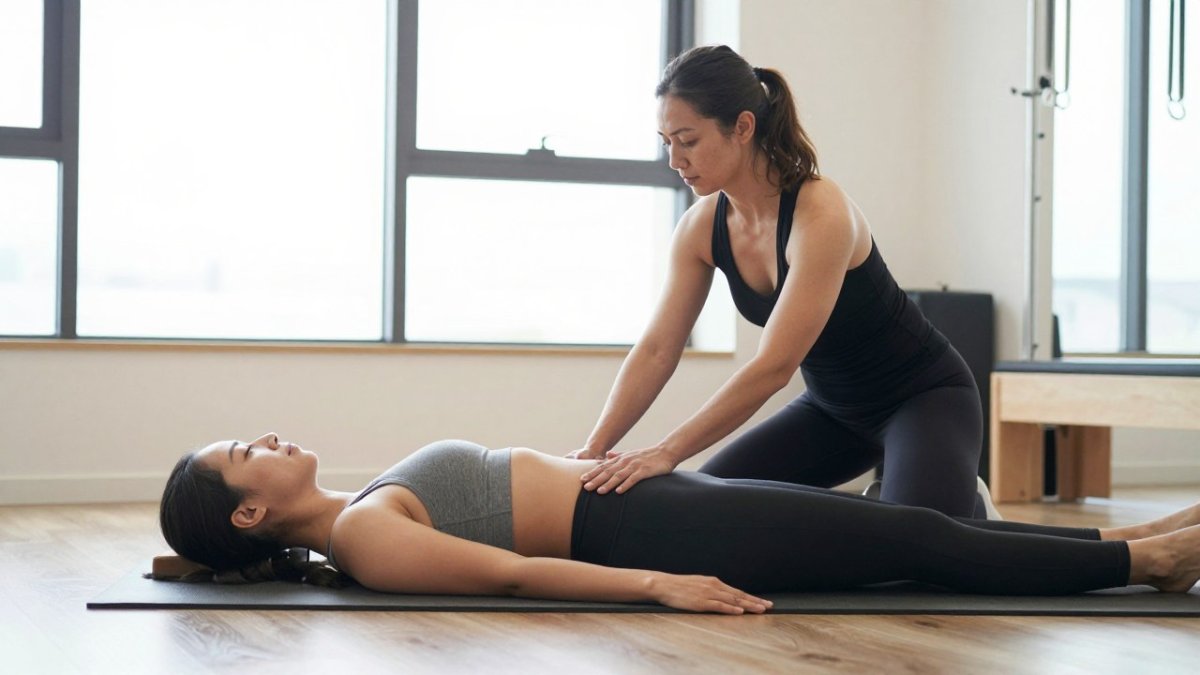
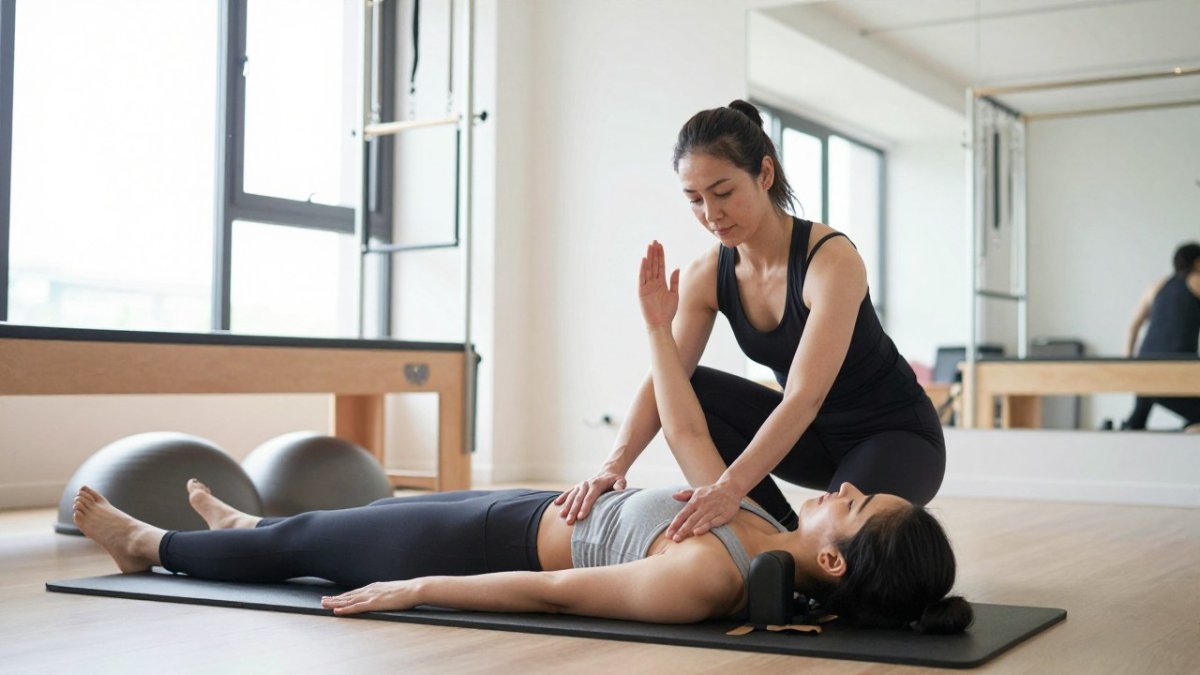
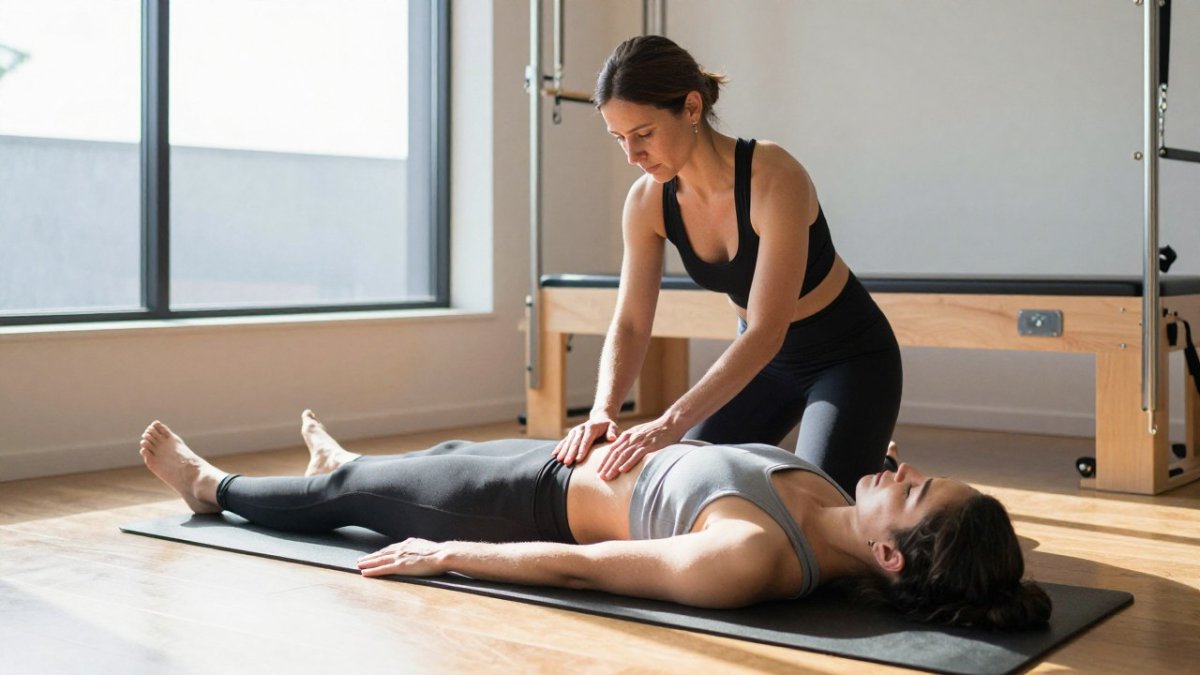
Private Pilates sessions for back support are one-to-one sessions shaped around an individual’s movement needs. The practitioner can modify exercises and observe how each movement feels and looks. The aim is to build movement confidence, not to promise a cure.
- Private sessions allow closer observation and adaptation than most group classes.
- Core control means coordinating trunk and pelvis during movement, not holding the body rigid.
- Ask how exercises are modified when a movement brings on pain.
- Start with a short conversation, movement assessment, goal setting and a between-session plan.
- Speak with a qualified health professional for persistent or changing symptoms.
Table of Contents
- Why Private Pilates Sessions Suit Back Pain
- Private Pilates vs Group Classes for Back Pain
- What Happens in a First Private Session
- Pilates for Lower Back Pain: Core Control and Stable Spine
- How Often to Do Pilates for Back Pain
- Pilates for Posture Correction at Home and in Session
- Booking Your Free 15 Minute Consultation
- Frequently Asked Questions
Why Private Pilates Sessions Suit Back Pain
Private Pilates sessions for back support offer individual attention to movement, breathing and exercise choice. At Menezes Method Pilates, we focus on core control and how spinal position, posture and everyday movement relate to back pain.
Private Pilates sessions for back support are one-to-one sessions shaped around an individual’s movement needs.
A common mistake is treating core strength as the whole answer. Strong abdominal muscles do not automatically mean a person can control the trunk while breathing, bending or carrying.
The Menezes Method® uses individual movement assessment and personalised exercise selection. Its approach includes the B-Line® cue for lower abdominal activation and Stable Spine® principles for spinal control.
For persistent or changing symptoms, speak with a qualified health professional.
Private Pilates vs Group Classes for Back Pain
Private Pilates sessions provide individual attention, while small-group classes ask participants to follow a shared class plan. For back pain, the main difference is how closely exercises can be selected, observed and adjusted to suit an individual’s needs.
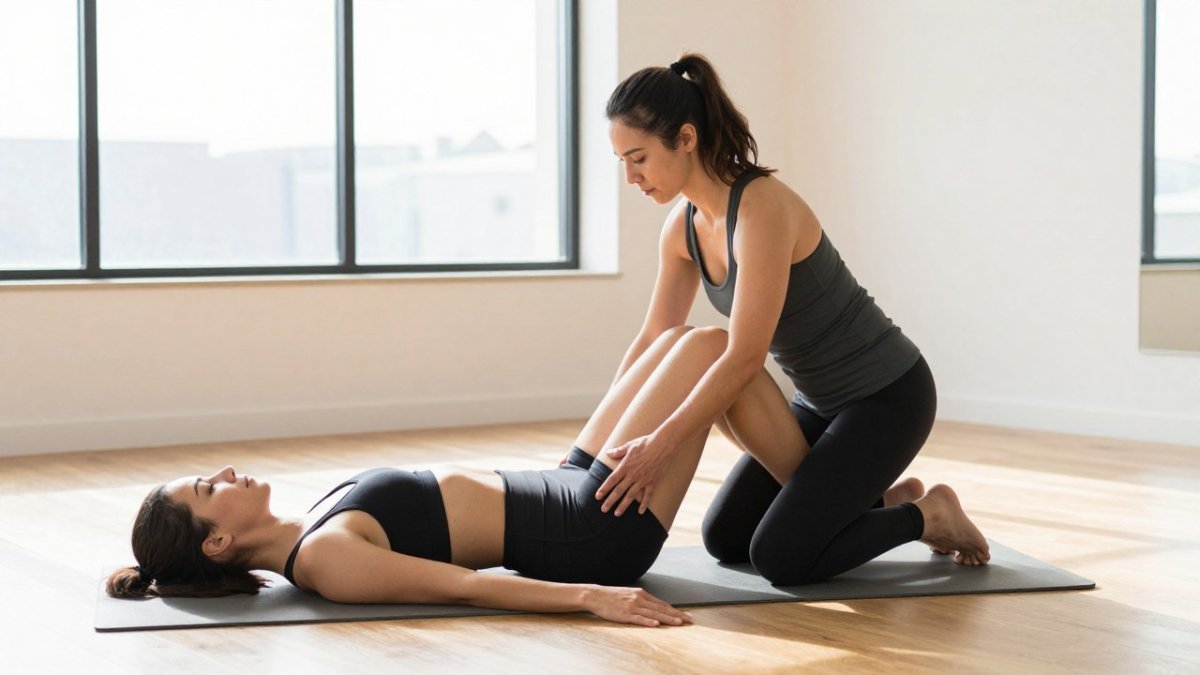
In private sessions, the practitioner can focus on your movement patterns and adapt exercises as needed. Group classes can provide a structured way to practise Pilates, but the instructor’s attention is shared across participants.
| Option | Often suits | Main trade-off |
|---|---|---|
| Private session | Individual exercise selection and close observation | Less group interaction; usually a higher per-session commitment |
| Small-group class | Shared instruction and routine, with some individual correction | Less individual attention; less scope for modification |
| Home practice | Repeating familiar exercises between sessions | Limited observation and feedback |
A common mistake is assuming that a group class is unsuitable simply because back pain is present. Some people prefer that setting, while others need closer guidance, especially when returning to exercise or learning movement control. Ask how exercise modification works and what the instructor does if a movement brings on pain.
How to choose a private instructor for back support
Qualifications and experience matter more than the studio’s aesthetic. In Australia, Pilates instructors come from a range of backgrounds, some are physiotherapists or exercise physiologists who have added Pilates training, others are comprehensively trained Pilates teachers, and some hold both.
Questions worth asking before you book:
- What training and certification do you hold, and with which organisation?
- How do you assess a new client with back pain?
- How do you modify exercises when a movement provokes symptoms?
- Do you work alongside physiotherapists or other clinicians, and would you refer on if needed?
- What equipment do you use, and is it appropriate for my current level?
- What happens if my symptoms flare between sessions?
A practitioner who welcomes these questions and answers them plainly is usually a better sign than one who deflects them.
Watch out: a very low introductory offer can sometimes mean a large group dressed up as a small class, or an instructor with limited experience with back pain. Ask how many people will be in the room and who will be teaching.
Men who want to learn about the studio’s offering can read about Pilates for men. Whichever format you choose, describe your symptoms and goals before starting, and follow advice from your treating clinician where relevant.
What Happens in a First Private Session
A first private session usually follows a predictable structure: a conversation, a movement assessment, a small amount of carefully chosen exercise, and a plan for what comes next. Knowing the shape of it in advance removes much of the uncertainty, especially if you have been avoiding exercise because of back pain.
Stage 1: Intake and history
The practitioner will ask when your symptoms began, what makes them better or worse, and what you have already tried. They will want to know about any diagnosis, imaging, medication, previous surgery or advice from a clinician. Bring any relevant reports or referral letters if you have them. You do not need a perfect description, simple examples such as discomfort after long sitting or difficulty bending to put on shoes are genuinely useful.
Stage 2: Movement assessment
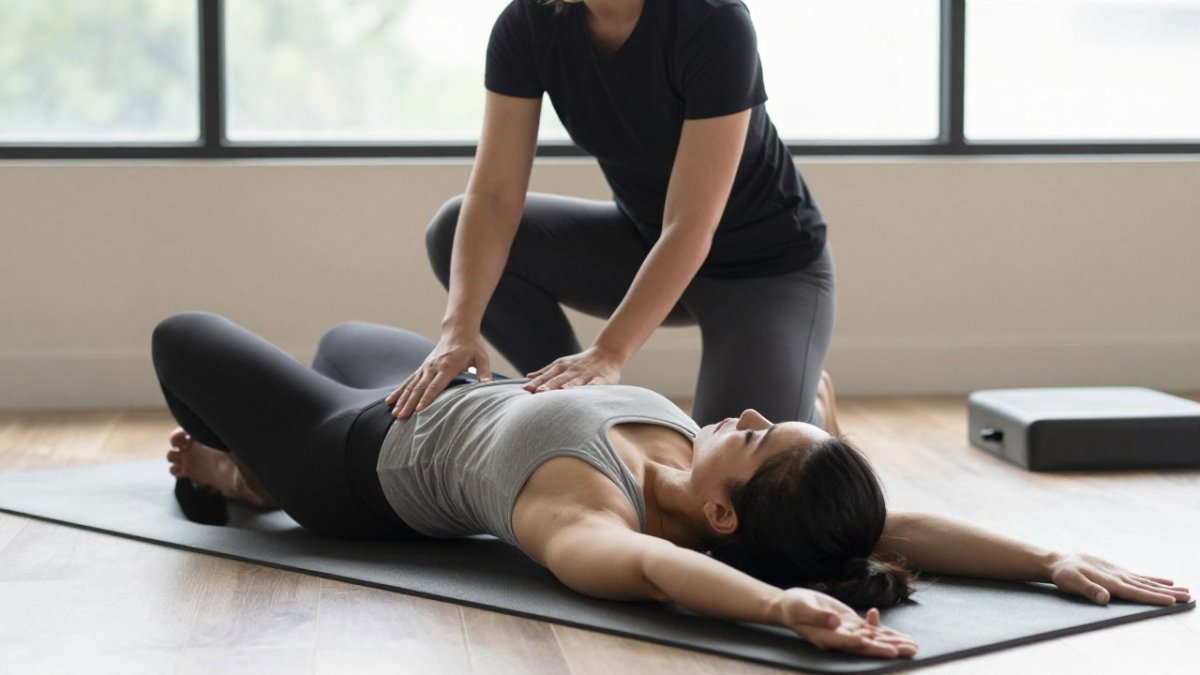
The practitioner will watch you move through everyday patterns, standing, sitting to standing, bending, walking, perhaps a single-leg stance or a gentle leg-lowering movement. They are looking at how your pelvis, spine and breathing behave together, not testing how flexible or strong you are. This is a movement screen, not a medical diagnosis.
Stage 3: Goal setting
Goals should be functional and specific: returning to a daily walk, sitting through a workday with less discomfort, lifting a grandchild, or resuming a sport. Agree on one or two priorities rather than a long list. Ask how progress will be judged, most practitioners will track function and confidence rather than pain scores alone.
Stage 4: Exercise selection and adaptation
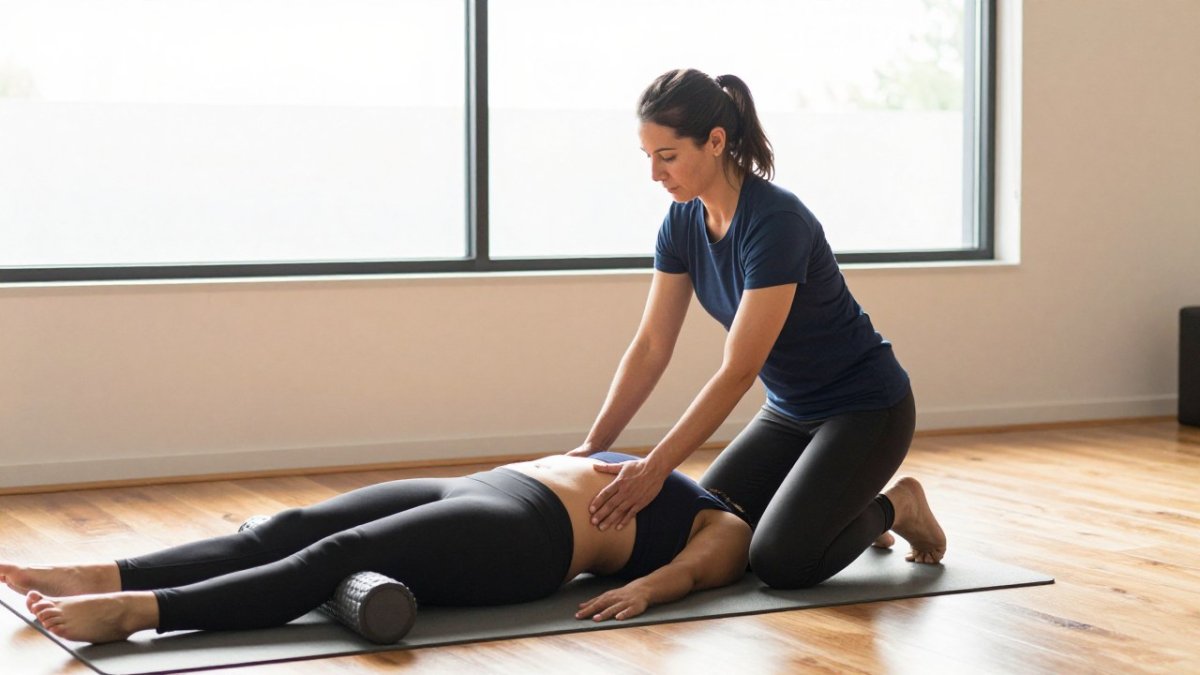
The practitioner will teach a small number of exercises, often on the mat or with props such as a cushion, band or small ball, and may use equipment such as a reformer if the studio has one. Each exercise should be explained in terms of what it is training and how it relates to your goals. Expect the practitioner to adjust range, leverage, breathing and support in response to what they observe.
Stage 5: Between-session plan
You should leave knowing which exercises to practise, how often, and what to do if symptoms change. Ask for the plan in writing or as a short video if that helps you remember it.
A practical first-session checklist:
- Describe when your back symptoms began and what affects them.
- Mention any diagnosis, treatment or advice from a clinician.
- Explain your daily activities and movement goals.
- Ask how exercises are selected and modified.
- Agree on what to do if symptoms change during practice.
- Confirm what to practise before the next session.
Watch out: if a practitioner promises a fixed number of sessions to cure your back pain, or pushes through a movement that clearly reproduces your symptoms, treat that as a reason to pause and ask questions.
A movement assessment is not a medical diagnosis. If you have concerning symptoms, seek medical care rather than relying on a Pilates screen. Healthdirect Australia’s [back pain guidance | healthdirect.gov.au] outlines symptoms and situations that warrant medical attention.
Pilates for Lower Back Pain: Core Control and Stable Spine
Pilates for lower back pain can focus on breathing, trunk control and movement quality rather than simply increasing abdominal effort.
Stable Spine® is a Menezes Method teaching principle for organising the spine while allowing breathing and movement. It differs from treating one fixed spinal position as the goal.
The B-Line® offers a specific reference for lower abdominal activation, using the midpoint between the prominent bones at the front of the pelvis. The method also includes SpinalCore® for core strengthening and the Performer for rotational movement.
What most guides miss is the value of transferring studio practice into daily tasks. Ask how an exercise relates to standing, walking, bending or carrying.
The [Australian Physiotherapy Association’s consumer information | australian.physio] can provide further context on physiotherapy and movement care.
How Often to Do Pilates for Back Pain
How often to do Pilates for back pain depends on your starting point, symptoms, goals and the advice of your health professional. There is no single weekly schedule that suits everyone, so begin with a plan you can follow and review how your body responds.
Private Pilates sessions for back support can help you learn exercises and receive feedback, while home practice may reinforce movements you already understand. The right balance depends on the person and the programme; ask the practitioner to explain the purpose of each exercise and how progression will be decided.
A useful way to review progress is to track function, not just pain:
- Which daily movements feel easier or harder?
- Can you breathe comfortably during exercise?
- Are you moving with more control?
- Do symptoms settle, stay the same or change after practice?
- What questions should you bring to your next appointment?
Keep notes in plain language. This gives you and your practitioner a clearer basis for discussing exercise progression, session frequency and any needed changes. If symptoms worsen or new concerns arise, pause the exercise and seek appropriate clinical advice.
Pilates for Posture Correction at Home and in Session
Pilates for posture correction works best as movement practice, not as an instruction to hold one rigid pose all day. In a session, a practitioner can help you notice how breathing, spinal position and pelvic control affect movement; at home, brief practice can reinforce familiar cues.
For home practice, use only exercises already taught to you and follow the agreed modifications. Choose a clear space, move at a comfortable pace and keep breathing. Do not add resistance or increase the range of motion just to make an exercise feel harder.
A practical home routine can focus on three habits:
- Pause during desk work and change position regularly.
- Practise a familiar breathing or mobility exercise.
- Notice spinal control during everyday bending and standing.
The aim is not to monitor posture constantly. Instead, build body awareness and use movement options that feel manageable. If an exercise brings on pain or a new symptom, stop and ask a qualified professional whether it remains appropriate.
Booking Your Free 15 Minute Consultation
A consultation is an opportunity to explain your back-support goals, ask how the Menezes Method works and find out whether its approach fits your needs.
Pricing information is available on the Menezes Method Pilates pricing page. Ask about current fees and what is included before deciding whether to proceed. The consultation can help you understand the approach, but it cannot guarantee a particular result.
Private Pilates sessions for back support may suit people seeking individual movement guidance, especially when their goals include core control, posture or mobility. If you are unsure whether Pilates is appropriate for your symptoms, speak with a qualified health professional first.
Healthdirect Australia back pain information
Book a consultation with Menezes Method Pilates to discuss individual movement assessment, B-Line® activation and Stable Spine® principles. Get started with Menezes Method Pilates and clarify whether private Pilates sessions fit your back-support goals.
Frequently Asked Questions
Can private Pilates sessions help support your back?
Private sessions can give you individual attention on spinal control, breathing and pelvic stability, which group classes often cannot offer. Because an instructor can watch how you move and adjust exercises as you respond, many people find the approach more suitable for recurring back discomfort. Results vary between individuals, so a consultation with a qualified health professional is a sensible first step before starting, particularly if you have significant or radiating pain.
Is one-to-one Pilates better than group Pilates for back pain?
One-to-one Pilates is often better suited to back pain because the instructor can observe your movement, modify exercises and progress them at a pace that matches your symptoms. Group classes can work well for people without pain who want general conditioning, but they offer less individual feedback. The right choice depends on your history, your goals and how your back responds to exercise.
How often should you do Pilates for back support?
Many people start with one or two private sessions a week and practise short movement routines at home between appointments. The right frequency depends on your symptoms, your goals and how your back responds over the first few weeks. Your instructor or health professional can help you set a plan, and you should report any increase in pain so the program can be adjusted.
Should I see a health professional before starting Pilates for back pain?
Yes, it is sensible to speak with a qualified health professional before starting Pilates for back pain, especially if you have radiating pain, numbness, tingling, limb weakness, unexplained night pain, fever or a recent injury. A professional assessment helps identify which movements are appropriate for you. Pilates can complement professional care, but it is not a substitute for a medical diagnosis.