Last Updated: November 4, 2026
Quick Summary
To prepare for your first reformer class, wear fitted stretchable clothing, bring water, a sweat towel and grip socks, and arrive 10 to 15 minutes early. Tell your instructor it is your first session and share any pain, injury or movement limitations before you begin.
- A reformer class is a small-group session on a spring-loaded carriage, guided by an instructor who sets the springs.
- Grip socks are worth bringing, as many studios ask for them for hygiene and slip prevention.
- Most reformer Pilates classes run 45 to 60 minutes, including warm-up, main exercises and cool-down.
- The instructor sets the springs and footbar for you, so you do not need to work the machine out on day one.
- Stop and tell the instructor if an exercise causes sharp pain, dizziness or numbness.
Table of Contents
- What to Expect at Your First Reformer Pilates Class
- What to Wear to Reformer Pilates
- What to Bring and How Early to Arrive
- What to Tell Your Pilates Instructor Before Class
- How Long a Reformer Pilates Class Runs
- A Beginner’s Reformer Equipment Glossary
- Safety, Accessibility and When to See a Health Professional
- Book Your Free 15 Minute Consultation
- Frequently Asked Questions
What to Expect at Your First Reformer Pilates Class
Walking into your first reformer class is easier when you know exactly what happens. A reformer class is a small-group session where you perform controlled exercises on a spring-loaded bed called a carriage, guided by an instructor who adjusts resistance and checks your form. (Source: the importance of core strength and stability for overall health)
At Menezes Method Pilates, we have taught people with back pain and movement limitations since 1986. In our experience, the people who enjoy their first session most are the ones who arrive knowing the basics.
The woman is Australian.
How the Reformer Machine Works
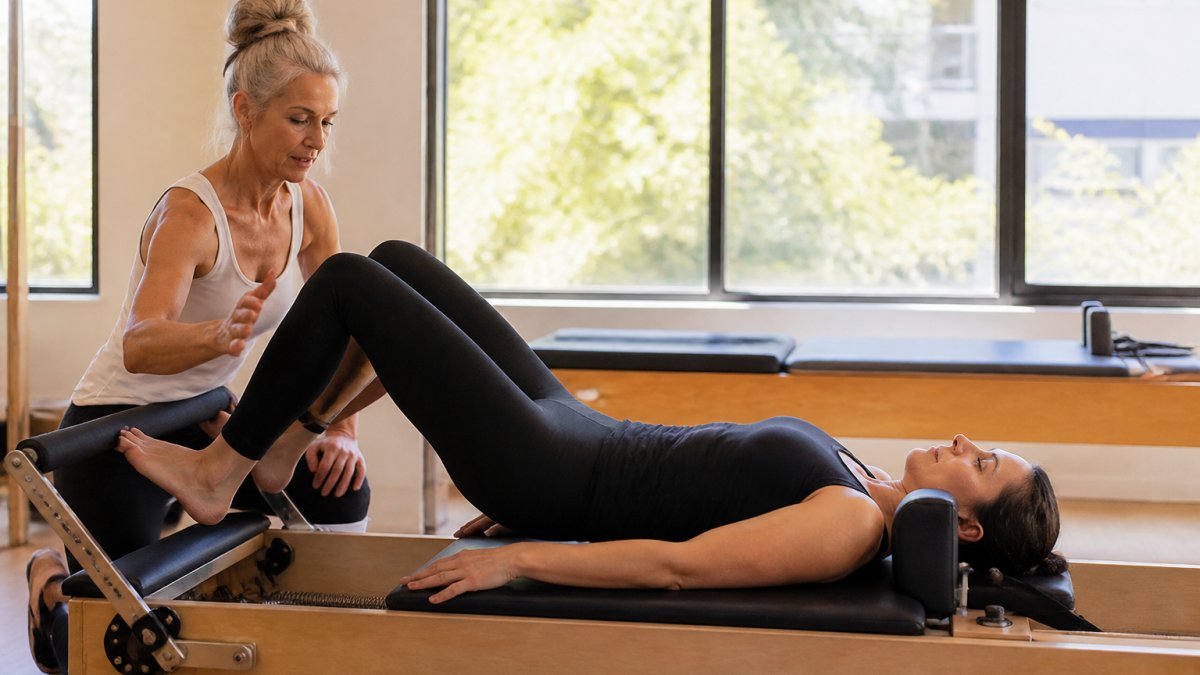
The reformer is a sliding platform on a frame. You lie, sit or kneel on the carriage and push or pull against springs, a footbar, straps and handles.
More spring tension means more resistance. Fewer springs mean less stability, so your core works harder to control the movement.
The instructor sets the springs for you before each exercise. You do not need to work the machine out on day one.
How a Reformer Class Differs from Mat Pilates
Mat Pilates uses your body weight on the floor. A reformer supports you and adds spring resistance, so you can train control with less load through painful joints.
That support makes reformer work a low-impact option for people returning to exercise. The trade-off is that the machine does part of the work, so precise cues matter more than effort.
What Happens During the Class, Step by Step
Most beginner reformer classes follow a similar rhythm. Knowing the sequence in advance removes most of the uncertainty.
- Check-in and setup. You arrive, confirm your booking, and the instructor shows you to a reformer. They will ask about injuries and may adjust the footbar and springs before you begin.
- Warm-up. The first five to ten minutes are usually gentle, breathing, spinal articulation and slow leg or arm movements to wake up the core and warm the joints.
- Main exercise blocks. The instructor leads a series of exercises, often grouped by body area or movement pattern. You might do footwork lying on your back, then seated arm work with straps, then kneeling or standing leg work. Springs and footbar height change between blocks.
- Transitions. You will stop between exercises while the instructor demonstrates the next one and adjusts equipment. This is normal and not a sign you are slow.
- Cool-down. The final five minutes slow the pace, often with stretching and breathing to settle the nervous system.
A common pattern is that the first class feels stop-start because so much is new. That is expected. By the second or third session the transitions shorten and the flow becomes familiar.
Watch out: if an exercise causes sharp pain, dizziness or numbness, stop and tell the instructor immediately rather than pushing through to keep up with the group.
How the Instructor Supports Beginners
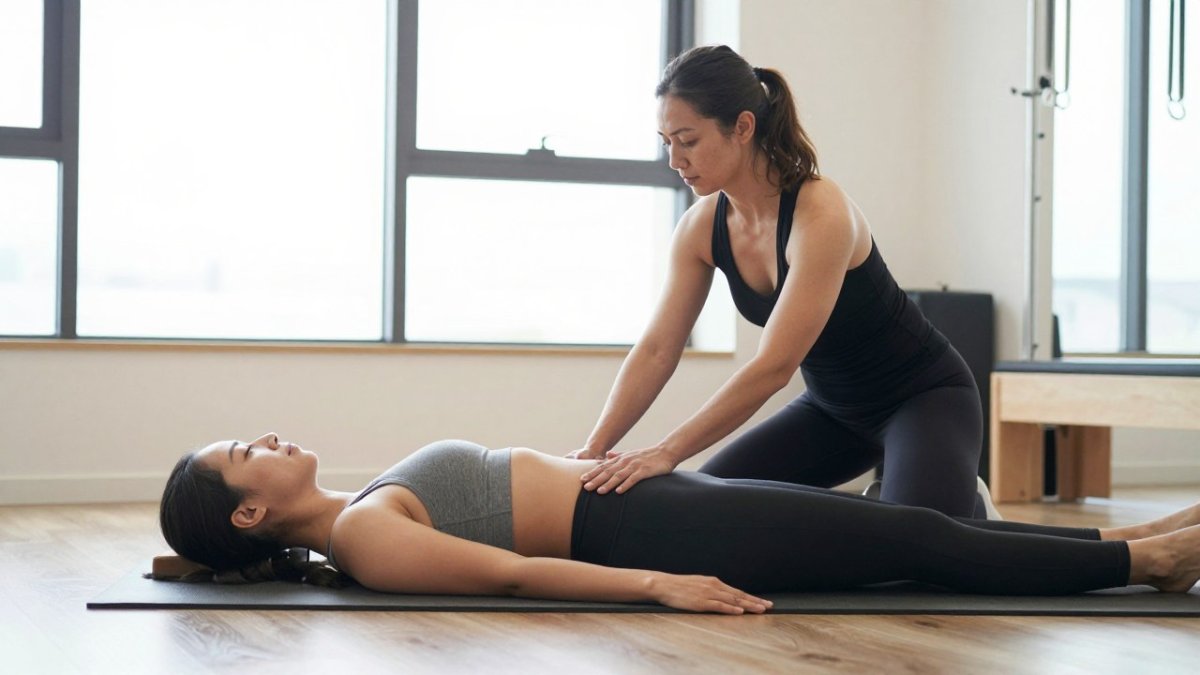
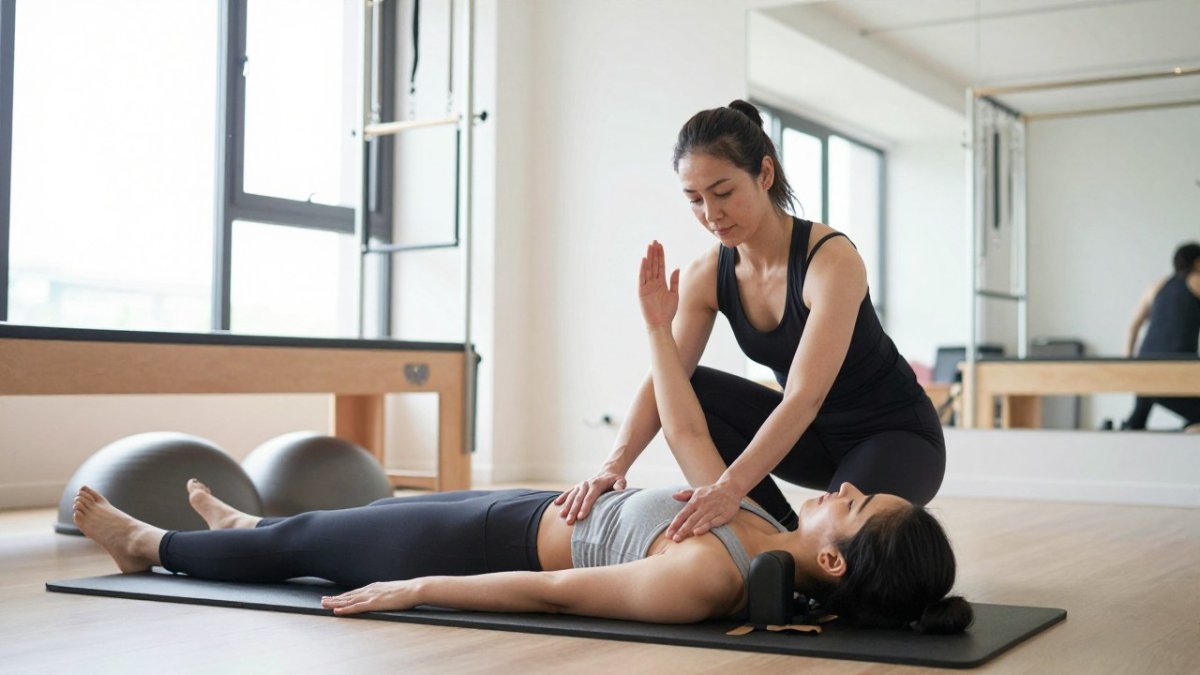
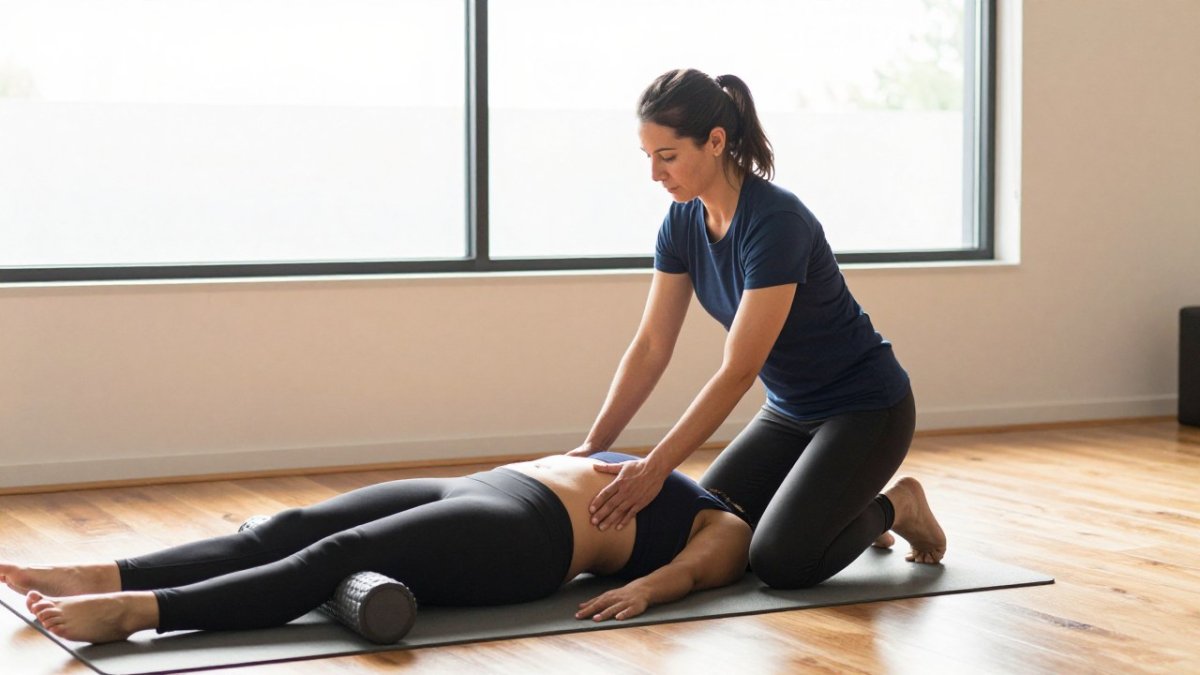
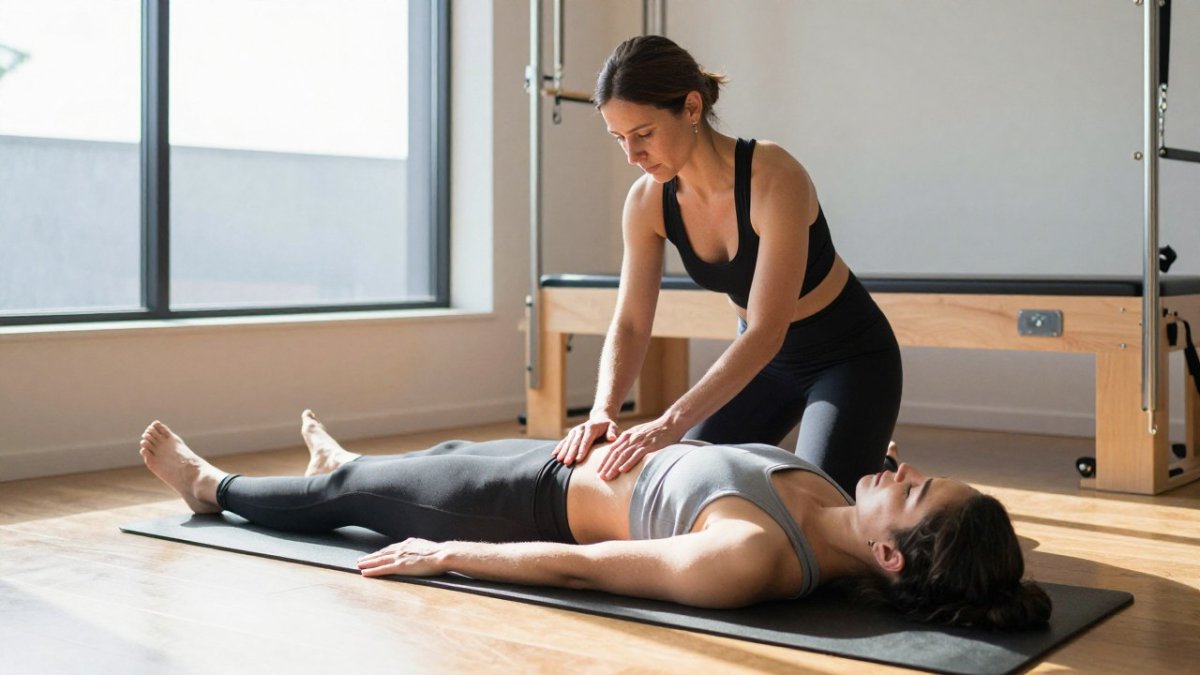
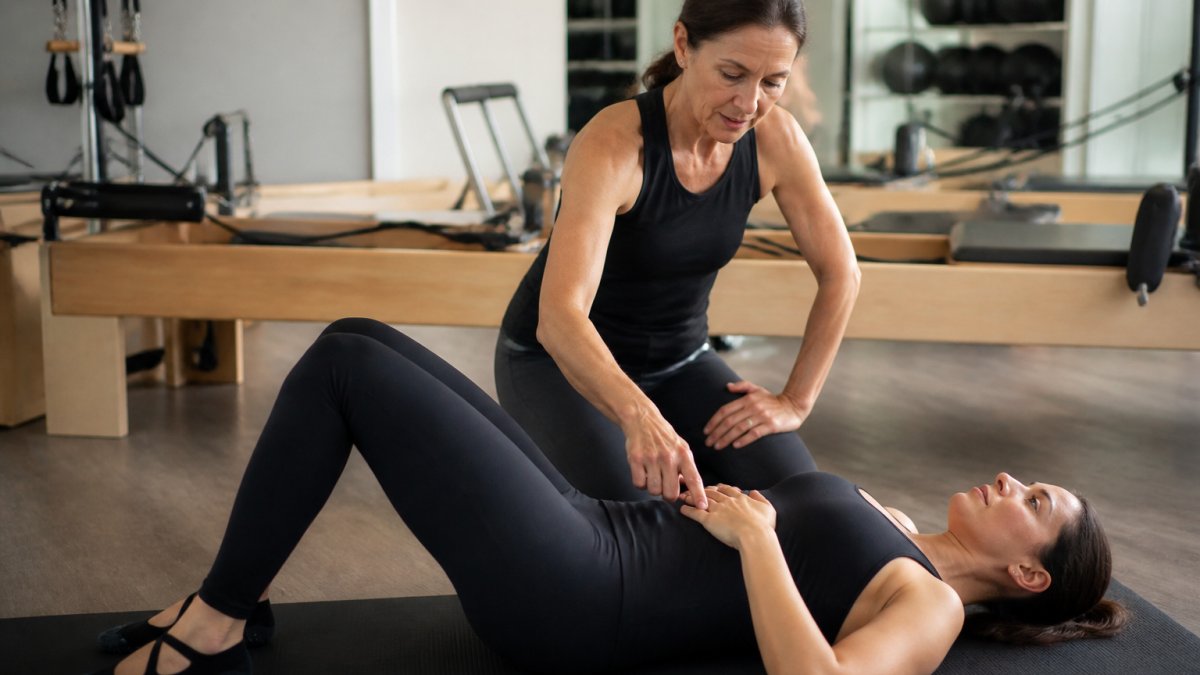
A good instructor watches form continuously and offers modifications rather than a single correct version of each exercise. In a small class they can usually see every carriage.
Ask the studio when you book whether beginner classes are capped at a smaller number, whether a one-to-one introduction is available, and whether the instructor stays on the floor with the group or demonstrates from a reformer. Those three answers tell you a lot about how supported you will feel on day one.
What to Wear to Reformer Pilates
Wear fitted, stretchable clothing you can move in comfortably. Loose tops fall over your face when you lie back, and baggy shorts can catch on the carriage.
What to wear to reformer Pilates comes down to three things:
- Leggings or fitted shorts that stay in place through hip and leg movements
- A fitted top or t-shirt that will not ride up when you roll down
- No zips, buckles or loose jewellery that could press into your back or catch the straps
Avoid heavy sweat fabric. Studios are usually warm, and you will feel every extra layer.
Do You Need Grip Socks?
Grip socks are worth bringing. Many studios ask for them for hygiene, and the rubber soles stop your feet sliding on the carriage or footbar.
If you do not own a pair, ask the studio before your first visit. Some lend or sell them at reception.
What to Bring and How Early to Arrive
Bring a water bottle, a small sweat towel and grip socks, and arrive 10 to 15 minutes early. That buffer covers check-in, a quick tour of the equipment and a chance to tell the instructor you are new.
A simple pre-class checklist:
BOOK YOUR FREE 15 MINUTE CONSULTATION →
- Water bottle
- Sweat towel
- Grip socks
- Fitted clothing
- Any relevant scans or reports, if you have back pain
Arriving early also lets you mention injuries without holding up the class. If you are running late, call ahead so the instructor can plan a spot near the door.
What to Tell Your Pilates Instructor Before Class
Tell your instructor three things before the session starts: that this is your first reformer class, any pain or injury you are managing, and anything that affects movement, such as recent surgery or pregnancy.
What to tell your Pilates instructor before class matters more than most beginners expect. A good instructor will then offer modifications, adjust your spring resistance and watch your form more closely.
Be specific. “My lower back aches after long sitting” is more useful than “my back is a bit sore”. Mention scans or reports if you have them.
How Long a Reformer Pilates Class Runs
Most reformer Pilates classes run 45 to 60 minutes, including a warm-up, the main exercise sequence and a cool-down. Introductory or one-to-one sessions often run longer.
Reformer Pilates class duration depends on the studio and the class level. A beginner class usually moves at a slower pace, with more demonstration and verbal cues, so expect plenty of stopping and adjusting.
Ask the studio about timing when you book, and plan to stay a few minutes after class for questions.
A Beginner’s Reformer Equipment Glossary
The reformer has its own vocabulary, and knowing the words takes away most of the first-class nerves.
| Term | What it is | How you will use it |
|---|---|---|
| Carriage | The sliding platform you lie, sit or kneel on | It moves under you as you push or pull; your control of that movement is the exercise |
| Springs | Clips of varying tension attached under the carriage | The instructor sets these before each exercise; more springs mean more resistance, fewer mean less stability |
| Footbar | The padded bar at one end | You press feet or hands against it to drive the carriage away |
| Straps and handles | Loops and ropes at the other end | You hold or loop them around feet and hands for arm and leg work |
| Headrest | An adjustable pad at the top of the carriage | Raised or lowered depending on whether you are lying flat or sitting |
| Shoulder blocks | Padded stops near the head end | They give your shoulders something to press against so you do not slide |
| Pilates ring | A flexible circle you squeeze or hold | Adds resistance or gives feedback on alignment |
| Soft ball | A small inflatable ball | Placed between knees or hands to help you feel alignment and stability |
| Blocks and bands | Props kept beside the reformer | Used to modify an exercise, support a limb or add light resistance |
A few practical points help the glossary stick. The carriage runs on rails, so it will move the moment you shift your weight, that is normal, not a sign you are doing it wrong.
Watch out: never unclip or add springs yourself mid-exercise unless the instructor asks you to, because the carriage can shift suddenly when tension changes.
Your instructor will name each part as you use it, so you will pick up the terms quickly.
Safety, Accessibility and When to See a Health Professional
Reformer Pilates is generally a low-impact form of exercise, but it is not risk-free, and a class is not a substitute for medical assessment. Tell your instructor about any condition before you start.
Seek medical advice before your first class if you have:
- Significant or radiating back pain
- Numbness, tingling or limb weakness
- Unexplained night pain, fever or recent trauma
- Recent surgery or a joint replacement
- Pregnancy, without checking with your treating practitioner first
Stop and speak up if an exercise causes sharp pain, dizziness or numbness. A good instructor will modify the movement rather than push you through it.
If back pain is your reason for starting, our guide to Chronic Back Pain: A Guide to Pilates & Core Stability explains how core stability work fits alongside professional care. If you are choosing between studios, our Pilates Studio Guide: How to Choose in 2026 covers what to look for, and men new to the equipment can read Pilates For Men before their first session.
Book Your Free 15 Minute Consultation
The best way to prepare is to ask your questions before you arrive. At Menezes Method Pilates, every new client starts with a one-to-one session, and our approach uses individual movement assessment rather than a one-size-fits-all routine.
Our method replaces the usual navel-to-spine cue with the B-Line®, and teaches Stable Spine rather than forcing the back flat. The SpinalCore system then builds core control that carries into sitting, standing and lifting.
You can see what the first session involves on our pricing page, or book a free 15 minute consultation with our team and start your first reformer class with a plan built around your body.
Frequently Asked Questions
What should I wear to my first reformer Pilates class?
Wear fitted, stretchable clothing you can move and breathe in, such as leggings and a close-fitting top. Loose shirts can ride up or catch on the carriage and straps, so closer fits work better. Grip socks are usually expected in studios because they improve footing on the footbar and carriage. Bring a water bottle and a small towel, and leave jewellery and heavy accessories at home so nothing snags on the equipment.
Do I need to be fit before starting reformer Pilates?
No. A beginner or introductory class is designed for people with no reformer experience, and exercises can be modified for different fitness levels. The springs, straps and footbar let the instructor adjust resistance and range of motion to suit you. If you have an existing injury, chronic pain or recent surgery, mention it before class so the instructor can adapt the sequence. A movement assessment, such as the one used in the Menezes Method, helps identify where your control needs work.
How long does a reformer Pilates class last?
Most reformer Pilates classes run between 45 and 60 minutes, though introductory or one-on-one sessions can be shorter. The class duration usually includes a warm-up, the main exercise sequence and a cool-down. Arrive 10 to 15 minutes early for your first class so you can check in, meet the instructor and get set up on the reformer without rushing. Ask the studio about session length when you book, as it varies by format.
What should I tell the instructor before my first class?
Tell your instructor you are new to the reformer, and flag any pain, injuries, surgeries or conditions that affect how you move. Mention if you have been diagnosed with a back, hip, knee or shoulder issue, and describe what makes symptoms worse. Ask for help with the equipment setup and say if a movement does not feel right during class. Clear communication lets the instructor offer modifications and adjustments so you can work at a level that suits you.