Table of Contents
- Why Pilates Failed My Back: When Good Intentions Meet Bad Form
- Lower Back Pain After Pilates: What Your Symptoms Are Telling You
- Core Engagement and Deep Abdominal Support: Where Pilates Back Pain Starts
- Pilates Exercises to Avoid With Back Pain (and What to Do Instead)
- Pilates Modifications for Back Pain: Adapting Before You Quit
- How to Prevent Back Pain During Pilates: Class, Instructor, and Equipment Choices
- Returning to Pilates After a Flare-Up: A Step-by-Step Plan
- Stage 1: Settle the Flare-Up (Usually 2-5 Days)
- Stage 2: Rebuild Breathing and Deep Core Control (Usually 3-7 Days)
- Stage 3: Supported Matwork (Usually 1-2 Weeks)
- Stage 4: Reintroduce Equipment (Usually 1-2 Weeks)
- Stage 5: Return to Class at Reduced Intensity
- Adapting to a Specific Diagnosis
- What to Tell Your Instructor
- When to Seek Professional Advice About Your Back
- Frequently Asked Questions
Last Updated: October 12, 2026
Why Pilates Failed My Back: When Good Intentions Meet Bad Form
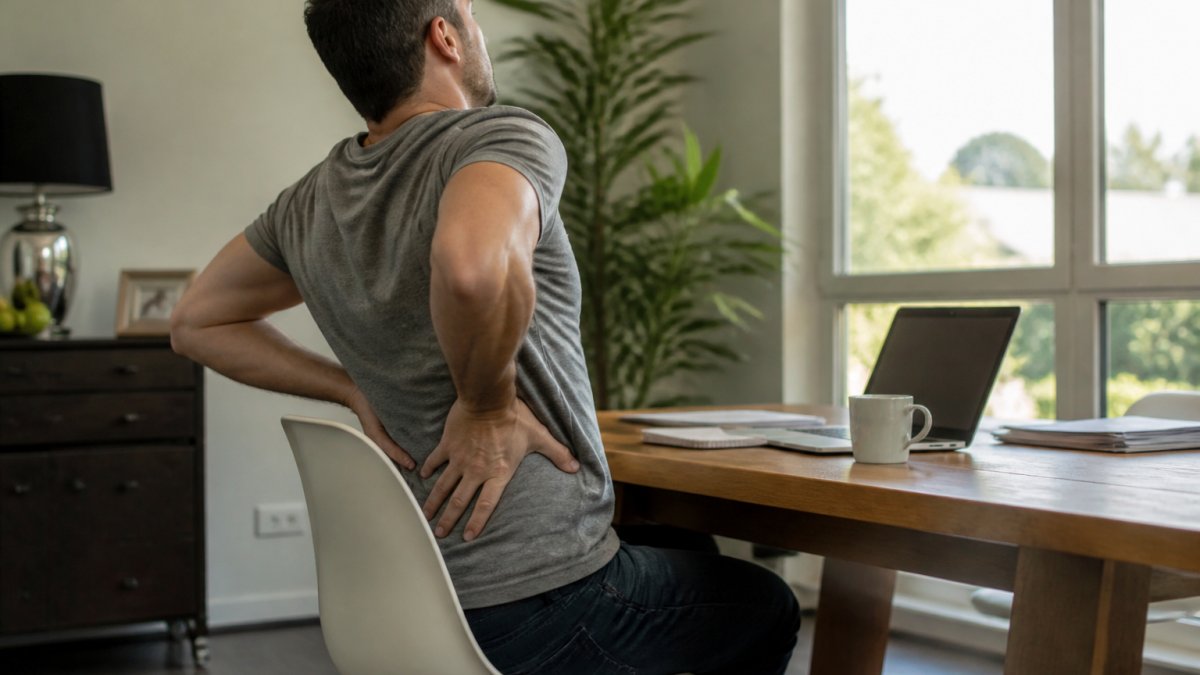
If you are asking why Pilates failed my back, the answer is usually not Pilates itself. It is how the exercises were taught, how hard you pushed, and whether the program was built for your spine. This guide from Menezes Method Pilates explains what goes wrong and how to fix it.
Pilates is a movement system built on control, breathing and precision. When those pieces are missing, the lower back often pays the price. A common mistake is copying a group class pace instead of your own.
Below, we break down the warning signs, the exercises that cause trouble, and how to adapt a session before you quit.
Better Health Channel guide to back pain
Lower Back Pain After Pilates: What Your Symptoms Are Telling You
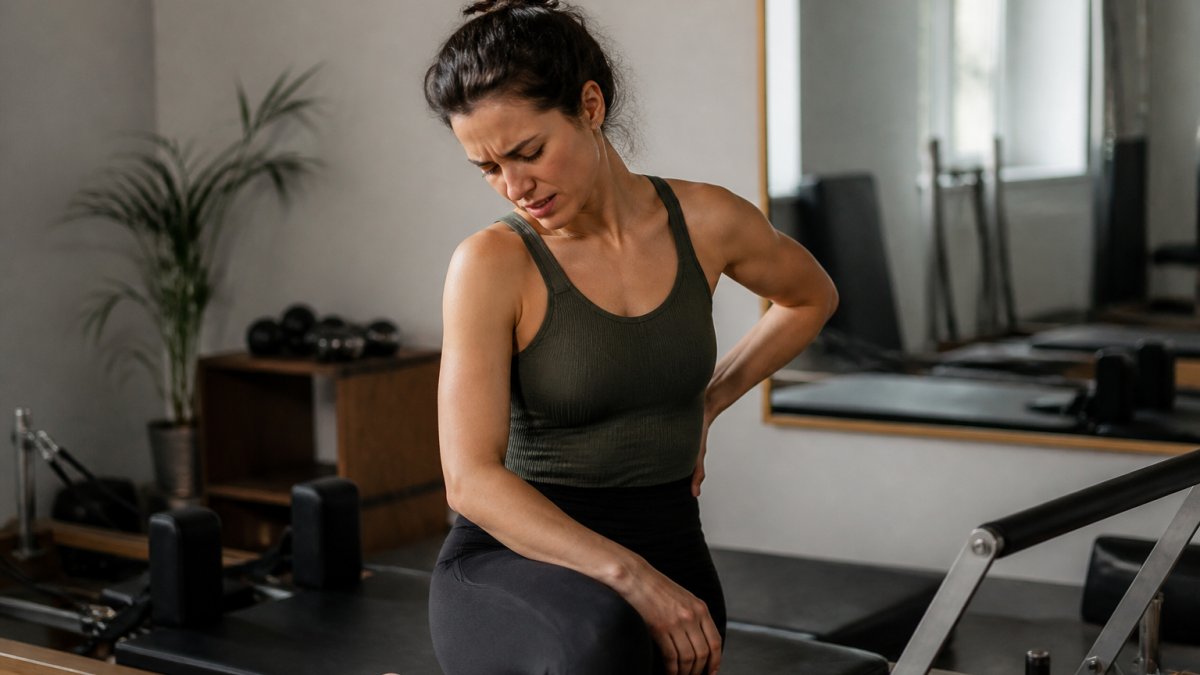
Lower back pain after Pilates is your body reporting on the load it just carried. The timing, location and behaviour of that pain matter more than most people realise, because they point to different causes and different next steps.
Pain During a Session vs Pain That Shows Up the Next Day
Pain during a movement usually points to technique, alignment or a position your spine cannot hold yet. Pain that appears the next day usually points to dosage: too many reps, too much intensity, or a new exercise your deep core was not ready for.
A useful rule of thumb:
- During: stop the exercise, reset your position, and try a smaller range. If it still hurts, leave it out for the day.
- Next day: treat it as a dosage signal. Reduce reps, range or resistance by roughly a third and rebuild.
- Two or more days later: this is no longer ordinary soreness. Treat it as a flare-up and follow the return plan below.
How to Tell Soreness From a Flare-Up
Muscle soreness feels broad, affects both sides, and eases with gentle movement. A flare-up is sharper, often sits in one spot, and may come with muscle tightness, tingling or a feeling of instability. If symptoms worsen over 24 hours, stop and seek advice.
| Signal | Ordinary soreness | Flare-up | Seek advice urgently |
|---|---|---|---|
| Timing | 12-48 hours after | During or within hours | Any time |
| Location | Broad, both sides | One spot, one side | One spot, may travel |
| Behaviour | Eases with movement | Does not settle, may worsen | Worsens despite rest |
| Other signs | None | Tightness, stiffness | Numbness, weakness, pain down the leg, changes to bladder or bowel control |
A Simple Two-Week Symptom Diary
Track four things after each session: the exercise you were doing, the time pain started, where it sat, and what made it better or worse. After two weeks, patterns usually emerge, for example, pain that only follows roll-ups, or pain that appears the day after a longer class. Take that record to your instructor or physiotherapist; it is far more useful than a vague description.
Numbness, weakness, or pain that travels down the leg is not a technique problem. Stop exercising and see a doctor or physiotherapist promptly.
Better Health Channel guide to back pain
Core Engagement and Deep Abdominal Support: Where Pilates Back Pain Starts
Poor core engagement is the most common reason Pilates aggravates a back. The deep abdominal muscles, including the transverse abdominis, need to switch on before the limbs move, not after.
When they switch on late, the spinal muscles and back muscles take the load. That is how a gentle mat exercise becomes a strain.
In practice, this means slowing down. Breathe out as you engage, keep the ribs stacked over the pelvis, and check that your lower back is not arching to get the job done.
Sucking your navel to your spine and holding your breath is a common error. It reduces deep core activation and can raise muscle tightness through the lower back.
Pilates Exercises to Avoid With Back Pain (and What to Do Instead)
Some classical Pilates exercises load the spine heavily and are unsuitable when the back is already irritated. You can modify most of them rather than cut them out.
The Roll-Up and Other Classical Mat Exercises That Load the Spine
The roll-up asks the spine to flex under load through a long range. If your deep core cannot control that range, the lower back does the work. Swap it for a supported version, or build control first.
| Exercise | Why It Can Aggravate | Safer Alternative |
|---|---|---|
| Roll-up | Loads spinal flexion | Knee rolls with support |
| Teaser | High demand on deep core | Seated leg lifts, small range |
| Swan | Extends the lower back | Prone chest lift, low height |
| Leg circles | Pelvis loses stability | Single-leg slides |
Australian Physiotherapy Association on exercise and back pain
Pilates Modifications for Back Pain: Adapting Before You Quit
Modification is not a step down. It is how you keep training while the back settles, and it is where most people give up too early.
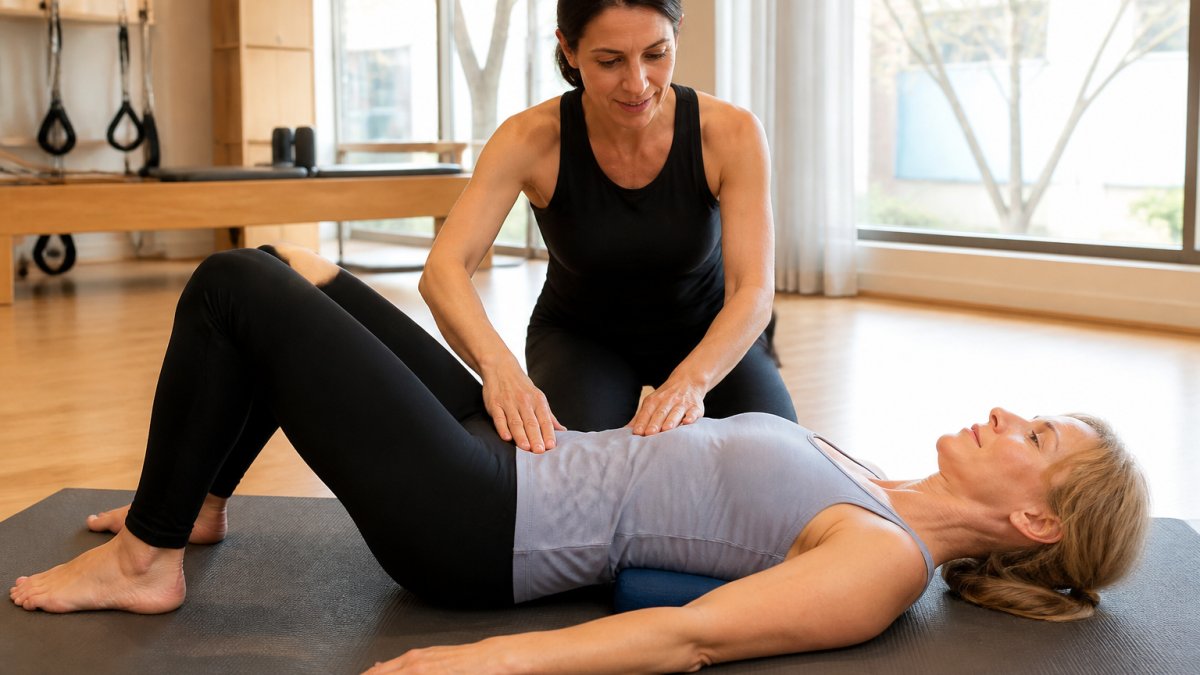
Start with these changes:
- Reduce the range of every movement
- Add support under the pelvis or knees
- Lower the reps and slow the tempo
- Keep the spine in a stable position throughout
This is the principle behind the Menezes Method, which uses Stable Spine and the B-Line instead of navel to spine. The focus stays on quality of movement, not completing the set.
How to Prevent Back Pain During Pilates: Class, Instructor, and Equipment Choices
Prevention comes down to three choices: the class, the instructor, and the equipment. Get these right and most flare-ups never happen.
BOOK YOUR FREE 15 MINUTE CONSULTATION →
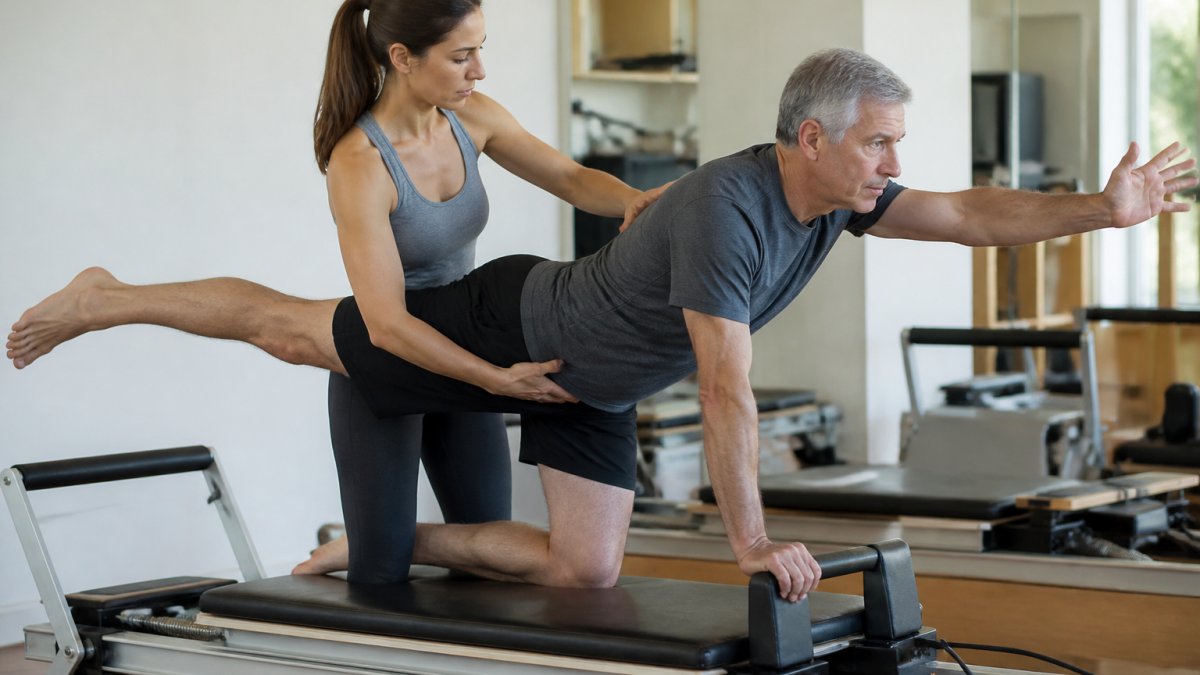
A reformer gives more support and feedback than matwork, which suits a sensitive back early on. Mat classes demand more control, so they are better once your deep core is stronger.
Before you book, ask:
- Does the instructor assess you one-on-one first?
- Can exercises be modified for your symptoms?
- Is the class size small enough for hands-on cues?
Ask to observe a class before joining. Watch whether the instructor corrects alignment or just calls the next exercise. That single detail tells you most of what you need to know.
Returning to Pilates After a Flare-Up: A Step-by-Step Plan
Coming back too fast is the fastest way to re-injure. The plan below is graded, but the timeline is a guide, not a schedule, progress only when each stage feels easy for two consecutive sessions, and drop back a stage if symptoms return.
Stage 1: Settle the Flare-Up (Usually 2-5 Days)
Rest from loading. Gentle walking, light daily activity and comfortable positions only. Avoid prolonged sitting and any movement that reproduces the pain.
Stage 2: Rebuild Breathing and Deep Core Control (Usually 3-7 Days)
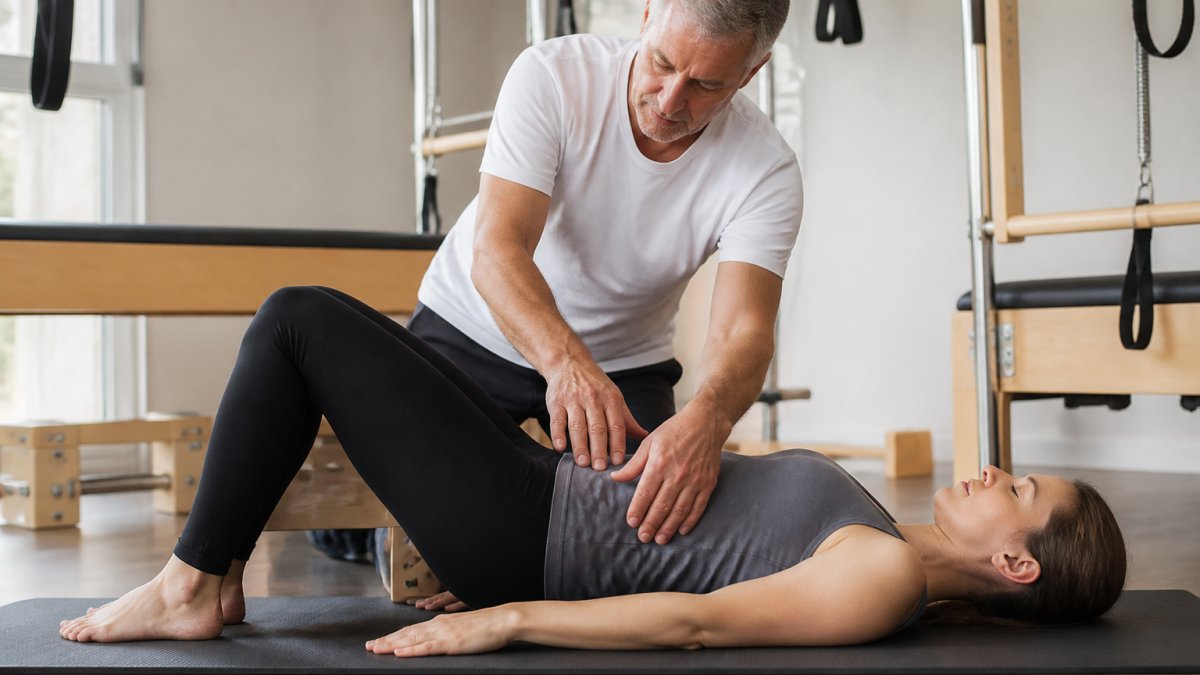
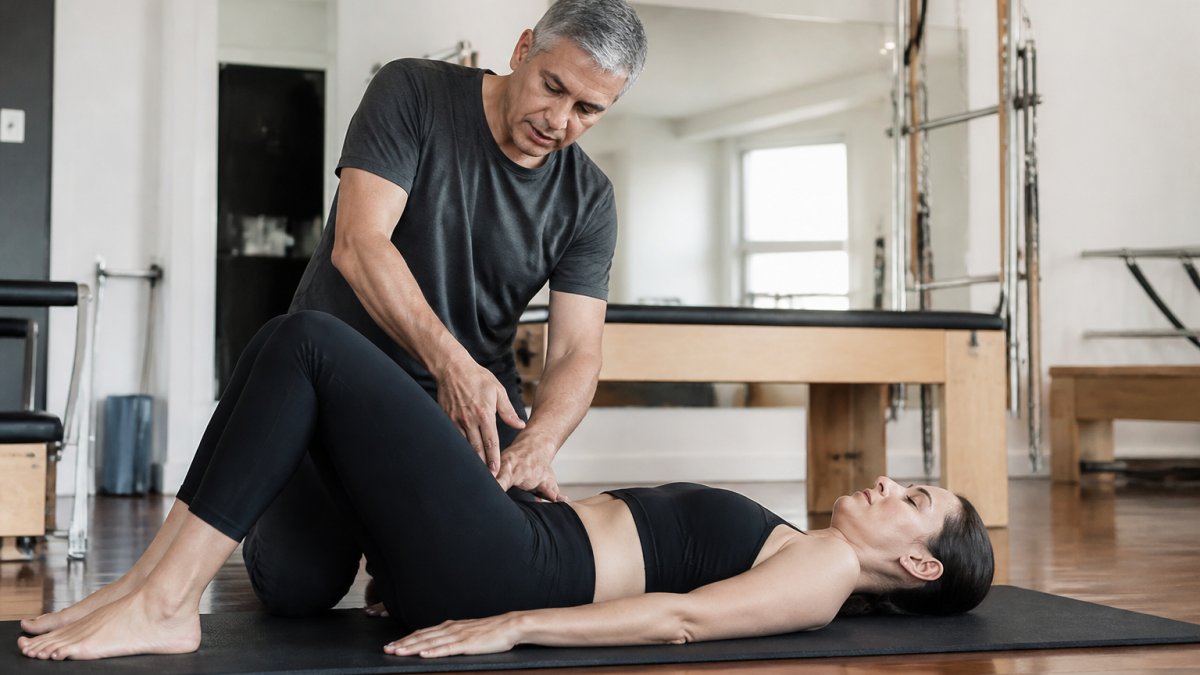
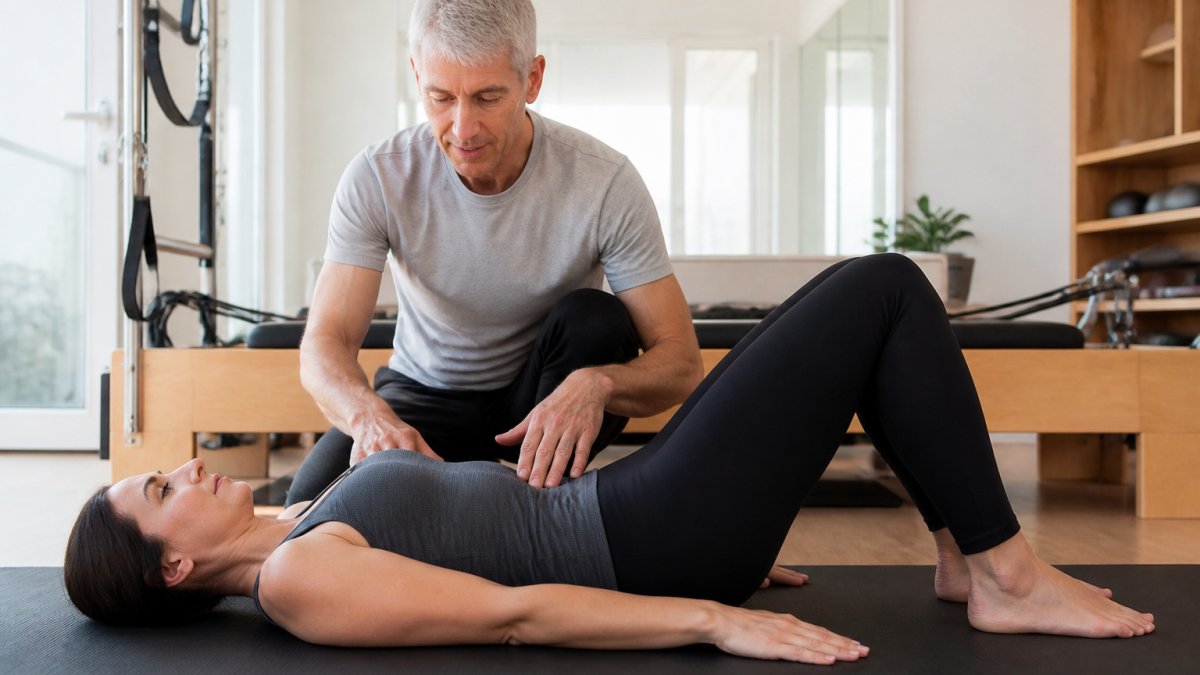
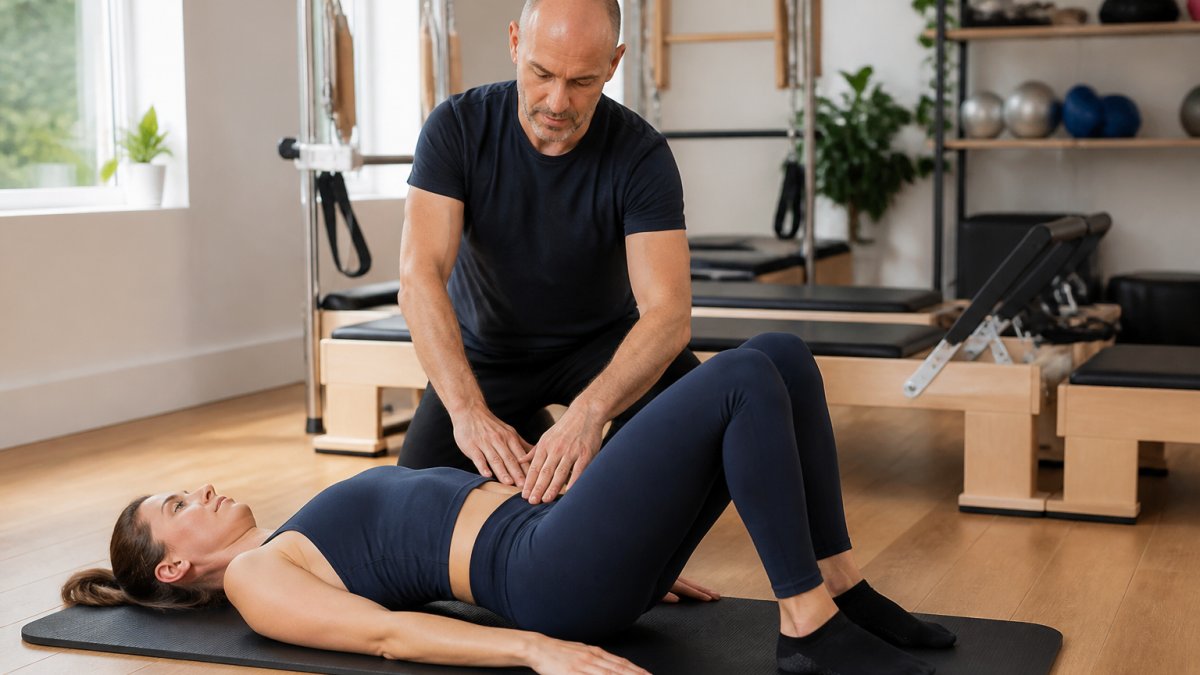
Lie on your back with knees bent. Practise slow breathing with a gentle engagement of the deep abdominal muscles on the exhale. Aim for control, not effort. If you cannot breathe normally while holding the position, you are working too hard.
Stage 3: Supported Matwork (Usually 1-2 Weeks)
Add small-range, supported exercises: knee rolls, single-leg slides, supported bridging. Keep the spine in a stable position and stop before fatigue changes your form. Two sets of five to eight controlled reps is plenty.
Stage 4: Reintroduce Equipment (Usually 1-2 Weeks)
Reformer work with light springs gives more support and feedback than matwork, which suits a sensitive back early on. Use the reformer to relearn control before returning to full mat classes.
Stage 5: Return to Class at Reduced Intensity
Rejoin at roughly half your previous volume. Tell the instructor before class what happened and which movements still provoke symptoms.
Adapting to a Specific Diagnosis
Exercises depend on the person and the assessment, not the label. As a general guide:
- Disc-related pain: avoid loaded spinal flexion and prolonged sitting; favour neutral-spine work and walking.
- Facet joint irritation: avoid end-range extension; favour flexion-biased, supported positions.
- Sacroiliac joint pain: focus on pelvic stability and gluteal control; avoid wide asymmetrical ranges.
- Sciatica or nerve pain: avoid positions that reproduce leg symptoms; keep ranges small and stop if symptoms travel.
These are starting points only. A physiotherapist or experienced clinical Pilates instructor should assess you and tailor the progression.
What to Tell Your Instructor
Before class, share: what happened, which movements provoke symptoms, what you have already tried, and any diagnosis or imaging you have. Ask for alternatives in advance rather than mid-exercise. A short written note is often easier than explaining in a busy studio.
Progress is measured by control, not by returning to your old class level. If you can complete a stage twice with no next-day symptoms, you are ready to move on.
Australian Physiotherapy Association on exercise and back pain
When to Seek Professional Advice About Your Back
Some symptoms need a professional, not a modification. See a doctor or physiotherapist if pain persists beyond a few weeks, wakes you at night, or comes with numbness or weakness in the legs.
If you have a specific diagnosis, a tailored assessment matters more than any generic class. At Menezes Method Pilates, our individual movement assessment looks at how you breathe, sit and move, then builds a program around your pattern.
We have taught this approach since 1986, and clients like Zang Angi report feeling stronger with reduced lower back pain after three months.
Frequently Asked Questions
Can Pilates be bad for your back?
Pilates itself isn’t inherently bad for your back, but poorly taught or poorly matched sessions can aggravate existing problems. When core engagement, spinal positioning, and exercise selection don’t suit your body, the load shifts to back muscles and joints instead of the deep abdominal muscles. This is why some people experience lower back pain after Pilates while others improve. The method matters less than whether the session is adapted to your specific movement pattern, injury history, and current tolerance.
Why does my lower back hurt after Pilates but not during?
Pain that appears hours later often points to overexertion, muscle tightness, or compensation patterns that built up during the session. You may have pushed through a roll-up or teaser using your back muscles rather than your deep core, and the soreness shows up once the muscles cool down. It can also reflect exercise dosage that was too high for your current tolerance. Track which movements preceded the pain and reduce their range or repetition count next time.
How can I modify Pilates exercises for back pain?
Start by reducing range of motion and supporting the lower back with a cushion or small ball. Swap full roll-ups for partial curl-ups, replace double leg lifts with single leg slides, and use a reformer’s spring assistance instead of bodyweight resistance. Pilates modifications for back pain also include slowing the tempo, reducing repetitions, and pausing between exercises. The goal is to keep moving without triggering symptoms, then progress gradually as your tolerance improves.
When should I seek professional advice about back pain after exercise?
See a qualified health professional if pain persists beyond a few days, radiates into your legs, comes with numbness or tingling, or affects your bladder or bowel control. Also seek advice if you’ve had to stop Pilates entirely because of pain, or if the same movements keep causing flare-ups despite modifications. A physiotherapist or musculoskeletal doctor can assess whether your symptoms need investigation and help you plan a safe return to Pilates.
Back pain that keeps returning is frustrating, and a generic class often makes it worse rather than better. The Menezes Method Pilates approach uses individual assessment, the SpinalCore system and Stable Spine principles to build control before load. Book your free 15 minute consultation and find out how to move without fear of your back.