Table of Contents
- Wellness Pilates CBD: What Actually Matters When You Choose
- Reformer Pilates CBD: What the Equipment Changes
- Private Pilates CBD: One-to-One Versus Semi-Private Sessions
- Beginner Pilates Classes CBD: How to Start Without Flaring Pain
- Pilates for Back Pain: Why General Classes Often Fall Short
- Picking a Studio by Goal, Health Condition and Schedule
- What to Ignore When Comparing CBD Pilates Options
- Conclusion: Match the Method to Your Movement Problem
- Frequently Asked Questions
Last Updated: October 14, 2026
Wellness Pilates CBD: What Actually Matters When You Choose
Wellness Pilates CBD is not a single thing. It is a group of studios offering reformer, matwork and clinical-style sessions within a few blocks of each other, and the differences between them matter far more than the postcode. At Menezes Method Pilates, we have taught movement since 1986, and the question we hear most often is simple: why did one approach help when another did not?
The honest answer is method, not equipment.
A reformer class is not automatically better than matwork. A private session is not automatically better than a group class. What changes your back pain is whether someone assesses how you move, then teaches you to control it. Below, we break down the formats, the session types and the practical details so you can choose well.
The studio that helps you is the one that assesses you first and teaches control, not the one with the newest equipment or the busiest timetable.
Reformer Pilates CBD: What the Equipment Changes
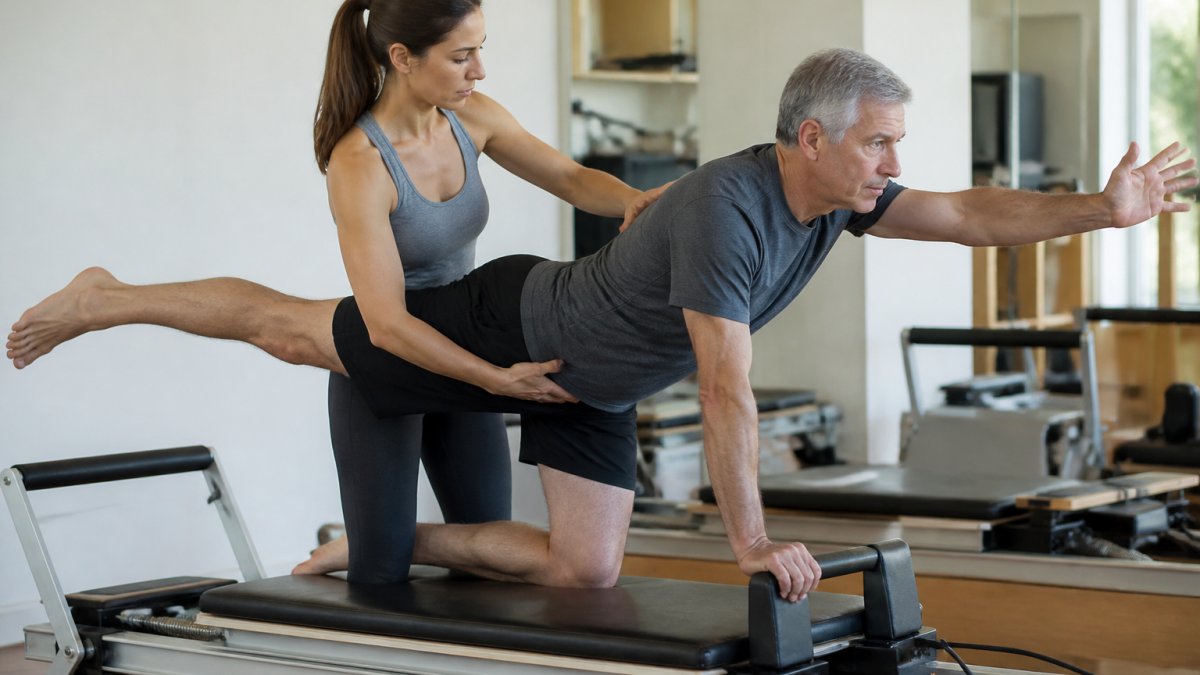
Reformer Pilates uses a sliding carriage, springs and straps to add resistance and support. In practice, that means the machine can assist a movement you cannot yet control, or resist one you can.
What the reformer does not do is teach timing. Springs give feedback; they do not correct a breathing pattern or a pelvis that rotates under load. We treat the reformer as one tool among several.
Mat, Reformer and Studio Apparatus Compared
| Format | What it does well | Best for | Watch out for |
|---|---|---|---|
| Matwork | Builds control with no equipment to hide behind | Beginners, home practice | Hard on a spine that cannot yet tolerate floor work |
| Reformer | Supports or resists movement with springs | Progression, jump board work | Easy to follow along without real control |
| Wunda Chair | Loads standing and seated patterns | Single-leg control, balance | Less forgiving of poor alignment |
| Ladder Barrel, Cadillac | Opens the spine, supports extension | Stiffness, rotation work | Needs supervision to set up safely |
Class Formats You Will See in a CBD Studio
Most studios in a central business district run a mix of the following. The names vary, but the structure is fairly consistent.
- Group reformer classes, typically 6 to 12 people on reformers, following a shared sequence. Good for general fitness and consistency once you already move well.
- Mat classes, no equipment beyond a mat and small props. Often the most affordable entry point and the easiest to replicate at home.
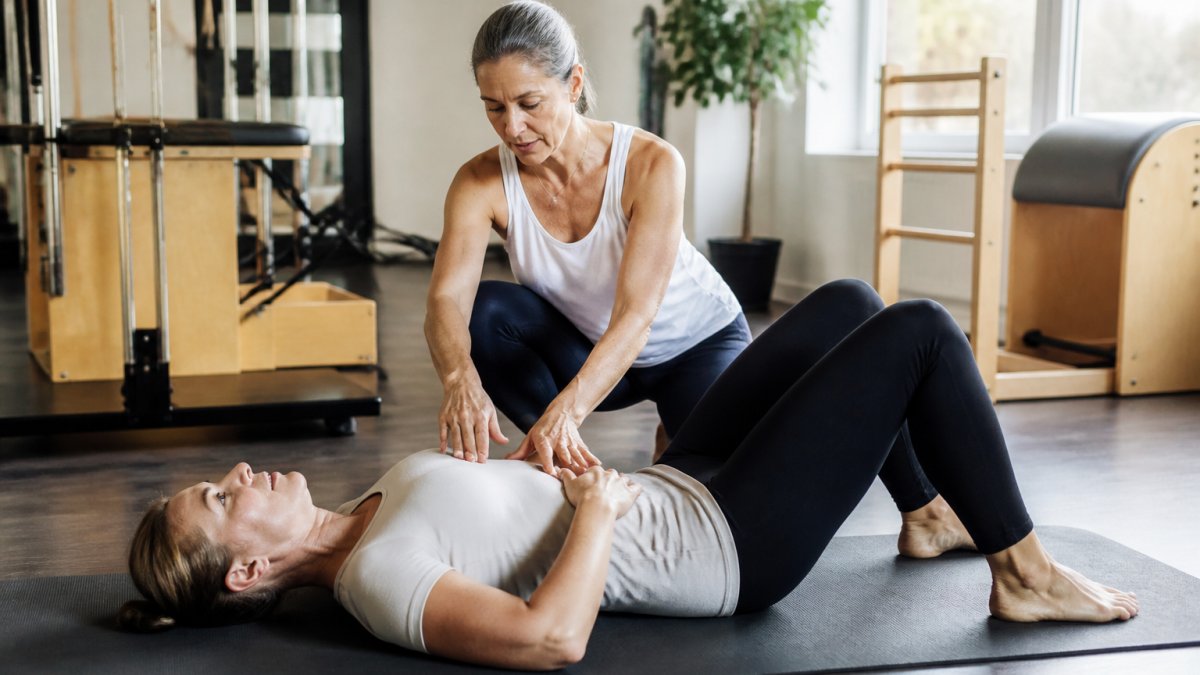
- Clinical or rehabilitation Pilates, usually one-to-one or small-group, led by an instructor with additional training in injury management. The focus is on assessment and modification, not choreography.
- Pre- and post-natal classes, modified programming for pregnancy and the postnatal period, with attention to pelvic floor and abdominal recovery.
- Express or lunch-time sessions, shorter classes, often 30 to 45 minutes, built around a CBD work schedule.
How to Choose a Format by Goal
- Chronic lower back pain: start with an assessment and one-to-one clinical sessions, then progress to a small group.
- General fitness and posture: group reformer or mat classes are fine, provided the instructor corrects individuals.
- Pre-natal or post-natal: look specifically for instructors trained in modified programming.
- Scoliosis or a diagnosed condition: ask how the studio adapts exercises individually before you book.
Ask to observe a class before booking. Watch whether the instructor corrects individuals or calls cues to the room. That single detail tells you more than any brochure.
Private Pilates CBD: One-to-One Versus Semi-Private Sessions
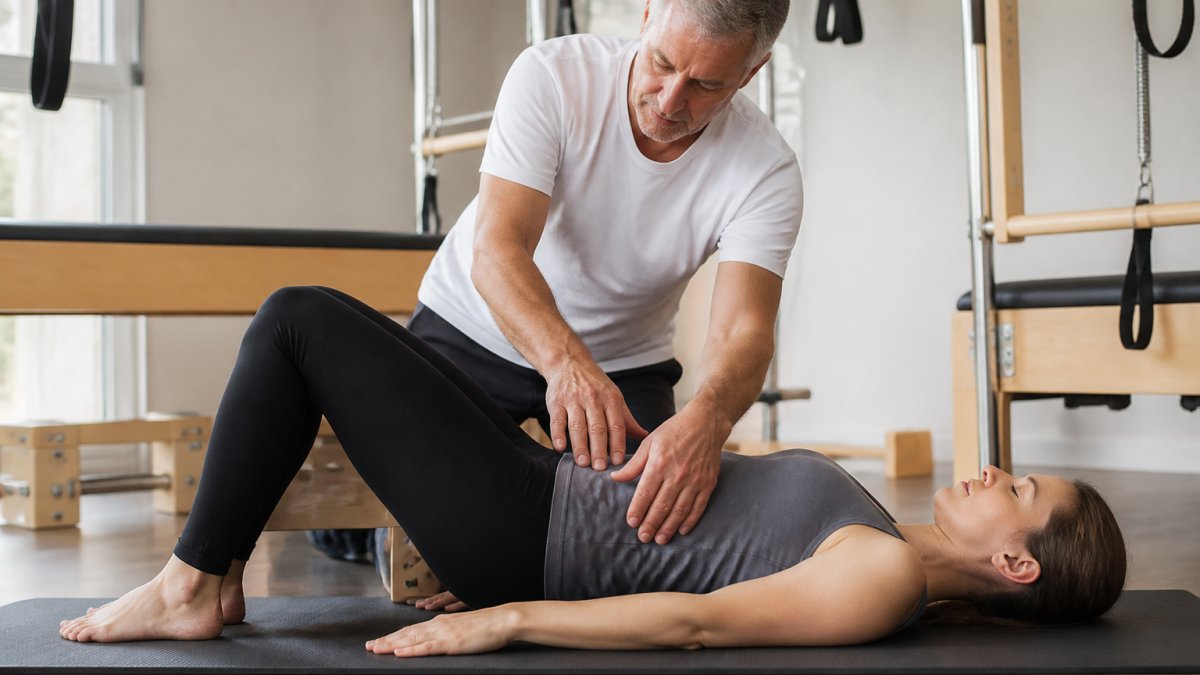
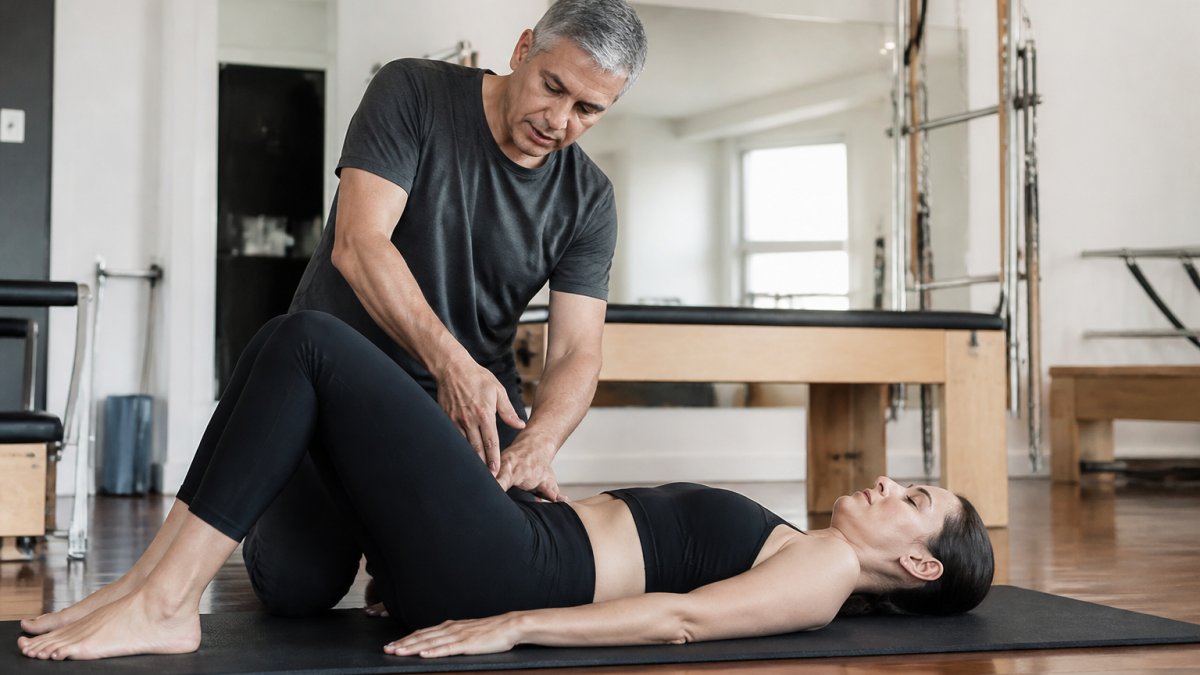
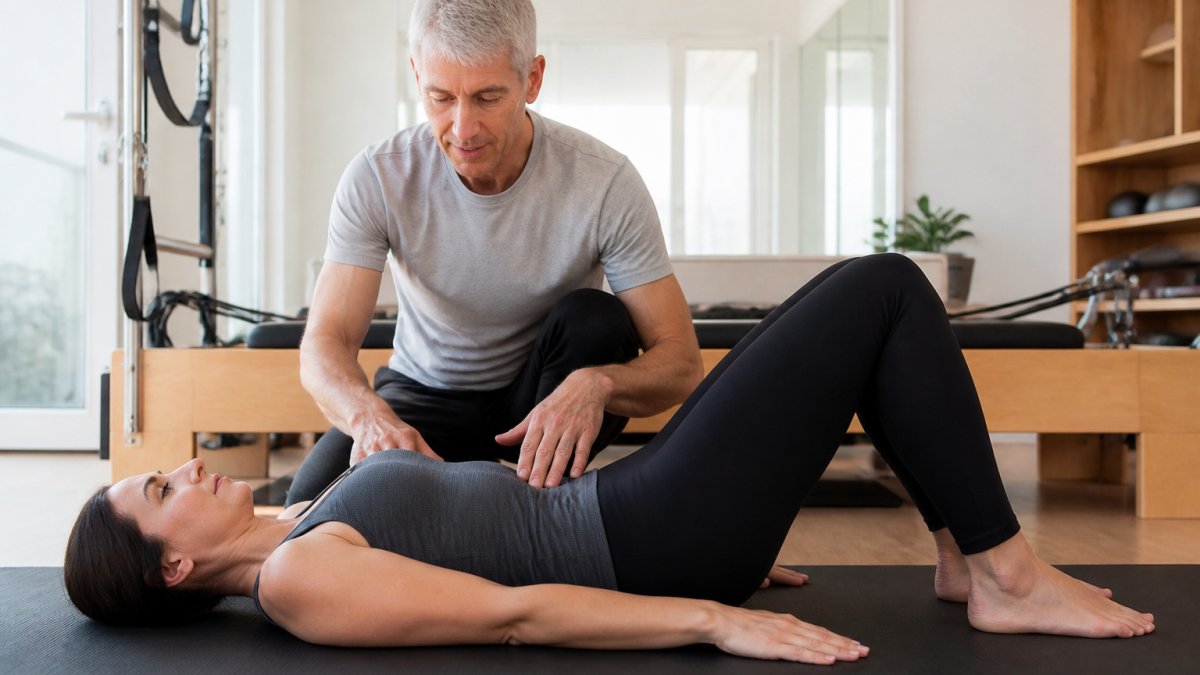
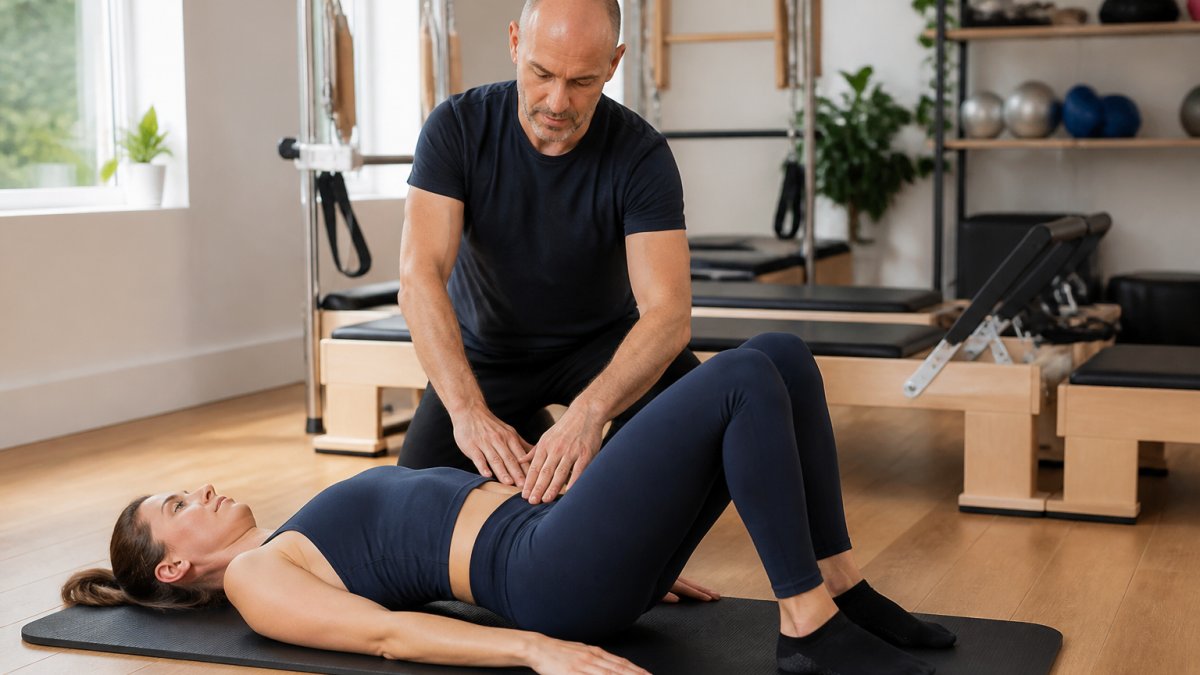
Private Pilates means one instructor working with one client, or with two in a semi-private session. The advantage is not extra attention for its own sake. It is that exercises can be modified in real time when something provokes pain.
In a semi-private session you still get hands-on correction, and the cost per person is lower. The trade-off is that the program must suit two bodies at once. Where someone has a specific health condition, a recent injury or a long history of back pain, we usually start one-to-one.
Group classes suit people who already move well and want consistency.
Beginner Pilates Classes CBD: How to Start Without Flaring Pain
Beginner Pilates classes should teach you how to breathe and how to hold a spinal position before they teach you exercises. If your first class is a fast reformer flow, you are being tested, not taught.
A sensible first month looks like this:
- Have someone watch you move before you join a class
- Learn to breathe into the lower ribs without gripping the stomach
- Practise one hip hinge pattern until it feels automatic
- Keep sessions short and frequent rather than long and occasional
- Stop any movement that produces radiating pain, numbness or tingling
The most common mistake beginners make is pushing through a movement because the rest of the class is doing it. Pain that travels down a leg is not a sign of progress. Stop and get assessed.
Pilates for Back Pain: Why General Classes Often Fall Short
General classes are built around a repertoire, not around you. Everyone does the same sequence at the same tempo, and the instructor’s job is to keep the room moving.
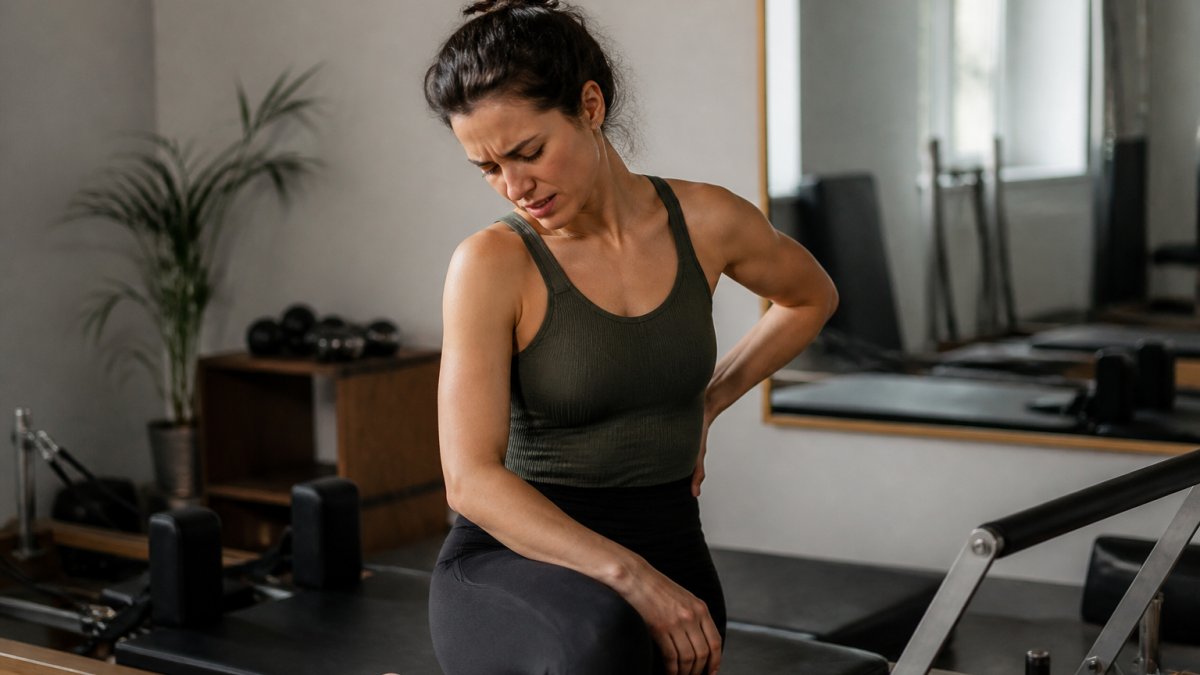
That structure works for fitness. It works poorly for recurring back pain, because the cause is usually a pattern rather than a weak muscle. Someone may exercise well for an hour, then spend the rest of the day sitting poorly, bending inefficiently and loading the spine in compromised positions.
We built the Menezes Method around that gap. It uses the B-Line® instead of “navel to spine” as the reference for lower abdominal activation, and Stable Spine instead of neutral spine, so the goal is length and control rather than a forced flat back. The SpinalCore system ties breathing, pelvic position and spinal stabilisation together.
“After three months, I feel noticeably stronger, my core stability has improved, and my lower back pain has significantly reduced.” – Zang Angi
Picking a Studio by Goal, Health Condition and Schedule
Match the format to the problem, not to the timetable alone. A neutral way to compare options is to look at four things: what the session is designed to do, who it suits, how it is taught, and how easily you can get to it.
Compare by Session Type
| Session type | Typical size | Best suited to | What to check |
|---|---|---|---|
| Group reformer | 6-12 | General fitness, consistency | Instructor-to-client ratio on the floor |
| Group mat | 8-15 | Beginners, home practice | Whether corrections are individual or room-wide |
| Semi-private | 2 | Progression with some hands-on correction | Whether the program suits both bodies |
| One-to-one | 1 | Injury, chronic pain, rehabilitation | Instructor’s training in rehabilitation |
| Clinical / rehab | 1 or small group | Diagnosed conditions, post-surgical | Assessment process before joining |
Compare by Health Need
- Chronic lower back pain: start with an assessment and one-to-one sessions, then progress.
- Posture and desk-related stiffness: matwork plus a hip hinge you can use at work.
- Pre-natal and post-natal programs: look for instructors trained in modified programming.
- Scoliosis or a diagnosed condition: ask how the studio adapts exercises individually.
- General fitness: group reformer classes are fine, provided the instructor corrects you.
Compare by Practical Access
A lunch-time express class or a studio near your office only helps if you actually attend. When comparing CBD options, check:
- Transit access, how close the studio is to train, light rail, bus or ferry connections.
- Opening hours, whether early-morning and evening classes exist, not just midday.
- Class times and availability, whether the times you want are consistently bookable, or fill weeks ahead.
- Changing facilities, showers and lockers matter if you are fitting a session into a work day.
- Starter options, whether an introductory session or pack exists so you can try before committing.
Questions to Ask Before Booking
- Will someone assess my movement before I join a class?
- Who teaches the session, and what is their training in rehabilitation?
- How are exercises modified when something hurts?
- Can I start one-to-one and move into a group later?
- What happens if I need to change or cancel a session?
Better Health Channel guidance on back pain and exercise
Australian Physiotherapy Association information on choosing a practitioner
If you have significant radiating pain, numbness, tingling, limb weakness, unexplained night pain, fever, recent trauma or other concerning symptoms, seek professional assessment before starting any class.
What to Ignore When Comparing CBD Pilates Options
Ignore the equipment list first. A studio with a Cadillac and a Ladder Barrel is not better than one without if nobody assesses you.
Ignore class size claims unless you know how many instructors are on the floor. Ignore the words “clinical Pilates” on a website if the studio cannot explain what changes for your condition. And ignore any promise of a fixed timeline for pain relief, from any provider.
What to ask instead:
- Will someone assess my movement before I join a class?
- Who teaches the session, and what is their training in rehabilitation?
- How are exercises modified when something hurts?
- Can I start one-to-one and move into a group later?
Australian Physiotherapy Association information on choosing a practitioner
Conclusion: Match the Method to Your Movement Problem
Choosing a studio is a decision about method, not location or price alone. If you have recurring back pain, the right first step is an assessment with someone who will look at how you breathe, stand and bend before prescribing exercises. Menezes Method Pilates has taught this approach since 1986, combining individual movement assessment, the B-Line® and Stable Spine with personalised programming you can carry into daily life.
Frequently Asked Questions
What should I look for when choosing a Pilates studio in the CBD?
Look at what happens before you join a class. A studio worth your time will assess how you move, ask about your history of back, hip, knee or shoulder pain, and explain how exercises get modified for you. Ask whether sessions are run by an experienced instructor, whether class sizes allow hands-on correction, and whether the studio teaches breathing and spinal control rather than just counting repetitions. Location and timetable matter, but assessment and programming quality decide whether you improve.
What is the difference between mat Pilates and reformer Pilates?
Mat Pilates uses your body weight and gravity as resistance, so it demands more independent control of your spine and pelvis. Reformer Pilates adds a moving carriage, springs and straps, which can support you, add resistance or challenge stability depending on the setting. For back pain and beginner Pilates classes CBD, a reformer often makes early control work easier to feel, while matwork builds the same control without equipment. Many programs combine both.
How do I choose between group and private Pilates sessions?
Choose group classes when you already move well, understand the cues and can self-correct. Choose private Pilates CBD sessions when you have ongoing pain, a diagnosed health condition, a recent injury or a specific goal such as returning to sport. Semi-private sessions sit between the two: a small number of people, more attention than a large class, and a lower cost than one-to-one. If you are unsure, start with an assessment and let the instructor recommend a format.
How long before I notice results from Pilates for back pain?
Most people notice changes in how they sit, stand and bend within a few weeks, while measurable strength and control gains typically build over two to three months of consistent practice. One client at Menezes Method reported feeling noticeably stronger with reduced lower back pain after three months. Progress depends on your starting point, how often you practise and whether you apply the same movement habits outside the studio. Ask for a reassessment so progress is measured, not guessed.
Most people with recurring back pain have already tried a class that did not help. The difference is rarely effort. It is whether anyone assessed how you move before handing you a program. Menezes Method Pilates offers individual movement assessment, the B-Line® and Stable Spine approach, and personalised exercise selection built around your condition rather than a fixed repertoire. Book your free 15 minute consultation and find out what your movement is actually doing.