Table of Contents
- What a Personalized Movement Assessment for Pain Actually Involves
- Movement Assessment for Back Pain: What to Screen and Why
- Movement Assessment for Shoulder Pain: Testing Without Aggravation
- The Functional Movement Assessment: Testing Strength, Stability and Motor Control
- How a Clinical Pilates Assessment Turns Findings Into a Plan
- A Safe Step-by-Step Self-Assessment You Can Try at Home
- Frequently Asked Questions
Last Updated: October 18, 2026
What a Personalized Movement Assessment for Pain Actually Involves
A personalized movement assessment for pain is a structured look at how you move, breathe and load your body, used to find the patterns that may be feeding your pain. It is a fact-finding process, not a test you pass or fail. (Source: the Australian Institute of Health and Welfare’s data on musculoskeletal conditions)
It starts with your history: where the pain sits, how long it has been there and what makes it worse. From there, a professional watches you move through simple tasks and notes where control changes.
The goal is to find your pain source and your movement limitations, then build a plan around them.
How This Differs From a Standard Fitness Screen
A standard fitness screen measures capacity. It asks how much you can lift, how far you can reach and how many reps you can complete.
A pain-focused assessment asks different questions. It looks at movement quality, timing and compensatory movement under real load.
Someone can score well on a fitness screen and still move in a way that irritates an old injury.
Movement Assessment for Back Pain: What to Screen and Why
A movement assessment for back pain should screen your breathing, spinal position, pelvic stability and how you hinge, squat and carry. These are the tasks that load the lower back every day.
Most guides get this wrong. They jump straight to “strengthen your core” without checking whether your spine and pelvis stay controlled while you breathe.
Here is what a professional might look at:
- Pain history: when it started, what eases it, what flares it
- Spinal position: whether you can hold length without bracing hard
- Hip hinge: whether you bend from the hips or collapse through the lower back
The most common mistake is testing yourself on a bad day and pushing through pain to “see if it’s still there”. That tells you nothing useful and can leave you sore for days. Stop at the first sign of sharp pain.
Movement Assessment for Shoulder Pain: Testing Without Aggravation
A movement assessment for shoulder pain tests range of motion, scapular control and how the shoulder behaves under load, all kept within a pain-free range.
A professional might start with active range of motion.
Then, movement quality is checked. Does the shoulder blade rotate smoothly, or does it hitch and compensate?
Finally, light load might be added. A small weight or a band is enough to show whether control holds.
If any test brings on sharp pain, numbness or tingling, it is advisable to stop and seek professional referral.
The Functional Movement Assessment: Testing Strength, Stability and Motor Control
A functional movement assessment measures strength, stability and motor control during the tasks you actually do, not just in isolation. That means bending, lifting, carrying, rotating and reaching.
Strength is the easy part to see. Stability and motor control are where the real story sits, and where most self-guided assessments fall apart, because people test capacity and never test control.
What Each Layer Actually Tests
It helps to separate the three layers, because they fail in different ways and need different corrections.
- Strength: can the muscle produce enough force? A simple screen is a sustained hold or a controlled lift against light resistance, repeated until form changes.
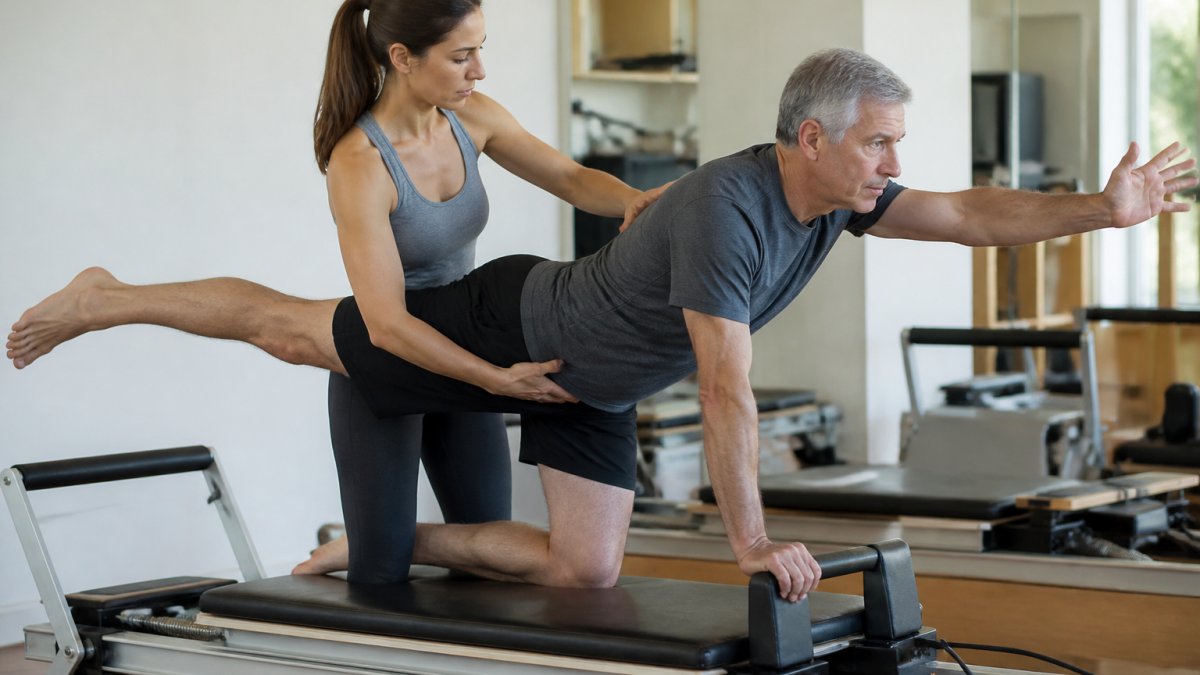
- Stability: can the trunk and pelvis hold position while the limbs move? This is tested by moving an arm or leg while watching whether the spine or pelvis shifts.
- Motor control: does the right muscle fire at the right time and in the right amount? This is tested with slow, deliberate movement where timing is visible, not with heavy load where compensation is hidden.
A common pattern observed is a client who can deadlift a respectable load but cannot control a slow single-leg movement without the pelvis dropping. The strength may be there; the timing may not. That distinction can change the entire plan.
Specific Tasks Worth Screening
Rather than a vague checklist, screen tasks that map to daily load:
- Sit-to-stand: watch whether the knees track over the feet, whether the trunk folds or stays tall, and whether one side does more work.
- Split squat or step-down: look for pelvic drop on the unsupported side, trunk lean and knee position.
- Overhead reach against a wall: check whether the ribs flare and the lower back arches to gain range.
For each task, record three things: the movement quality, whether breathing changed, and whether symptoms changed. Those three notes are more useful than a single pass or fail.
Pain-Sensitive Modifications
Most assessment guides assume a pain-free, able-bodied participant. That is not the reality for most people seeking help with pain. Adapt the screen rather than skipping it:
- During a flare-up: reduce range, remove load and test only the tasks that remain comfortable. A partial screen on a bad day still tells you something.
- Limited equipment: a wall, a chair, a step and a household weight are enough for a basic screen.
- Reduced mobility or disability: substitute seated or supported versions of each task and note the modification, so reassessment uses the same version.
The principle is consistent: test movement, do not provoke it, and change one variable at a time so you know what caused the change.
Test motor control before you test strength. A strong muscle that fires late is less useful than a moderate muscle that fires on time. We see this constantly with clients who can lift heavy but cannot control a slow, single-leg movement.
What a Screen Can and Cannot Tell You
A movement screen is an observation tool, not a diagnosis. It cannot identify the cause of your pain, rule out pathology or predict whether you will be injured.
BOOK YOUR FREE 15 MINUTE CONSULTATION →
What a screen can do is show where control changes under load, give you a baseline to compare against later, and point toward which patterns are worth addressing first. Treating it as a prediction tool overclaims; treating it as a structured observation understates its value.
When to Stop and Refer
Stop the screen and seek assessment from a qualified health professional if you experience sharp or radiating pain, numbness, tingling, limb weakness, unexplained night pain, fever, unsteadiness, or pain following recent trauma. Those signs sit outside what any movement screen should attempt to interpret.
How a Clinical Pilates Assessment Turns Findings Into a Plan
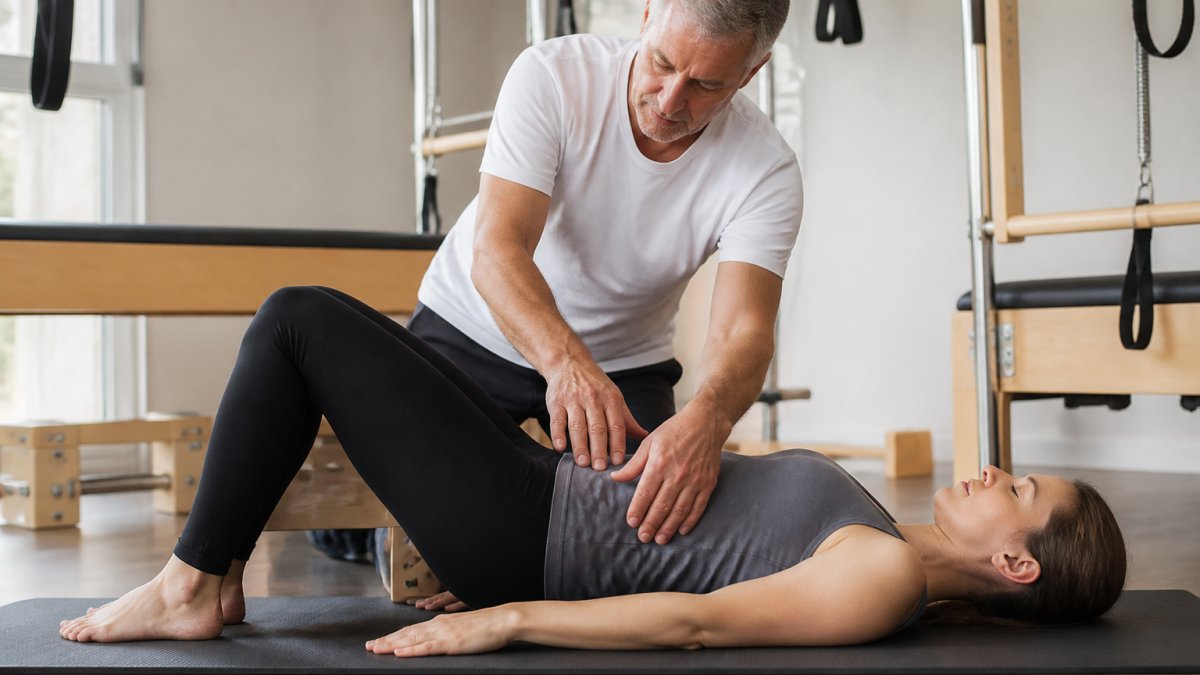
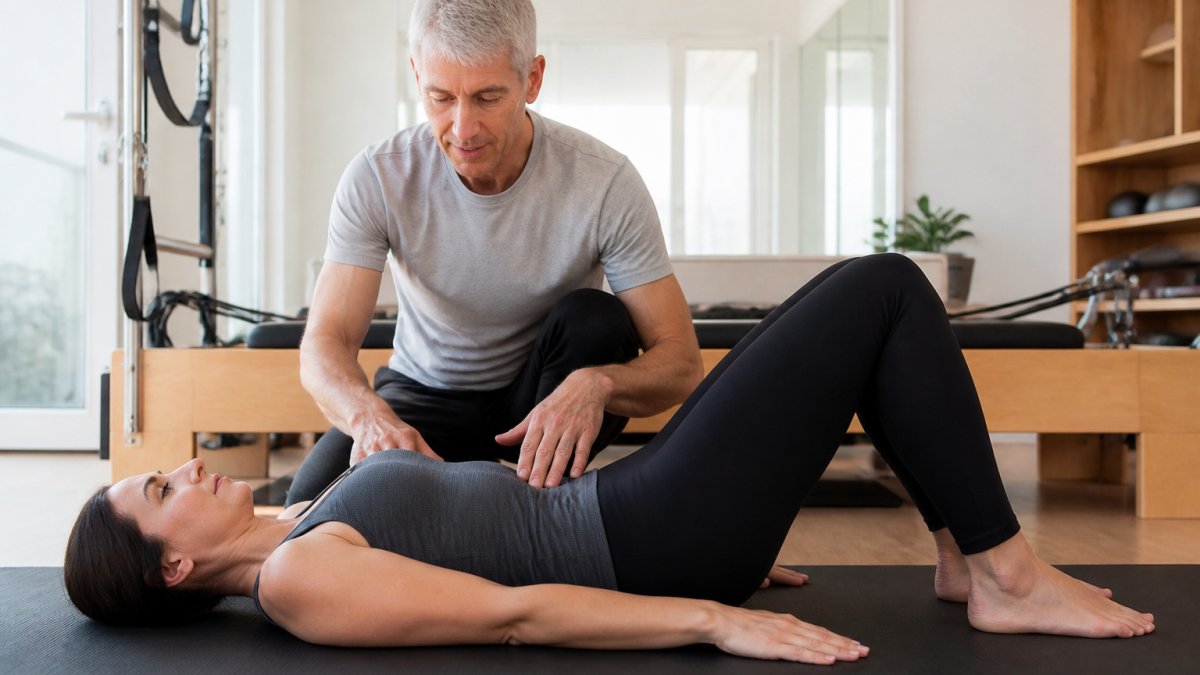
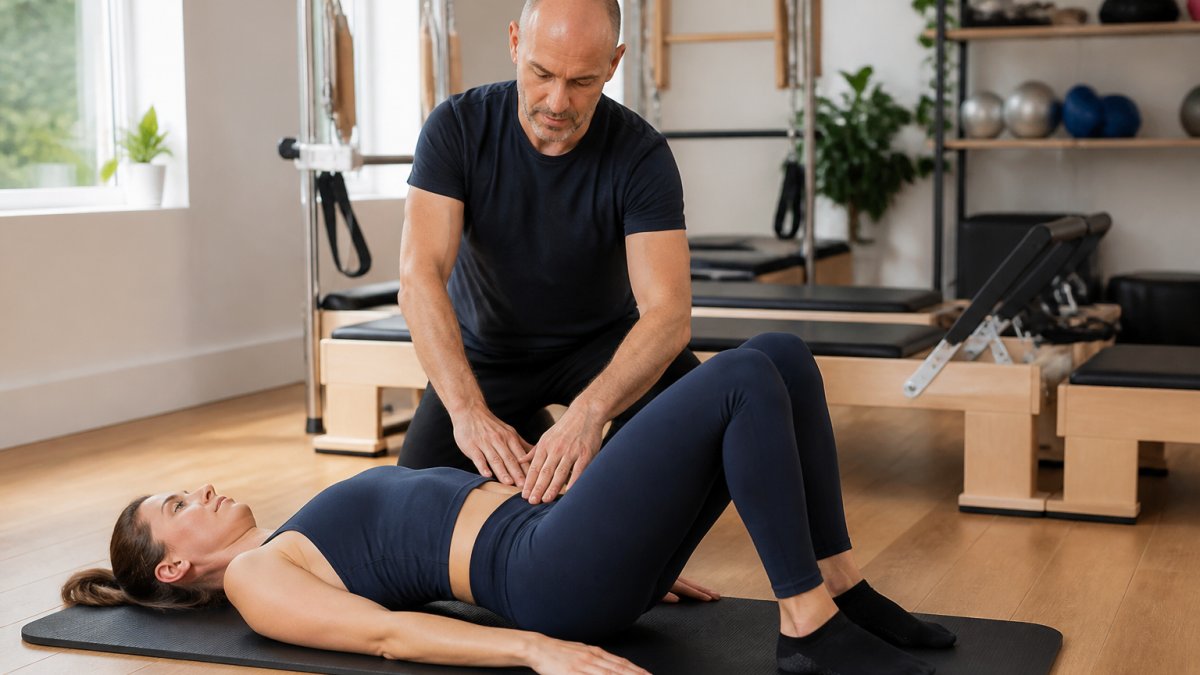
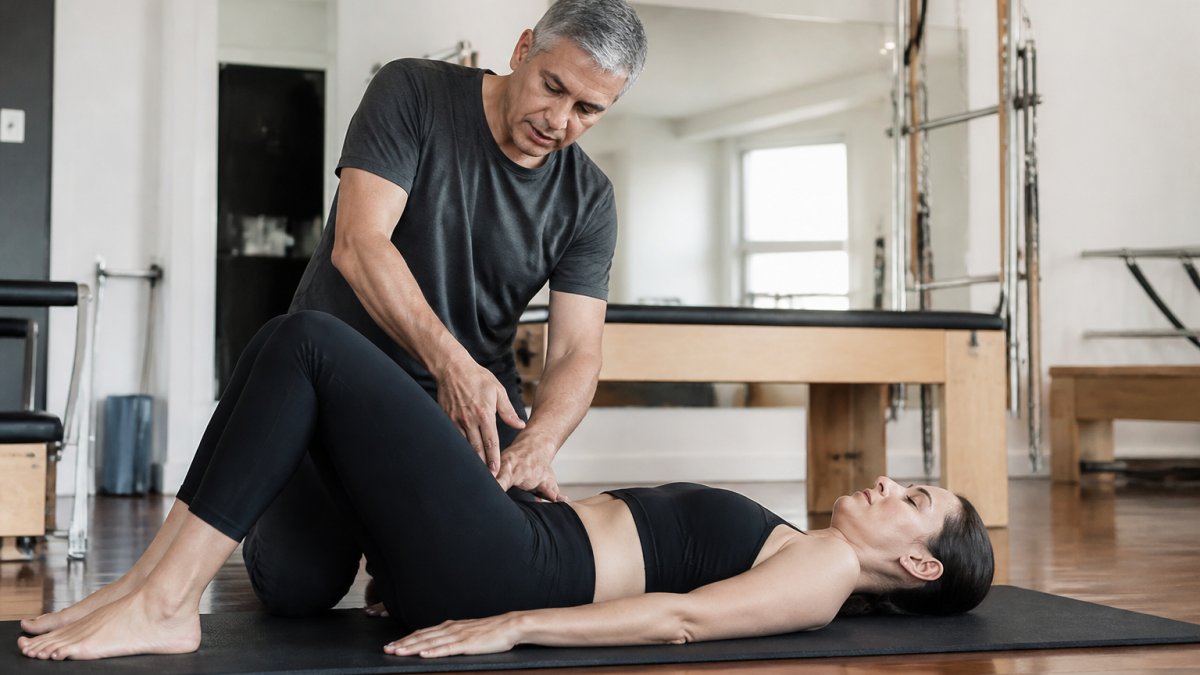
A clinical Pilates assessment converts your findings into an individualised care plan, with targeted exercise chosen for your specific patterns. The assessment is only useful if it changes what you do next.
Most guides stop at the assessment. The gap is the workflow that follows it, how findings become a plan, how progress is measured, and how the plan is revised when it is not working.
A Reproducible Assessment Workflow
A consistent sequence makes findings comparable over time. Ours runs in this order:
- Consent and scope: explain what the assessment involves, what it can and cannot tell you, and agree on what will be recorded.
- History: pain location, onset, duration, aggravating and easing factors, prior episodes, relevant medical history and current activity levels.
- Baseline measures: record the specific tasks and observations before any intervention, so change can be measured rather than remembered.
- Task selection: choose tasks that map to the person’s daily load and goals, not a fixed protocol.
- Findings: summarise the patterns observed, where control changed, which side differed, and what provoked symptoms.
- Plan: select targeted exercise for the specific limitation found, with a clear progression and reassessment date.
- Follow-up: repeat the same measures at set intervals and revise the plan based on what changed.
Documenting each step matters. Without a written baseline, reassessment becomes a memory exercise, and memory is unreliable when pain is involved.
Choosing Measures That Actually Show Change
A plan is only as good as the measures used to track it. Two categories are worth recording:
- Objective measures: the specific tasks from the screen, scored the same way each time, for example, whether the pelvis stays level in single-leg stance, or how many controlled repetitions are completed before form changes.
- Patient-reported measures: pain intensity on a simple 0-10 scale, how much the pain interferes with daily activities, and a short functional goal such as returning to a specific task.
Record both. A person can improve on an objective task while still reporting high pain, or feel better while movement quality has not changed. Seeing both prevents overclaiming progress.
Interpreting Progress Honestly
Change is rarely linear. A common pattern is improvement over the first few weeks, a plateau, then a flare-up when load increases. That is not failure; it is information about whether the progression was too fast.
Use the same tests at each reassessment so change is measured, not guessed. If a measure has not moved after a reasonable interval, the plan should change, not the measure.
The assessment is not the product. The plan, the reassessment and the honest interpretation of change are what make the assessment worth doing.
How the Method Cues Fit the Plan
This is where our approach differs from a group class. The B-Line® gives a precise reference for lower abdominal activation, and Stable Spine® replaces the old cue to force the back flat. Both come from the assessment, not from a script, they are selected because the findings called for them, not applied to everyone.
Our client Zang Angi described the result after three months: ‘After three months, I feel noticeably stronger, my core stability has improved, and my lower back pain has significantly reduced.’ That outcome is the aim, but the path to it is the workflow above, history, baseline, targeted exercise, reassessment, not a single cue or a single session.
A Safe Step-by-Step Self-Assessment You Can Try at Home
You can run a basic movement assessment at home to get a baseline, provided you stay within a comfortable range and stop at any warning sign. It is not a diagnosis, but it can show you where control changes.
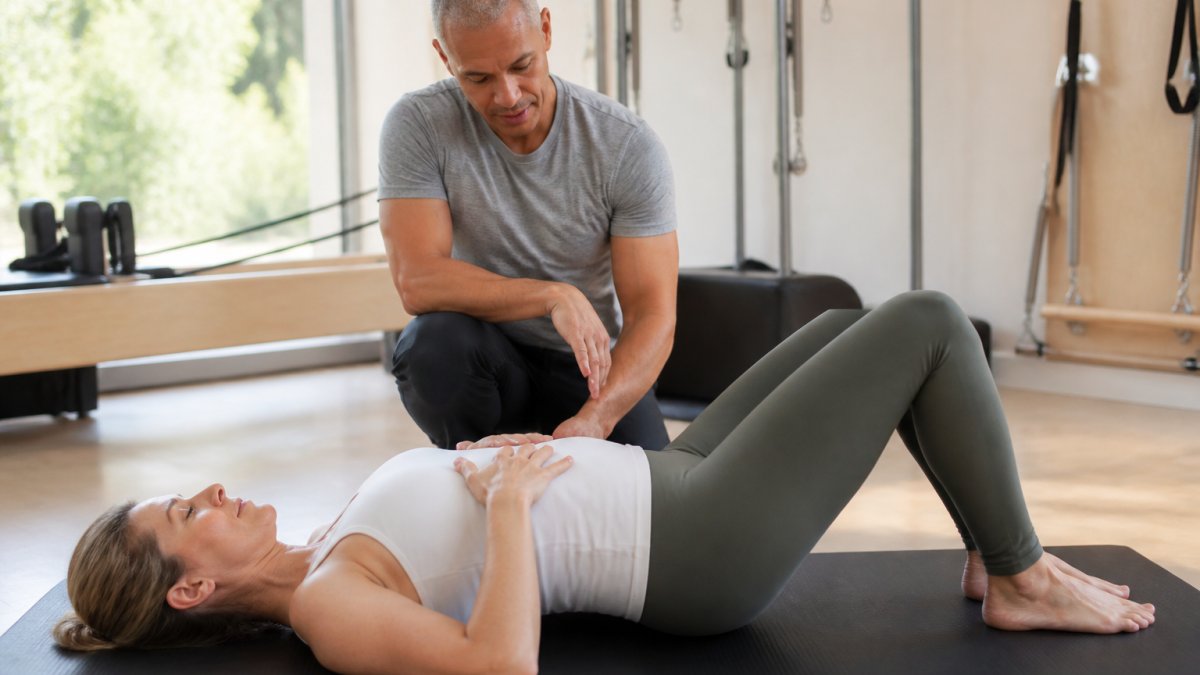
Work through these in order:
- Breathing: lie on your back, knees bent, hands around the lower ribs. Breathe in and feel the ribs widen, not just the chest lift.
- Leg lowering: keep your spine still and slowly move one leg away. Watch whether the pelvis stays controlled.
- Hip hinge: stand and bend from the hips, keeping length through the spine. Avoid collapsing the lower back.
- Single-leg stance: stand on one leg and check whether the pelvis stays level and the trunk stays upright.
- Loaded carry: hold a comfortable weight in one hand and walk. Stay tall and keep breathing.
Score each one as pass, partial or fail. The point is to find where control changes, not to score perfectly.
When to Stop and Seek Professional Advice
Stop and book a proper assessment if you feel sharp pain, numbness, tingling, limb weakness, unexplained night pain, fever or pain after a recent injury. Those signs need a qualified professional, not a home test.
For everyone else, a movement assessment is a starting point. It shows you what to work on and gives you a way to measure progress.
Frequently Asked Questions
What is a personalised movement assessment for pain?
It is a structured series of observations and simple movement tests used to see how your body stabilises, breathes and moves when pain is present. Rather than measuring how much weight you can lift, it looks at movement quality, range of motion, control and compensatory patterns. A movement assessment is not a diagnosis. It gives a baseline so an instructor or clinician can choose targeted exercise and track changes over time, and it should be adapted or paused when a movement provokes symptoms.
How does a movement assessment help identify what aggravates pain?
By changing one variable at a time, such as range, load, speed or position, you can see which movements reproduce symptoms and which feel comfortable. Recording pain location, intensity and duration before and after each test builds a clearer picture of pain patterns. This helps distinguish a movement that is merely stiff from one that consistently flares. The findings guide exercise selection and are a useful starting point for a conversation with a qualified professional about your pain history.
Can a movement assessment diagnose the cause of pain?
No. A movement assessment identifies limitations, asymmetries and compensatory movement, but it does not diagnose a medical condition. Diagnosis requires a qualified health professional taking a full history, considering red flags and ordering imaging where appropriate. Treat assessment findings as observations, not conclusions. If you have significant radiating pain, numbness, tingling, limb weakness, unexplained night pain, fever or recent trauma, seek professional assessment before attempting any self-testing.
How can movement assessments guide a Pilates rehabilitation plan?
A clinical Pilates assessment shows where control breaks down, so exercises can be chosen and progressed for your body rather than a generic class plan. For example, someone with poor pelvic stability in single-leg stance may start with supported leg loading before adding standing balance work. Reassessment at set intervals shows whether range of motion, motor control and functional tasks are improving. That feedback loop keeps the plan targeted and lets your instructor modify load or difficulty as your symptoms change.
Back pain that keeps returning usually means the underlying movement pattern was never addressed. At Menezes Method Pilates, we build every plan from an individual assessment, using the B-Line® for precise lower abdominal control and Stable Spine® for length without rigidity. Our approach has been refined since 1986 by Australia’s most experienced Pilates Master Trainer. Book your free 15 minute consultation and find out what your movement is actually telling us.